

Over Thanksgiving weekend, your vacant rental faces its highest risk of undetected damage. Keep your thermostat set to at least 55°F to prevent frozen pipes, and never fully shut off the heat. Before you leave, check under sinks, around toilets, and near water heaters for slow leaks. Standing water or missing heat can escalate into thousands in repairs within days. The details below will help you protect every vulnerable system on your property.
Key Takeaways
- Set thermostats to a minimum of 55°F—or 60°F in colder climates—to prevent frozen pipes in vacant rentals over Thanksgiving.
- Inspect under sinks, around toilets, and near water heaters for slow leaks, moisture stains, and mineral deposits before the holiday.
- Smart thermostats allow remote temperature monitoring, helping owners quickly detect heating failures during holiday weekends.
- Standing water or active leaks require immediate attention, as mold growth can begin within 24 to 48 hours.
- Structured holiday check-ins with documented findings help catch silent issues early, reducing liability and costly repair risks.
Why Vacant Rentals Take the Most Damage Over Holiday Weekends
Vacant rentals are especially vulnerable over Thanksgiving weekend because no one's there to catch problems early. A slow pipe leak, a failed furnace, or a backed-up drain can escalate into costly damage within hours. Without a tenant on-site, you lose your first line of defense.
Holiday risks compound this exposure. Contractors take time off, response times slow, and emergency service calls cost considerably more. Vacant damage from a burst pipe or flooding can run into thousands of dollars before anyone notices.
You're also carrying full liability. If the property sustains structural or water damage during a multi-day vacancy, your insurance claim may hinge on whether you took reasonable precautions beforehand. A well-drafted lease should require tenants to report emergencies immediately, with emergency repairs addressed within 24 hours to prevent minor issues from becoming major losses. Preparation isn't optional—it's protective.
What Temperature Should You Set in an Empty Rental This Winter?
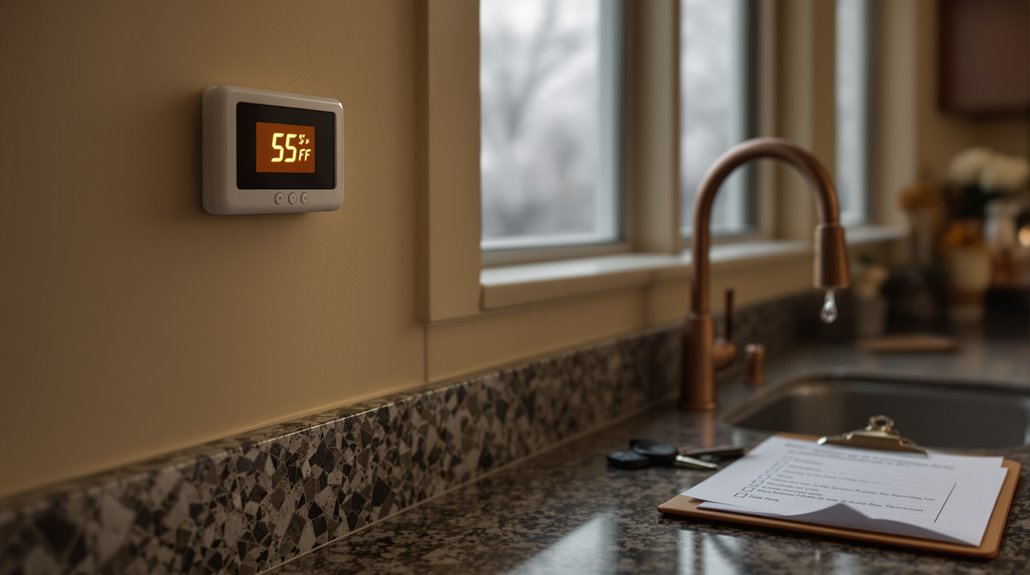
One of the simplest ways to protect an empty rental over Thanksgiving weekend is setting the thermostat correctly. For vacant rentals during winter, keep the heat set to a minimum of 55°F. That baseline protects your pipes from freezing without running your heating system unnecessarily. If your market runs colder—think Denver or Bend—consider bumping that up to 60°F as added insurance.
Don't cut heat entirely in the name of energy efficiency. The short-term savings aren't worth a burst pipe, water damage claim, or emergency repair call over a holiday weekend. If you've got a smart thermostat, use it. You'll maintain control remotely and monitor winter temperature fluctuations without relying on a neighbor or tenant to check in for you. Alongside your thermostat settings, biannual plumbing checks can help you catch vulnerabilities before cold weather turns a small leak into a costly emergency.
Where to Check for Leaks Before You Leave Town
Before you leave your rental vacant for Thanksgiving weekend, do a quick walkthrough and check the areas most likely to hide slow leaks: under bathroom and kitchen sinks, around the base of toilets, near the water heater, and along any exposed pipes in the basement or crawl space.
During your leak detection sweep, look for water stains, warped cabinet floors, mineral deposits, or any soft spots in drywall. These are signs that moisture has already been sitting longer than you'd like. A basic moisture assessment doesn't require special equipment—run your hand along pipe connections and check for dampness. If you spot something concerning, address it before you leave. A small drip left unattended over a long weekend can turn into a costly repair. If your property uses a septic system, also check around the tank and drain field for any signs of pooling water or unusual odors, as landlords are obligated to maintain essential septic system functionality to ensure a habitable living environment for tenants.
What Usually Breaks When Your Rental Sits Empty?
When your rental sits empty over Thanksgiving weekend, three things tend to go wrong first: pipes freeze and burst, heating systems fail without anyone noticing, and small leaks escalate into serious water damage. Without a tenant present to catch early warning signs, minor issues compound quickly and your liability grows with every hour they go unaddressed. Knowing what's most likely to break lets you take targeted action before you leave town. Minor issues like small leaks can escalate into costly health hazards such as mold when left undetected in a vacant property over an extended holiday weekend.
Pipes and Plumbing Failures
Pipes and plumbing are among the first things to fail when a rental sits vacant over Thanksgiving weekend. Without regular water use and proper pipe insulation, you're exposed to freeze-related failures that cause significant water damage fast.
Skipping basic plumbing maintenance before a vacancy creates real liability. Here's what commonly fails:
- Frozen pipes in exterior walls or unheated crawl spaces that burst overnight
- Dripping faucets left unaddressed that freeze and crack supply lines
- Water heater failures when units sit cold and sediment buildup accelerates
- Slow leaks under sinks that go undetected for days without anyone present
Each of these issues compounds quickly in an empty unit. Catching them before your tenant leaves—or before the long weekend hits—keeps small problems from becoming expensive claims. Inspecting attic and basement insulation before cold weather arrives helps prevent the kind of heat loss that accelerates pipe freezing in vulnerable areas of your rental.
Heating System Breakdowns
Most heating system failures in vacant rentals don't announce themselves—they compound quietly over a long weekend until you're facing emergency repair costs or tenant displacement. Furnaces that run infrequently are especially vulnerable; dust-clogged filters restrict airflow, causing systems to overheat and shut down. Ignitors fail. Pilot lights go out. Heat pumps ice over when temperatures drop and nobody's there to catch it.
Without routine heating maintenance, these aren't surprises—they're liabilities you've deferred. A failed system in a vacant rental during Thanksgiving weekend means higher emergency repairs costs, slower response times from HVAC contractors, and potential pipe damage if indoor temps fall far enough. Changing air filters monthly helps prevent the kind of restricted airflow that forces systems into shutdown at the worst possible time. Don't treat your heating system as an afterthought before you hand over the keys for the holiday.
Undetected Leaks Worsen
Vacant rentals don't just sit still—they slowly reveal problems you didn't know existed. A slow leak under a sink or behind a wall can go undetected for days, turning minor water damage into a costly repair and a liability headache.
Without a tenant present, nothing triggers a response. Preventative measures matter most here:
- Slow drips beneath sinks and around toilets compound quickly without anyone noticing
- Appliance supply lines can fail silently, soaking cabinets and subfloors
- Water heater pressure relief valves may seep without triggering obvious signs
- Roof or window leaks worsen through fall rain with no one inside to catch them
Older rental units are especially vulnerable during extended vacancies, as gaps in original siding and window frames can allow rainwater entry to escalate undetected without a tenant present to report the damage.
Schedule a physical check-in before you leave the property vacant for any extended holiday stretch.
What a Holiday Property Check-In Actually Covers
When your RentalRiff specialist arrives for a holiday check-in, they start at the systems most likely to cause damage during a vacancy — heating, plumbing supply lines, and water-dependent appliances. They're looking for early warning signs that don't trigger visible damage yet, like a slow pressure drop, a pilot light that's gone out, or a water heater showing early corrosion. Catching these issues before they escalate is what keeps a quiet Thanksgiving weekend from turning into an expensive repair call. Vacant properties are also particularly vulnerable to moisture buildup, which can create the conditions for mold spore growth when heating systems aren't maintaining consistent temperatures throughout the space.
What Specialists Inspect First
A holiday property check-in isn't a casual walkthrough—it's a structured inspection designed to catch the specific risks that empty properties accumulate over a long weekend. Your specialist follows defined maintenance priorities to move through the property systematically, not randomly.
Property inspections during Thanksgiving weekend focus on four immediate concerns:
- Heat setpoints — confirming thermostats are holding programmed temperatures and no heating failures have occurred
- Visible water intrusion — checking ceilings, under sinks, and around appliances for active or recent leaks
- Entry point security — testing locks, doors, and windows for anything compromised while the unit sat empty
- Utility operation — verifying water, heat, and electricity are functioning without irregularities
Each item directly ties to liability exposure. Catching one failure early prevents a small issue from becoming a costly, documented problem.
Spotting Silent Property Issues
Those four inspection priorities get the obvious risks documented—but they're only the starting layer. A thorough check-in also turns up problems that don't announce themselves loudly but create serious liability when ignored.
Your specialist scans for early mold growth around windows, under sinks, and in corners where condensation collects during cold weather. They check for pest infestations—droppings, entry points, and gnaw marks that indicate activity tenants may have missed or never reported. They also note standing water under appliances, slow drains, and any odors that suggest hidden moisture.
These silent issues worsen fast when a property sits empty over a long weekend. Catching them during a holiday check-in means you're dealing with a small problem on Monday instead of a large one after the holiday.
Signs Your Rental Needs Immediate Attention, Not a Wait-and-See
Some issues at a vacant rental can't wait until you're back from the holiday. During property inspections, certain findings demand urgent repairs before they escalate into costly, liability-heavy damage.
Watch for these red flags:
- Standing water or active leaks – Moisture spreads fast and fuels mold growth within 24 to 48 hours
- No heat in freezing temps – Pipe bursts can cause tens of thousands in structural damage
- Gas odors or CO detector alerts – These require immediate emergency response, not a callback Monday morning
- Unsecured entry points – A broken lock or open window exposes you to theft, vandalism, and liability
If your check-in reveals any of these, act immediately. Document everything, contact the right professionals, and don't leave it sitting over the long weekend.
Frequently Asked Questions
Should I Notify My Tenants Before Scheduling a Holiday Check-In?
Yes, you should always notify your tenants before scheduling a check-in. Following proper tenant communication and holiday protocols protects you legally, builds trust, and guarantees you're respecting required notice periods under your lease and local laws.
Does Rentalriff Cover Multiple Properties Under One Holiday Check-In Plan?
Yes, RentalRiff supports multi property management under coordinated holiday check in coordination. You'll work with your dedicated specialist to schedule visits across all your units, ensuring each vacant property gets proper attention during the Thanksgiving weekend.
How Quickly Can a Property Specialist Respond During Thanksgiving Weekend?
Your dedicated property specialist follows emergency protocols to respond rapidly—typically within hours. They'll use clear communication strategies to keep you updated on any urgent issues, like leaks or heat failures, throughout the Thanksgiving weekend.
Will My Homeowner's Insurance Cover Damage Found During a Holiday Check-In?
Your policy may cover holiday damage, but it depends on your specific insurance coverage terms. You'll want to document everything found during check-ins and contact your insurer directly to confirm what's included before filing a claim.
How Do I Share Property Access With Rentalriff While I'm Traveling?
You'll share property access with your RentalRiff specialist before you travel by providing a key, lockbox code, or smart lock credentials. Following these travel tips guarantees your specialist can respond quickly without liability delays.
Conclusion
A vacant rental over Thanksgiving doesn't have to become an emergency. Set your heat before you leave, check for leak risks, and have someone walk the unit mid-weekend. You're not just protecting pipes and drywall — you're protecting your liability position if something does go wrong. A little preparation now keeps a four-day holiday from turning into a four-figure repair bill.