
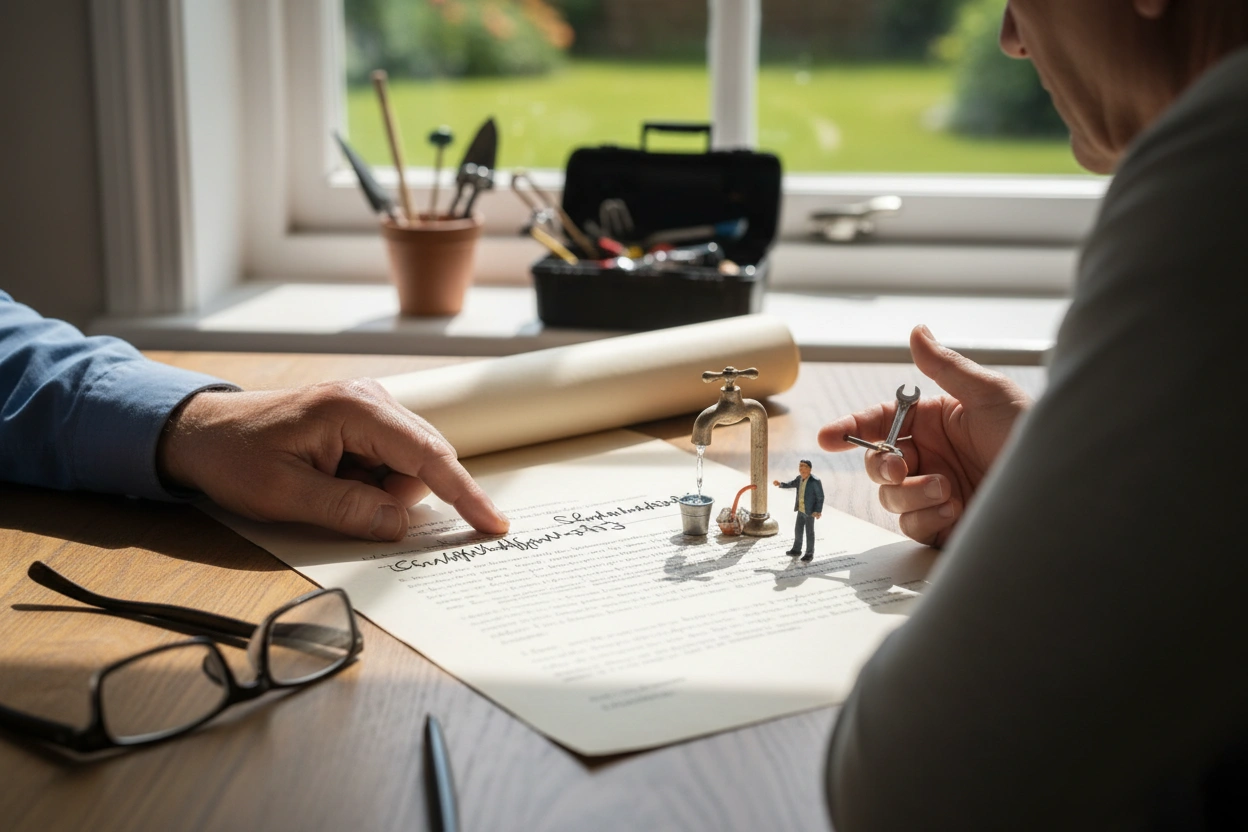
A strong maintenance clause defines who handles what, how repairs get requested, and how fast they must be completed. You'll need to assign responsibilities explicitly, set response timelines for emergency and routine repairs, and establish a formal request process with documentation requirements. Vague language like "reasonable repairs" invites disputes and weakens your legal standing. Align everything with your state's landlord-tenant statutes, and your lease becomes a document that actually protects you—everything you need to get there is covered ahead.
Key Takeaways
- Clearly assign repair responsibilities to both parties using itemized lists to avoid vague language that creates disputes.
- Define specific repair timeframes: 24 hours for emergencies, 48–72 hours for urgent, and 7–14 days for routine repairs.
- Require written repair requests with documentation including dates, issue descriptions, and photos to trigger response timelines.
- Align all maintenance obligations with state landlord-tenant statutes to ensure the clause remains legally enforceable in court.
- Include consequences for missed repair deadlines, such as rent credits or tenant repair rights, to ensure accountability.
What a Maintenance Clause Actually Needs to Cover
A solid maintenance clause covers four essential elements: who's responsible for what, how repair requests must be submitted, what timeframes apply to different types of repairs, and what happens when either party fails to meet their obligations.
Without all four, you're leaving room for disputes that could've been avoided.
Set tenant expectations clearly by defining which repairs fall to the tenant and which remain yours.
Specify the submission process—written notice, a portal, or email—and require documentation.
Establish maintenance frequency for recurring upkeep like HVAC filter changes or pest prevention.
Then define consequences: what happens if a tenant delays reporting damage, or if you fail to respond within the required window.
Vague language invites conflict. Precise language protects both parties. Additionally, a thorough review of lease agreements can help identify repair responsibility clauses that clarify obligations for both landlords and tenants.
How to Clearly Split Responsibilities Between Landlord and Tenant
The most effective maintenance clauses don't leave responsibility open to interpretation—they assign it explicitly to either the landlord or the tenant. You'll want to list tenant duties directly in the lease, covering items like replacing light bulbs, maintaining cleanliness, and reporting damage promptly. On your end, you must clearly state your obligations for structural repairs, major systems, and anything required by local habitability law. Additionally, consider specifying that landlords must ensure all appliances are in good working order at lease signing to comply with landlord responsibilities.
Define Each Party's Role
Clarity begins with assigning responsibility before a dispute ever arises. Your lease should explicitly state landlord obligations — structural repairs, HVAC servicing, plumbing, electrical systems, and anything affecting habitability. These aren't negotiable under most state landlord-tenant laws, so they belong in writing regardless.
Tenant responsibilities should cover day-to-day upkeep: replacing light bulbs, changing HVAC filters, keeping the unit clean, and reporting issues promptly.
Prompt reporting matters legally — if a tenant fails to notify you of a leak and damage worsens, that clause can shift liability.
Avoid vague language like "tenant shall maintain the premises." Instead, use itemized lists.
When each party's role is spelled out with specificity, your clause becomes enforceable rather than interpretive, and disagreements have a written standard to return to.
List Tenant Maintenance Duties
Once you've defined each party's role, translating those responsibilities into a concrete list is what makes your maintenance clause enforceable. Vague language invites disputes. Spelling out tenant duties removes ambiguity and gives you a paper trail if violations occur.
Common tenant maintenance duties to include:
- Cleaning responsibilities for kitchens, bathrooms, and common areas
- Replacing light bulbs, batteries, and HVAC filters
- Minor repairs such as tightening fixtures or patching small nail holes
- Promptly reporting leaks, damage, or safety hazards in writing
- Keeping drains clear and disposing of trash properly
Each item should reference what "acceptable condition" means at move-out. Tying cleaning responsibilities and minor repairs to lease terms—not just verbal expectations—gives your clause the enforceability it needs when disputes arise.
Clarify Landlord Repair Obligations
Spelling out tenant duties is only half the equation—your lease also needs to define what repairs fall on you as the landlord. State law typically sets baseline landlord expectations, requiring you to maintain habitable conditions, functioning plumbing, heating, and structural integrity.
Your lease should restate these obligations explicitly rather than relying on tenants to know the law.
Be specific about what you'll cover: roof repairs, appliance maintenance if appliances are included, pest control, and common area upkeep. Clarity here protects tenant rights and shields you from disputes over ambiguous language.
Also define your response timeline for urgent versus non-urgent repairs. A lease that vaguely promises "timely repairs" invites conflict.
Pinning down exact timeframes—24 hours for emergencies, seven days for routine issues—gives both parties enforceable expectations.
The Repair Request Process to Spell Out in Your Lease
Your lease should specify exactly how tenants must submit repair requests—whether by email, a written form, or a designated portal—and set clear deadlines for reporting different issue types, such as requiring immediate notice for emergencies and 24–48 hours for non-urgent problems.
Without defined submission methods, you lose the paper trail you'll need if a dispute arises over when a tenant reported a problem or whether they reported it at all.
Require tenants to document requests with photos, a written description of the issue, and the date of discovery to establish an accurate record from the start. Additionally, emphasize the importance of reporting damages caused by the tenant or their guests to ensure timely repairs and compliance with the lease agreement.
Submission Methods and Deadlines
Beyond defining who handles what repairs, your lease should clearly outline how tenants submit repair requests and when they must do them. Accepted submission formats and request channels must be explicitly stated to prevent disputes.
Include the following provisions:
- Approved channels: written email, tenant portal, or text message only
- Emergency reporting: verbal notice permitted, but written confirmation required within 24 hours
- Non-emergency deadlines: tenant must submit within 48 hours of discovering the issue
- Required information: unit number, issue description, photos when applicable
- Prohibited methods: verbal-only or social media reports won't be accepted
Vague submission language creates enforcement gaps. When your lease specifies exactly how and when requests must arrive, you eliminate ambiguity and establish a documented paper trail that protects you legally.
Required Request Documentation
Once you've established submission methods, your lease needs to define exactly what documentation a repair request must include to be considered valid.
Requiring standardized request formats protects you legally and eliminates ambiguous claims down the line.
Your lease should specify that every request must include:
- Date and unit address
- Detailed description of the issue
- Photos or videos where applicable
- Tenant's preferred access window
These documentation examples give you a paper trail if disputes arise over response times, pre-existing damage, or habitability complaints.
Without defined requirements, tenants can submit vague, undated requests that become difficult to track or contest.
State clearly that incomplete requests won't trigger your response timeline until all required information is received.
This single clause can greatly strengthen your position in any maintenance-related legal dispute.
Timelines and Response Windows That Hold Up in Court
When a dispute reaches court, vague language like "promptly" or "in a reasonable time" rarely holds up—judges want specific numbers. Timely responses and clear legal considerations protect you when tenants challenge your maintenance clause.
Use defined windows for every category:
- Emergency repairs (no heat, gas leaks): 24 hours
- Urgent repairs (appliance failure, leaks): 48–72 hours
- Routine repairs: 7–14 calendar days
- Tenant acknowledgment: Written confirmation within 24 hours of receiving a request
- Contractor delays: Require written notice explaining the timeline extension
Specify calendar days versus business days—courts treat them differently.
Include what happens if deadlines aren't met, such as rent credits or tenant repair rights, so consequences are enforceable and unambiguous. Additionally, familiarize yourself with tenant rights to better understand obligations and avoid disputes.
Common Maintenance Clause Mistakes That Void Your Protections
Even a well-intentioned maintenance clause can fail you if it contains common drafting errors that courts routinely use to strip landlords of their protections. One of the most prevalent legal pitfalls is using vague language like "reasonable repairs" without defining scope, timeframes, or responsible parties.
Another involves common misconceptions around implied warranties—many landlords assume silence on habitability standards protects them, but courts often interpret omissions against the drafter.
Avoid clauses that shift all repair responsibility to tenants without statutory basis, as most jurisdictions void these outright.
Don't bury maintenance obligations in general lease language where they're unenforceable due to lack of conspicuousness. Every obligation, timeline, and consequence should be explicitly stated, mutually acknowledged, and compliant with your state's landlord-tenant statutes before a tenant ever signs. Additionally, ensure that your maintenance clause aligns with landlord duties outlined in RCW 59.18.060 to avoid potential legal conflicts.
When Your Lease Is Solid but Maintenance Still Falls Through
A well-drafted maintenance clause gives you a strong legal foundation—but a lease can't fix an execution problem.
Even with airtight language, maintenance accountability breaks down when the operational side fails. Tenant expectations go unmet not because your clause is weak, but because follow-through isn't there.
Watch for these failure points:
- No designated point of contact for tenant repair requests
- Slow response times that escalate minor issues into costly repairs
- Undocumented work orders with no tracking or confirmation
- Vendors who don't show, leaving tenants without resolution
- No system for confirming repairs were completed satisfactorily
Your lease defines the rules.
Execution determines whether those rules actually protect you. If your clause is solid but maintenance still slips, the gap is operational—not legal. Implementing preventative maintenance plans can help mitigate these issues before they arise.
Frequently Asked Questions
Can I Use the Same Maintenance Clause for Multiple Rental Properties?
You can reuse a maintenance clause across properties, but you'll want to tailor tenant responsibilities and maintenance standards to each unit's specific conditions, local codes, and property type to guarantee it holds up legally.
Does a Maintenance Clause Need to Be Notarized to Be Enforceable?
You don't need notarization for lease enforceability. Notarization requirements don't apply to standard residential leases—your maintenance clause holds up legally as long as both parties sign the agreement with clear, mutual consent.
How Often Should I Update the Maintenance Clause in My Lease?
Review your maintenance clause annually. You'll also want to update it whenever local laws change, after disputes arise, or when tenant responsibilities shift. Keeping maintenance frequency and tenant responsibilities current protects you legally and prevents costly misunderstandings.
Can Tenants Negotiate Changes to the Maintenance Clause Before Signing?
Yes, tenants can negotiate changes before signing. Respect tenant rights by reviewing their requests carefully. Use clear negotiation strategies to reach mutual agreement, then document any revisions in writing to guarantee your updated maintenance clause holds up legally.
Are Maintenance Clause Requirements Different for Furnished Versus Unfurnished Rentals?
Yes, furnished rentals require more detailed maintenance clauses. You'll need to outline tenant responsibilities for every item provided, including furniture condition, appliance care, and damage reporting. Unfurnished leases carry fewer obligations, making your clause simpler to enforce.
Conclusion
A well-drafted maintenance clause doesn't just prevent disputes — it wins them. When you've clearly defined responsibilities, documented the repair process, and built in enforceable timelines, you're not relying on goodwill to protect your investment. You're relying on contract law. Review your current lease against every standard covered in this guide. If your clause can't answer who's responsible, when they must act, and what happens if they don't, it's time to rewrite it.