

Mid-season furnace noises split into two categories: wait-and-watch or call-now. Soft pops, startup clicks, and airflow whooshing are normal thermal and mechanical responses you can monitor. But if you're hearing banging, booming, or high-pitched screeching, don't wait—those sounds signal delayed ignition or failing blower components that worsen fast. Your furnace is under peak stress right now, and catching the difference early protects both your system and your safety. Keep going to know exactly what each sound means.
Key Takeaways
- Startup clicks, soft duct pops, and airflow whooshing are normal mid-season sounds that typically don't require immediate professional attention.
- Banging or booming sounds indicate delayed ignition, which stresses heat exchangers and demands an immediate service call.
- High-pitched screeching signals failing blower motor components or worn belts, requiring prompt professional inspection to prevent further damage.
- Before calling, check filter condition, open vents, secure access panels, and verify thermostat settings to rule out simple fixes.
- Prolonged, irregular, or worsening noises after basic troubleshooting always warrant an immediate call rather than waiting.
Why Your Furnace Gets Noisier Mid-Season
Furnaces tend to get louder mid-season not because they're failing, but because sustained operation exposes mechanical stress that start-of-season test runs don't. Once your system runs continuously through cold stretches, components expand, contract, and shift under load. That's when furnace wear becomes audible.
Seasonal adjustments your system made early on—belt tension, burner calibration, airflow balance—can drift as temperatures drop and runtime increases. Bearings that seemed fine in October start telegraphing friction in January. Heat exchangers flex differently under prolonged thermal cycling. Ductwork that was quiet during short cycles starts popping under sustained pressure. Clogged or dirty air filters compound these stresses by restricting airflow, forcing the system to work harder and making reduced airflow issues more likely to surface as audible strain mid-season.
None of this means your furnace is about to fail. But mid-season noises carry more diagnostic weight than early-season ones, and distinguishing between the two matters.
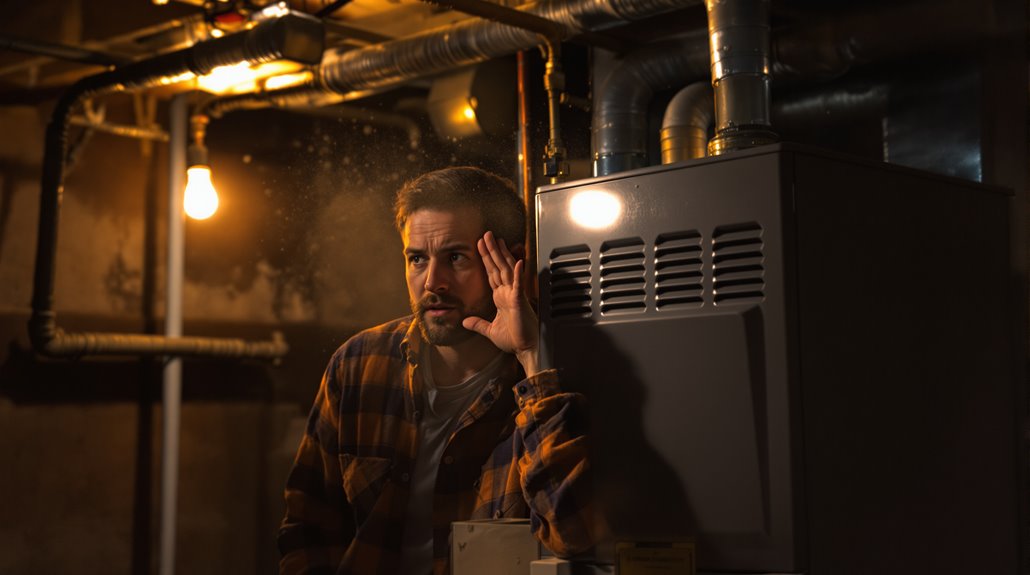
Furnace Noises That Are Normal and What They Signal
Not every furnace noise signals a problem worth acting on. You'll commonly hear startup clicks as the igniter fires, soft pops as metal ducts expand under heat, and a low whooshing sound as air moves through the system—all of which are normal mechanical responses to heating cycles. Recognizing these sounds helps you distinguish routine operation from the warning signs that actually require a call.
Startup Clicks And Pops
When your furnace kicks on, a few clicks and soft pops are normal—expected, even. The igniter cycling, gas valve opening, and metal ducts expanding under heat all produce brief startup sounds. These aren't startup issues—they're mechanical responses to rapid temperature changes.
You'll typically hear two to three clicks before ignition, followed by a low hum as the blower engages. Popping ducts settle within minutes as airflow stabilizes. Neither warrants concern on its own.
For basic troubleshooting tips, note the timing and frequency. Clicks that repeat without ignition, or pops that persist well into the heating cycle, shift the diagnosis. Normal sounds are brief and consistent. Anything prolonged, irregular, or louder than usual signals something worth investigating further. Scheduling seasonal HVAC inspections at the start of dry months can help identify developing mechanical issues before they escalate into disruptive mid-season failures.
Airflow Whooshing Sounds
Most airflow whooshing sounds fall into the normal category—steady, consistent, and tied directly to blower operation. When the blower kicks on, air moves through ducts under pressure, producing a low-level whoosh that stabilizes once airflow reaches equilibrium. These sound explanations are straightforward: moving air creates noise.
However, you'll want to pay attention to changes in intensity or pitch. A sudden increase in whooshing volume often signals airflow issues—specifically, a clogged filter restricting return air, partially closed dampers, or blocked vents. These restrictions force the blower to work harder, amplifying sound.
Check your filter first. If it's clean and vents are fully open but the whooshing intensifies mid-cycle, the issue likely sits deeper in the duct system and warrants a diagnostic call. Keep in mind that 30% of energy is lost in ducted systems due to leaks or poor layout, meaning unresolved duct issues can quietly drive up your energy bills well beyond the noise itself.
Minor Duct Expansion Noises
Duct expansion noises operate differently from airflow sounds—they're structural rather than pressure-driven. When your furnace fires up, metal ducts heat rapidly and expand against their framing, producing ticking, popping, or light creaking sounds. These duct vibrations are mechanical responses to thermal stress, not system malfunctions.
Properly installed expansion joints absorb most of this movement, but some noise still transfers through the structure depending on duct age, material gauge, and installation quality. You'll typically hear these sounds during the first few minutes of a heating cycle, then again when the system shuts off and ducts cool.
If the popping is isolated, short-lived, and consistent in pattern, it's normal. Irregular, loud banging that persists mid-cycle signals something different—restricted airflow or pressure buildup worth investigating. Scheduling regular preventative maintenance inspections can help identify whether duct conditions, installation quality, or material wear are contributing to abnormal noise patterns before they develop into costlier problems.
Furnace Sounds That Mean Call Someone Today
Some furnace noises signal a problem you shouldn't sit on. A banging or booming sound when your furnace fires up typically points to delayed ignition, where gas accumulates before finally igniting—a condition that stresses the heat exchanger and can crack it over time. High-pitched screeching usually means a failing blower motor bearing or a slipped blower belt, both of which will worsen quickly and leave you without heat if ignored.
Banging or Booming Sounds
Banging or booming sounds coming from a furnace typically point to delayed ignition—a condition where gas accumulates in the combustion chamber before igniting all at once. The resulting pressure release stresses heat exchangers, burners, and surrounding components. Understanding banging causes helps you act before the damage compounds.
Common contributing factors include:
- Dirty burners restricting proper gas flow and combustion timing
- Cracked heat exchanger allowing combustion gases to escape into living spaces
- Faulty igniter or pilot delaying the ignition sequence
- Gas pressure irregularities causing inconsistent fuel delivery
Don't dismiss this as a quirk—repeated booming accelerates heat exchanger failure, which is expensive and potentially dangerous. Consistent furnace maintenance reduces ignition-related failures, but if you're already hearing booming, schedule a diagnostic call today. Beyond repair costs, neglecting these warning signs can lead to property value depreciation as unresolved mechanical issues compound over time and undermine the overall condition of the home.
High-Pitched Screeching Noises
High-pitched screeching from a furnace almost always traces back to one of three mechanical sources: a failing blower motor bearing, a loose or worn blower belt, or a malfunctioning inducer motor. Identifying the screeching causes matters because each source carries a different urgency level and cost range.
A worn belt produces a steady, high-frequency squeal that worsens under load. Bearing failure generates a sharper, intermittent shriek. Inducer motor issues often combine screeching with startup delays or pressure-related fault codes.
Potential fixes range from belt replacement—a straightforward, low-cost repair—to full motor replacement, which runs considerably higher. Don't run the furnace through repeated cycles while screeching persists. Continued operation accelerates component wear and risks complete system failure mid-heating season. A clogged filter compounds the problem by restricting airflow and forcing the blower motor to overheat, accelerating the very failures that produce screeching in the first place.
What Banging, Squealing, and Rattling Each Mean
Different furnace noises point to different mechanical problems, and knowing which is which helps you act fast or avoid an unnecessary service call. Each sound carries a specific diagnostic signature:
- Banging causes include delayed ignition from gas buildup or expanding/contracting ductwork—delayed ignition requires immediate attention
- Squealing solutions start with inspecting the blower belt for wear or misalignment and checking motor bearings for lubrication failure
- Rattling typically indicates loose panels, unsecured ductwork, or a failing inducer motor
- Popping usually signals dirty burners or rapid temperature changes in sheet metal ducts
Delayed ignition banging is the only sound demanding an urgent call. Squealing and rattling are often maintenance-level fixes you can schedule within days. Regardless of the issue, proactive maintenance checks can prevent minor mechanical problems from escalating into costly repairs that disrupt your heating mid-season.
What to Check Before Requesting a Repair
Once you've identified the type of noise your furnace is making, a few quick checks can rule out simple causes before you request a repair. Use this furnace maintenance checklist as part of your pre repair troubleshooting process:
- Filter condition: A clogged filter restricts airflow, causing strain and unusual sounds. Check and replace it if it's grey and compacted.
- Vents and registers: Confirm all vents are open and unobstructed. Closed vents create pressure imbalances that produce rattling or whistling.
- Panel covers: Loose access panels vibrate during operation. Press them firmly and listen for changes.
- Thermostat settings: Verify your thermostat is set correctly and functioning. Erratic cycling can mimic mechanical problems.
If the noise persists after these checks, it's time to request a professional inspection. Keep in mind that local regulations and compliance requirements in your area may also influence how quickly a licensed technician must respond to heating system concerns in a residential property.
How Tenants Get Furnace Issues Resolved Fast
When a furnace problem goes unresolved, it affects your comfort, safety, and your landlord's property. If your landlord uses RentalRiff, you've got a direct line to a dedicated property specialist who handles maintenance requests quickly and keeps tenant communication clear throughout the process.
Here's how resolution typically moves fast:
- Submit early — report sounds immediately before they escalate into system failures
- Be specific — describe the noise type, frequency, and when it occurs during operation
- Document it — a short video clip accelerates diagnostic accuracy for your specialist
- Stay responsive — quick replies to scheduling requests prevent appointment delays
Your property specialist coordinates repairs directly, so you're never chasing down answers or waiting on unclear timelines.
Frequently Asked Questions
Can Cold Weather Outside Actually Make Furnace Noises Worse Indoors?
Yes, cold weather effects amplify furnace noises—thermal contraction tightens ductwork, intensifying bangs and pops. You'll also notice indoor acoustics shift as sealed winter homes trap and magnify sounds that warmer months naturally absorb.
How Long Can I Safely Run a Noisy Furnace Before Repairs?
Noise types determine your timeline. You can't safely ignore banging or screeching—they threaten furnace lifespan immediately. Rattling may allow brief continued operation, but you should schedule diagnostics within 24–48 hours to prevent escalating damage.
Will My Landlord Be Notified if I Report a Furnace Issue?
Yes, your landlord gets notified when you report a furnace issue—it's central to landlord responsibilities and your tenant rights. RentalRiff's dedicated property specialist coordinates directly with your property owner to diagnose and resolve the problem efficiently.
Does a Noisy Furnace Always Mean Higher Heating Bills This Month?
Not always, but certain noises do signal furnace efficiency losses that'll spike your bills. Rattling or banging often indicates airflow restrictions or mechanical strain. Prioritizing noise reduction through prompt diagnosis helps you avoid unnecessary energy waste and costly repairs.
Are Older Furnaces Naturally Louder Than Newer Models During Winter?
Yes, furnace age directly affects noise levels. You'll notice older units produce more noise compared to newer models due to worn components, loose parts, and outdated burner technology. A noise comparison often reveals a significant performance gap.
Conclusion
Your furnace is communicating a specific mechanical condition with every noise it makes — you just need to know the language. Don't ignore mid-season sounds hoping they'll resolve on their own. Diagnose what you're hearing against known failure patterns, distinguish urgent from non-urgent, and act accordingly. Delayed response on the wrong noise can escalate a $200 repair into a full heat exchanger replacement. When in doubt, you're always safer calling a technician than waiting.