
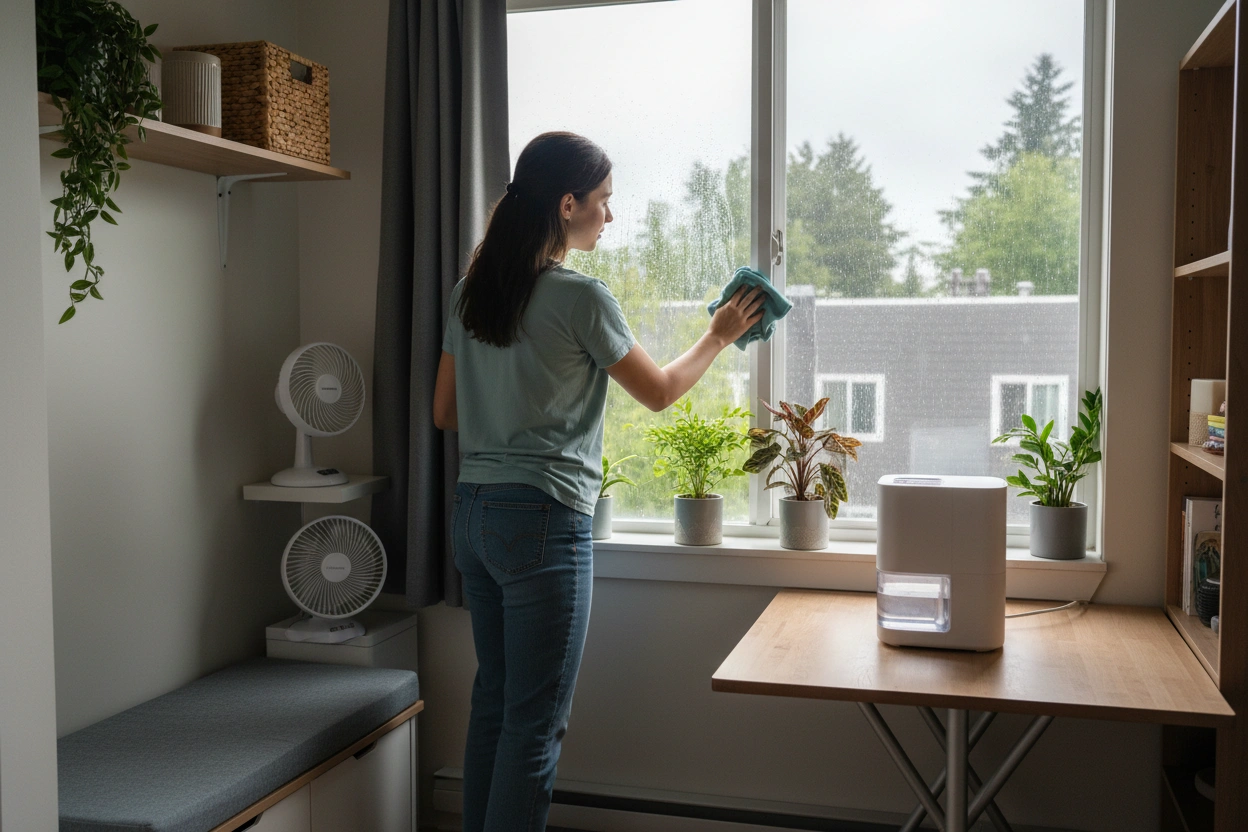
The Seattle climate is defined by its persistent gray skies and frequent drizzle, a combination that creates a unique challenge for those living in the city’s more compact residential spaces. While a cozy apartment offers a perfect retreat from the damp Pacific Northwest weather, that same exterior moisture can easily migrate indoors and become trapped within your living area. We are going to explore the mechanics of indoor humidity and provide practical, daily strategies to ensure your small apartment remains a dry, healthy, and comfortable sanctuary.
The Hidden Mechanics of Humidity in Compact Spaces
In a small apartment, the ratio of living activity to air volume is much higher than in a large house, meaning that every day actions have a disproportionate effect on your indoor environment. Activities that seem harmless, such as boiling a pot of pasta, taking a hot shower, or even drying a load of laundry on a rack, release significant amounts of water vapor into the air. In the tight quarters of a modern Seattle flat, this vapor has fewer places to go, leading to a rapid spike in relative humidity that can quickly exceed healthy levels.
When indoor humidity stays consistently above 60 percent, the air begins to feel heavy and sticky, but the more serious issues are happening at the surface level. Moist air naturally gravitates toward colder surfaces, such as window glass or exterior-facing walls, where it condenses into liquid water. This condensation is the primary catalyst for the degradation of your living space. By understanding that your apartment is a closed loop, you can begin to make small adjustments to your habits that prevent moisture from accumulating in the first place.
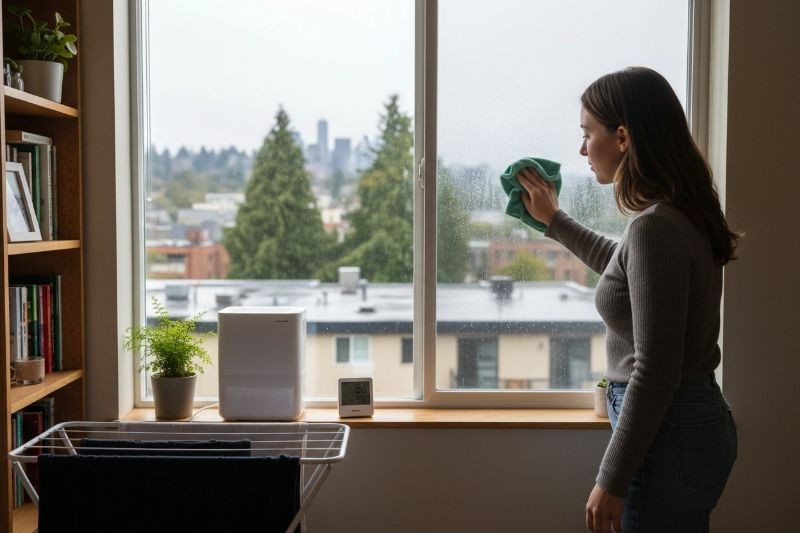
Signs of Excessive Moisture Build-Up
- Window Condensation: Finding fog or water droplets on the inside of your glass panes every morning is a clear indicator of high indoor humidity.
- Musty Odors: A persistent earth-like smell in closets or near corners often points to hidden moisture or early mold colonization.
- Peeling Paint or Wallpaper: Excess moisture behind wall coverings can cause adhesives to fail and paint to bubble or flake.
- Damp Fabric and Paper: If your clothes feel slightly humid or the pages of your books are starting to curl, the air in your unit is over-saturated.
Mastering Airflow and Ventilation Strategies
The most effective tool for moisture control is the strategic movement of air. Many tenants make the mistake of keeping their windows tightly sealed throughout the winter to preserve heat, but this effectively turns the apartment into a terrarium. Even in the middle of a Seattle drizzle, cracking a window for just ten minutes a day can provide a vital exchange of air, allowing humid indoor air to escape and be replaced by fresher, albeit cooler, outdoor air.
Your apartment’s built-in ventilation systems are your first line of defense. Bathroom exhaust fans and kitchen range hoods are designed specifically to remove moisture-laden air at its source. It is essential to run these fans during every shower and cooking session and to leave them running for at least fifteen minutes after you have finished. If your fans feel weak or are making unusual noises, it may be time to request a specialist to inspect the motor or clear the ductwork. This proactive approach to the physical upkeep of the home is a core part of the service provided by RentalRiff, which focuses on preventative maintenance to keep buildings healthy.
Effective Daily Ventilation Tactics
- Cross-Ventilation: Open windows on opposite sides of the apartment for a few minutes to create a draft that flushes out stagnant air.
- Exhaust Fan Discipline: Always use fans during high-moisture activities and ensure they are pulling air effectively.
- Furniture Placement: Keep furniture at least two inches away from exterior walls to allow for proper airflow and prevent condensation pockets.
- Internal Door Management: Keep closet doors and interior doors open during the day to prevent micro-climates of high humidity from forming in stagnant corners.
The Strategic Use of Dehumidifiers and Moisture Absorbers
For many Seattle residents, passive ventilation alone is not enough to combat the relentless exterior dampness. In these cases, a mechanical dehumidifier becomes an essential investment. These devices pull moisture directly from the air and collect it in a reservoir, allowing you to maintain a precise humidity level—ideally between 30 and 50 percent. For small apartments, a compact, quiet unit can make a transformative difference in the air quality and general comfort of the space.
In smaller, enclosed areas like closets or under sinks, moisture-absorbing canisters or hanging bags can provide targeted protection. These products use desiccant crystals to draw water out of the air, preventing the musty smells that often ruin clothing and stored goods. While these are not a replacement for a full-room dehumidifier, they are an excellent secondary defense. Managing these small details is part of being a proactive tenant, and it mirrors the way RentalRiff assists landlords in maintaining the overall integrity of a property through trade-specific precision.
Choosing the Right Moisture Control Tools
- Compressor Dehumidifiers: Best for larger living areas or particularly damp apartments, as they are highly efficient at removing large volumes of water.
- Desiccant Dehumidifiers: Ideal for colder rooms or bedrooms where quiet operation is a priority.
- Hygrometers: A small, inexpensive digital gauge that allows you to monitor your exact humidity levels in real time.
- Activated Charcoal Bags: These help absorb both moisture and odors in small spaces like gym bags or shoe closets.
Preventing Mold and Protecting Your Personal Property
The ultimate goal of moisture management is the prevention of mold and mildew. Mold spores exist everywhere, but they only thrive when they find a consistent source of water. In a small apartment, the areas behind headboards, inside window tracks, and under bathroom sinks are the most vulnerable. Regularly wiping down these surfaces with a mild detergent and ensuring they stay dry is the best way to prevent a small patch of mildew from becoming a systemic health hazard.
If you do find a significant amount of moisture or early signs of mold that seem to be coming from the building itself—such as a leak in the ceiling or dampness in the floor—it is vital to act quickly. Providing clear tenant support and communication regarding building issues is a responsibility of the landlord, and most rental agreements require you to report these concerns immediately. By logging a 24/7 maintenance request, you ensure that a specialist can address the root cause, such as a roof leak or failing siding, before it causes permanent damage to your belongings or the apartment.
Understanding Your Rights and Responsibilities as a Tenant
In Seattle, the relationship between a landlord and a tenant regarding moisture is a shared responsibility. While the landlord is obligated to provide a structurally sound, weather-tight building with functioning ventilation, the tenant is responsible for using those systems correctly and maintaining a reasonable indoor environment. Being an informed resident means knowing when an issue is a result of daily living and when it is a failure of the building's physical upkeep.
Familiarizing yourself with the Seattle Residential Landlord-Tenant Act can empower you to advocate for necessary repairs, such as fixing a broken bathroom fan or addressing poor insulation that causes excessive condensation. Using a professional service like RentalRiff can bridge this gap, as they act as a primary contact for maintenance and coordinate with licensed specialists to ensure the property is cared for correctly. This level of professional oversight benefits both the tenant and the landlord by preserving the home and ensuring a high standard of living.
Proactive Tenant Action Steps
- Document Issues Early: Take photos of any leaks or persistent condensation to share with your management team.
- Report Faulty Equipment: If a fan or heater isn't working, submit a request for a specialist to fix it immediately.
- Follow Move-In Guidelines: Adhere to any specific moisture-control instructions provided in your lease or turnover services packet.
- Maintain Open Dialogue: Keep the lines of communication open with your landlord to ensure they are aware of the building’s performance in wet weather.
Creating a Resilient Home in a Rainy City
Living in Seattle means accepting the rain as a part of daily life, but it doesn't mean accepting a damp or unhealthy home. By taking a proactive stance on moisture management, you can protect your health, your wardrobe, and your peace of mind. A few small changes to your daily routine—properly using fans, monitoring humidity, and ensuring good airflow—are all it takes to keep the Pacific Northwest dampness where it belongs: outside.
Your apartment is your sanctuary, and keeping it dry is the best way to ensure it remains a place of comfort and relaxation. Whether you are dealing with a historic vintage unit or a modern micro-studio, the principles of moisture control remain the same. Stay vigilant, stay dry, and enjoy the beauty of the city without the stress of a humid home. Through better support and clear communication, both tenants and landlords can work together to maintain a high-quality living environment that stands up to the Seattle weather for years to come.