

If you already have a sump pump installed, you'll need a structured maintenance routine to keep it reliable. Each month, pour water into the pit to test the float switch and inspect the discharge line for blockages. Seasonally, clean the inlet screen, check the check valve, and verify your backup power source. Watch for grinding noises, rust, or constant cycling — all signs of trouble. The sections below break down everything you need to stay ahead of failure.
Key Takeaways
- Test the float switch monthly by pouring water into the pit and confirming the pump activates and shuts off automatically.
- Perform seasonal tasks like cleaning the pit in spring, inspecting the check valve in summer, and insulating discharge pipes in winter.
- Watch for warning signs like grinding noises, visible rust, or continuous running, which indicate potential pump failure.
- Replace pumps over 7–10 years old or showing burned-out motors, frequent overheating, or recurring failures beyond simple repairs.
- Keep detailed maintenance logs recording inspection dates, parts replaced, costs, and photos to support insurance claims and property sales.
How a Sump Pump Actually Works in Your Rental
A sump pump removes groundwater that accumulates beneath your rental property before it can flood the basement or crawl space. Water flows through the soil and enters a pit, called the sump basin, dug at the lowest point of your foundation. Once water reaches a set level, the float switch activates the pump motor.
Core sump pump components include the basin, float switch, pump motor, impeller, and discharge pipe. The impeller spins rapidly, drawing water into the pump and forcing it through the discharge pipe away from the foundation. Proper sump pump installation positions the discharge line to drain well away from the structure, preventing water from cycling back. Understanding modern drainage systems helps you identify when something's wrong before it becomes a costly repair.
Monthly Sump Pump Checks Any Landlord Can Do
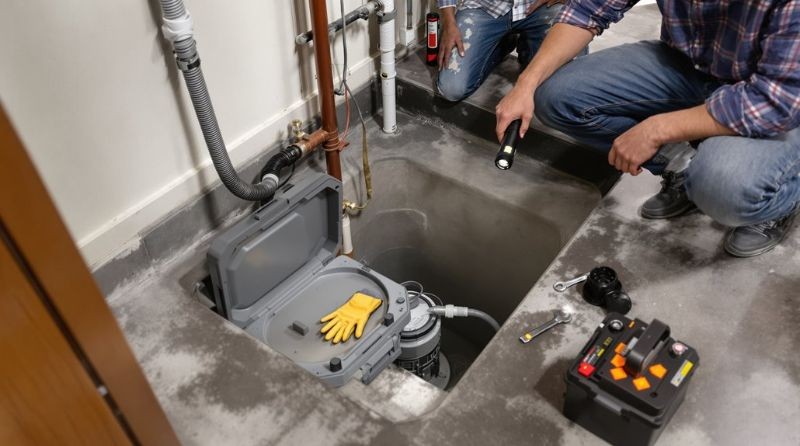
Monthly sump pump checks don't require specialized tools or training—just a systematic approach and about fifteen minutes.
Start by pouring water slowly into the pit until the float rises and triggers the pump. Confirm it activates promptly, clears the water, and shuts off automatically. Delayed activation or continuous running signals a problem requiring sump pump troubleshooting before the next rain event.
Next, inspect the discharge line for obstructions, ice blockages, or disconnected joints. Check the power cord and outlet for damage, and verify the backup battery holds a charge if your unit includes one. Regular inspections are crucial for preventing larger, costly repairs, as they help identify issues before they escalate.
These monthly steps form the foundation of effective preventative maintenance, catching mechanical wear, float failures, and drainage issues before they escalate into basement flooding or costly water damage repairs.
Seasonal Maintenance Tasks by Time of Year
Beyond monthly checks, sump pump maintenance follows a seasonal rhythm that aligns with changing weather conditions and shifting risk levels.
Spring: Prioritize spring cleaning of the pit and float assembly before snowmelt and heavy rainfall peak.
Test the pump under load, inspect discharge lines for frost damage, and clear any debris that accumulated over winter.
Summer: Inspect the check valve and motor housing.
Verify backup power systems are functional during storm season.
Fall: Clean the inlet screen, test the float switch, and confirm discharge lines drain well away from the foundation before ground freezing begins.
Winter: Winter preparation means insulating exposed discharge pipes, running a final test cycle, and confirming your backup battery holds a charge before freezing temperatures arrive.
Warning Signs Your Sump Pump Is Failing
Even with routine maintenance, your sump pump will eventually show signs that it's struggling or near failure.
Listen for grinding, rattling, or gurgling noises during operation, and inspect the unit for visible rust or corrosion on the housing, float, or discharge components.
If the pump runs continuously without cycling off, you're likely dealing with a stuck float, an undersized unit, or a check valve failure that demands immediate attention.
Unusual Noises During Operation
A sump pump in good working order runs with a consistent, low hum—any deviation from that baseline is worth investigating.
During sump pump troubleshooting, categorize the noise before diagnosing the cause. A rattling sound typically indicates loose components or debris inside the pit. Grinding or scraping points to worn bearings or an impeller making contact with the housing. Gurgling after the pump shuts off usually signals a missing or faulty check valve allowing water to flow back.
Loud vibration often responds to noise reduction measures like rubber grommets under the unit or securing loose discharge pipes.
Document when each noise occurs—during startup, operation, or shutdown—since timing narrows the likely cause and helps your technician resolve the issue faster.
Visible Rust Or Corrosion
Rust and corrosion on a sump pump signal accelerated material breakdown that affects both structural integrity and electrical safety. Inspect the pump housing, discharge pipe connections, and float switch bracket for orange or brown discoloration, pitting, or flaking metal.
Pay particular attention to cast iron components, which corrode faster than thermoplastic alternatives when exposed to moisture and mineral-heavy groundwater.
For corrosion treatment, apply a food-safe epoxy coating to minor surface rust on non-electrical components to slow further deterioration.
However, corrosion near wiring, terminals, or the motor housing requires immediate professional evaluation.
Rust prevention starts at installation — using PVC discharge piping and coated hardware reduces long-term oxidation risk considerably.
If corrosion has compromised the pump's structural joints or electrical housing, replacement is the safer, more cost-effective decision.
Pump Runs Continuously
While visible corrosion points to long-term material degradation, a sump pump that runs continuously signals an immediate operational failure that can burn out the motor within hours.
Continuous operation destroys pump efficiency and spikes energy consumption, often indicating a stuck float switch, undersized pump, or a failed check valve allowing water to cycle back into the pit.
To diagnose the issue, inspect the float switch first — it should move freely without obstruction.
Next, verify the check valve is functioning and installed correctly on the discharge line.
If both components check out, your pump may be undersized for the water volume your pit receives.
A continuously running pump isn't working harder — it's failing.
Address the root cause immediately before full motor burnout occurs.
When to Repair vs. Replace a Sump Pump
Once you've spotted warning signs, your next step is determining whether a repair will restore reliable function or whether the unit has reached the end of its service life.
Minor issues—such as a stuck float switch, a clogged discharge line, or a faulty check valve—typically warrant repair rather than full replacement.
However, if your pump is over 7–10 years old, cycles continuously, or has a burned-out motor, replacement is the more cost-effective and dependable path forward.
Signs Repair Suffices
Before replacing a sump pump outright, check whether the issue stems from a single faulty component.
Repair is typically the right call when the pump is under seven years old and the problem is isolated—a worn float switch, clogged inlet screen, or failed check valve. These parts are inexpensive and straightforward to swap out.
One of the most persistent maintenance myths is that any pump failure signals full replacement. That's rarely true. Addressing a specific mechanical fault extends sump pump longevity without the cost of a new unit.
Signs that repair suffices include:
- Float switch stuck or misaligned
- Check valve leaking or installed backwards
- Debris clogging the intake screen
- Loose or disconnected discharge line
If only one system is failing, fix that system.
Replacement Red Flags
Repair makes sense when the problem is contained—but some sump pump failures point to deeper issues that a replacement part won't fix.
If your pump is over 7–10 years old, you're approaching the end of its typical sump pump lifespan, and recurring failures signal it's time to replace rather than patch.
Watch for these red flags:
- Constant cycling despite no significant water intake
- Loud grinding or rattling indicating motor or impeller failure
- Visible rust or corrosion on the housing or discharge line
- Frequent overheating or tripped circuit breakers
When replacing, follow proper installation tips: size the pump correctly for your pit depth and water volume, verify the check valve is installed, and test the float switch before finalizing the setup.
Keeping Maintenance Records for Rental Properties
Tracking sump pump maintenance records gives you a clear, defensible history of every inspection, repair, and replacement tied to your rental property. Accurate record keeping protects you during tenant disputes, insurance claims, and property sales.
Log every service event in your maintenance logs with the date, technician name, work performed, parts replaced, and associated costs.
Store digital copies alongside photos of the pump, float switch, discharge line, and pit condition taken at each visit. Note any measured water levels, alarm tests, or battery backup readings. Flag entries where you identified wear or deferred a repair.
Consistent documentation transforms scattered service calls into a structured asset history, letting you anticipate failures, justify capital expenditures, and demonstrate diligent property stewardship. Additionally, maintaining clear communication channels for reporting issues is vital for effective property management.
Frequently Asked Questions
Can Tenants Be Held Responsible for Sump Pump Damage They Caused?
Yes, you can hold tenants liable for sump pump damage they've directly caused through negligence or misuse. Define tenant liability and maintenance responsibilities clearly in your lease to guarantee enforceable accountability for deliberate or careless damage.
Does a Sump Pump Affect My Rental Property's Insurance Coverage or Premiums?
A sump pump benefits your coverage by reducing flood-related insurance claims, which can lower your premiums. You'll want to notify your insurer about it, as it may qualify you for water damage discounts.
Should Sump Pump Maintenance Be Included in the Lease Agreement?
Yes, you should include sump pump responsibilities in your lease agreement. Clearly outlining tenant obligations—like reporting malfunctions and keeping the area clear—prevents disputes and guarantees consistent maintenance, protecting both your property and tenants.
How Does a Battery Backup Sump Pump Differ From a Standard One?
A standard pump relies solely on AC power, while a battery backup activates during outages. You'll notice installation differences in the added battery unit, and you'll need to monitor battery performance regularly to guarantee reliable operation.
Are Sump Pumps Required by Code in Basement Rental Units?
Sump pump regulations vary by location—there's no universal code requiring them in basement rental units. You'll need to check your local building codes and basement safety requirements, as Seattle, Portland, Denver, and other jurisdictions differ considerably.
Conclusion
Your sump pump won't protect your property if you're not actively maintaining it. Follow this checklist consistently — monthly checks, seasonal servicing, and detailed recordkeeping — and you'll catch problems before they escalate. Watch for warning signs, act on them quickly, and know when repair stops making sense. A well-maintained sump pump isn't just equipment; it's a documented, functioning system that protects your rental investment and keeps your tenants dry when it matters most.