
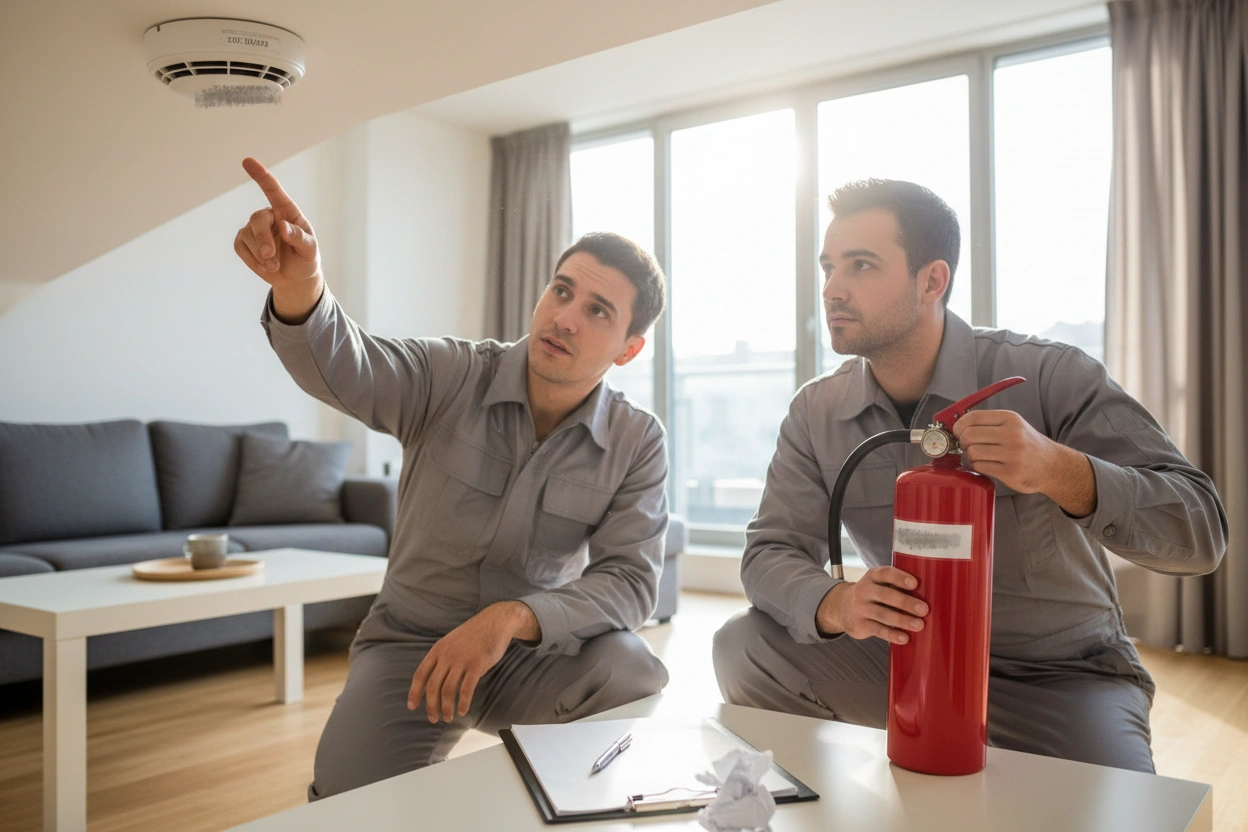
You should replace smoke detectors every 8 to 10 years and fire extinguishers every 5 to 12 years, depending on the type. These aren't suggestions—they're manufacturer-rated service limits tied to component degradation. As a landlord, you're also responsible for meeting state and local fire codes, which can impose stricter timelines. Staying compliant means tracking replacement dates, documenting inspections, and acting before equipment fails. There's more to managing this correctly than most landlords initially expect.
Key Takeaways
- Smoke detectors should be replaced every 8 to 10 years, as sensing components degrade and reduce reliability over time.
- Fire extinguishers typically last 5 to 12 years depending on type, and should be inspected annually by a professional.
- Replace disposable fire extinguishers immediately after any use, regardless of how much was discharged.
- Smoke detectors showing persistent beeping, discoloration, or frequent false alarms should be replaced promptly, regardless of age.
- Inspect and test all smoke detectors and fire extinguishers during every tenant turnover to ensure operational safety.
How Long Do Smoke Detectors Actually Last?
Smoke detectors don't last forever—most units carry a manufacturer-rated lifespan of 8 to 10 years, after which their sensing components degrade and lose reliability.
Understanding smoke detector lifespan isn't optional for landlords; it's a compliance and liability issue. Once a unit reaches its expiration date—stamped on the back of the device—you're required to replace it regardless of whether it still chirps when tested.
Ionization and photoelectric detectors both follow this replacement window, though their detection strengths differ.
As part of your maintenance tips routine, check each unit's manufacture date annually. A detector that passes a button test can still fail to detect slow-burning fires if its sensing chamber has deteriorated.
Don't rely on alarms alone—track dates, document replacements, and stay ahead of the expiration cycle. Additionally, regular inspections and tenant satisfaction ensure that safety equipment is functional and compliant with local regulations.
When to Replace Fire Extinguishers in a Rental
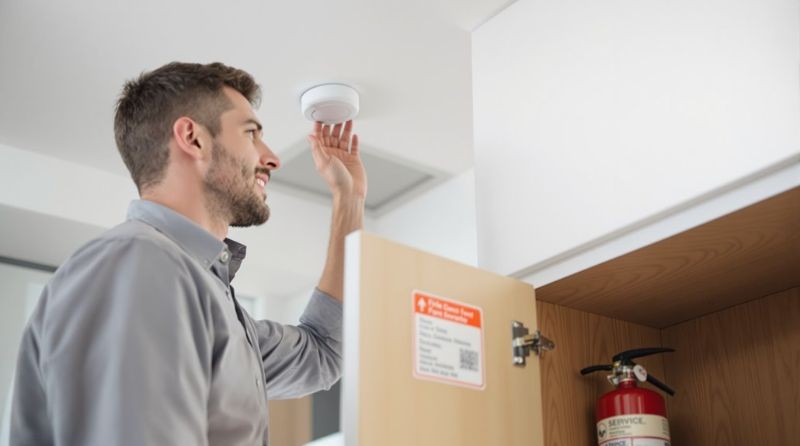
Fire extinguishers in rental properties don't last indefinitely, and knowing when to replace them keeps you compliant and your tenants protected.
Most units carry a fire extinguisher lifespan of 5 to 12 years, depending on the type and manufacturer specifications. Check the label for the manufacture date and follow replacement timelines accordingly.
Beyond age, inspect for these replacement triggers:
- Damaged or broken seals
- Corroded or dented cylinders
- Unreadable pressure gauge
- Missing pull pin or tamper indicator
Key maintenance tips include scheduling annual professional inspections, documenting service dates, and mounting extinguishers in clearly visible, accessible locations. Additionally, prioritizing fire safety in rental properties is vital to ensure tenant safety and compliance with evolving regulations.
Disposable extinguishers can't be recharged after use and must be replaced immediately. Rechargeable models require certified recharging following any discharge before returning to service.
State and Local Rules Landlords Need to Know
Fire safety laws for rentals aren't uniform—requirements for smoke detector placement, fire extinguisher provisions, and inspection intervals differ greatly by state and, in many cases, by city or county.
If you own rentals in Seattle, Portland, Denver, or other metros, you'll need to cross-reference both state statutes and local municipal codes to stay fully compliant. Landlord responsibilities include ensuring safety equipment is regularly maintained and replaced as necessary.
Failing to meet these requirements can expose you to fines, liability in the event of a fire, or legal action from tenants.
Laws Vary By State
While federal guidelines provide a general framework, state and local laws govern the specific requirements for smoke detectors and fire extinguishers in rental properties.
State regulations differ considerably — some mandate hardwired detectors with battery backup, while others permit battery-only units. Placement requirements, inspection intervals, and replacement responsibilities also vary by jurisdiction.
As a landlord, you're legally responsible for understanding and complying with the rules specific to your state and municipality. Failing to meet these requirements can expose you to liability in the event of a fire-related incident.
Beyond compliance, tenant awareness matters — your tenants should know how to test detectors, report malfunctions, and locate fire extinguishers. Staying informed about local codes keeps your property compliant and your tenants protected.
Local Codes Matter Too
State law sets the baseline, but local codes often go further — and those local requirements are what inspectors actually enforce.
Cities and counties frequently adopt amendments to statewide fire codes that impose stricter compliance requirements than state minimums. In Seattle, for example, the fire marshal's office enforces specific detector placement rules that exceed Washington State's baseline standards.
Portland and Denver operate similarly, with local fire codes layered on top of state law.
You need to verify local regulations with your city or county fire marshal's office — not just your state statutes.
Rental property inspections are conducted at the local level, and violations are cited against local code.
Assuming state compliance is enough is a common mistake that leads to failed inspections and potential liability.
Penalties For Non-Compliance
Failing to comply with smoke detector and fire extinguisher requirements exposes you to penalties that range from monetary fines to lease invalidation, depending on the jurisdiction.
Fire safety regulations in states like Washington, Oregon, Colorado, and California authorize inspectors to issue citations, mandate corrective action within tight deadlines, and levy daily fines for continued violations.
Compliance consequences can also extend into civil liability—if a tenant is injured due to a missing or defective device, you can face negligence claims regardless of whether a code violation was formally cited.
Some jurisdictions permit tenants to withhold rent or terminate their lease if safety devices aren't maintained.
Staying current with local ordinances and documenting all inspections, replacements, and repairs is your most reliable defense against enforcement action.
Signs Your Smoke Detector Needs Replacing Now
Even a working smoke detector has a finite lifespan, and recognizing when it's past its service life is just as important as testing it regularly.
Watch for these warning signs:
- Persistent beeping sounds after replacing expired batteries indicate sensor malfunctions rather than a power issue — replace the unit immediately.
- Discoloration signs such as yellowing or browning on the detector's casing signal heat exposure or aging components that compromise detection accuracy.
- Frequent false alarms or no response during monthly testing confirm internal sensor malfunctions that render the device unreliable.
If your detector is over 10 years old and displaying any of these symptoms, don't delay replacement. Additionally, proactive maintenance not only ensures safety but also helps avoid unnecessary legal disputes regarding tenant rights and responsibilities.
Regulatory compliance requires functional equipment — not just installed equipment.
Who's Responsible: Landlord or Tenant?
** When it comes to smoke detectors and fire extinguishers in rental properties, landlord and tenant responsibilities are divided by law — and misunderstanding that division creates liability exposure for both parties.
Landlord obligations typically include installing compliant devices, ensuring functionality at move-in, and replacing aging or defective units. Tenant awareness obligations generally cover monthly testing, battery replacement, and promptly reporting malfunctions.
Most state and local codes assign initial compliance to you as the landlord, while placing ongoing monitoring duties on tenants. However, jurisdiction-specific statutes vary greatly across markets like Seattle, Portland, and Denver.
Review your local fire code annually, document device conditions at each tenancy start, and maintain replacement records. Clear lease language reinforces each party's duties and reduces disputed liability after an incident. Additionally, understanding landlord obligations ensures that all safety measures are met effectively and legally.
How to Stay on Top of Fire Safety Between Tenants
Every tenant turnover is your opportunity to inspect smoke detectors and fire extinguishers before a new occupancy begins. Test each detector, check extinguisher pressure gauges, and confirm that all units meet current code requirements. Document every check with dated records you can reference if a dispute or inspection arises. Additionally, ensure that you have a plan for emergency maintenance to address any safety concerns promptly.
Inspect During Every Turnover
Turnovers are one of the most reliable windows you have to inspect fire safety equipment before a new tenancy begins.
Add fire safety to your turnover checklist to guarantee nothing gets overlooked between move-out and move-in.
Complete these three inspections during every turnover:
- Test all smoke and CO detectors — Verify functionality, check battery status, and confirm units aren't past their manufacturer expiration date.
- Inspect fire extinguishers — Confirm pressure gauge reads in the operable range, check for physical damage, and verify the inspection tag is current.
- Document findings in writing — Record the condition of each unit as part of your turnover report.
Set maintenance reminders post-turnover to schedule the next inspection cycle before it's due.
Test Before New Tenants
Before a new tenant takes occupancy, you're required in most jurisdictions to confirm that all smoke detectors, CO detectors, and fire extinguishers are fully operational.
Test each smoke and CO detector using the manufacturer's test function and document the results. Verify that fire extinguishers are within their service date and show a full pressure reading on the gauge.
Beyond equipment checks, prioritize tenant awareness by walking new tenants through device locations, testing procedures, and extinguisher operation during move-in.
This safety education component is often legally required and reduces liability. Provide written documentation outlining maintenance responsibilities, emergency contacts, and testing schedules.
Require tenants to sign an acknowledgment confirming they received this information before handing over keys.
Document All Safety Checks
Completing move-in safety checks means nothing if you don't have a paper trail to back them up. Safety documentation protects you legally and keeps your maintenance records organized for future reference.
For every inspection, log the following:
- Date of each smoke detector test, including which units passed or failed and any batteries replaced.
- Fire extinguisher inspection details, including pressure gauge readings, last service date, and technician sign-off if professionally serviced.
- Replacement records, noting the model, installation date, and location of every replaced device.
Store these records digitally so they're accessible during disputes, insurance claims, or regulatory audits.
Consistent documentation also helps you track replacement cycles accurately, ensuring no device ages past its service life undetected between tenancies.
Frequently Asked Questions
Can Smoke Detectors and Fire Extinguishers Be Bundled Into One Inspection?
Yes, you can bundle both into one inspection. Following combined maintenance guidelines streamlines your inspection frequency, saving time while ensuring you're meeting safety compliance requirements for smoke detectors and fire extinguishers simultaneously.
What Type of Fire Extinguisher Is Best for Residential Rental Properties?
For residential safety, you'll want an ABC-rated multi-purpose dry chemical extinguisher. It's the most versatile of all fire extinguisher types, handling common household fires involving wood, liquids, and electrical equipment effectively.
Are Combination Smoke and Carbon Monoxide Detectors Worth It for Rentals?
Yes, they're worth it. Combination detectors simplify safety compliance by meeting dual requirements in one unit. You'll also streamline tenant education, ensuring they understand both smoke and CO alerts without managing separate devices throughout your rental.
How Do I Document Fire Safety Equipment for Insurance or Legal Purposes?
Keep a log of all fire safety protocols and equipment maintenance records, including installation dates, inspections, tests, and replacements. You'll want to store photos, receipts, and signed tenant acknowledgments to protect yourself legally and satisfy insurance requirements.
Should Fire Extinguishers Be Placed in Every Room of a Rental?
You don't need fire extinguishers in every room. Fire safety regulations typically require room placement in kitchens and common areas. Check your local rental codes, as requirements vary by jurisdiction in cities like Seattle or Denver.
Conclusion
Replacing smoke detectors every 10 years and servicing fire extinguishers annually aren't optional best practices — they're baseline obligations you must meet as a landlord. You're responsible for knowing your state and local codes, documenting inspections, and acting before equipment fails. Don't wait for a chirping alarm or a tenant complaint to trigger action. Build replacement schedules into your property management routine, and you'll stay compliant, reduce liability, and keep your tenants safe.