
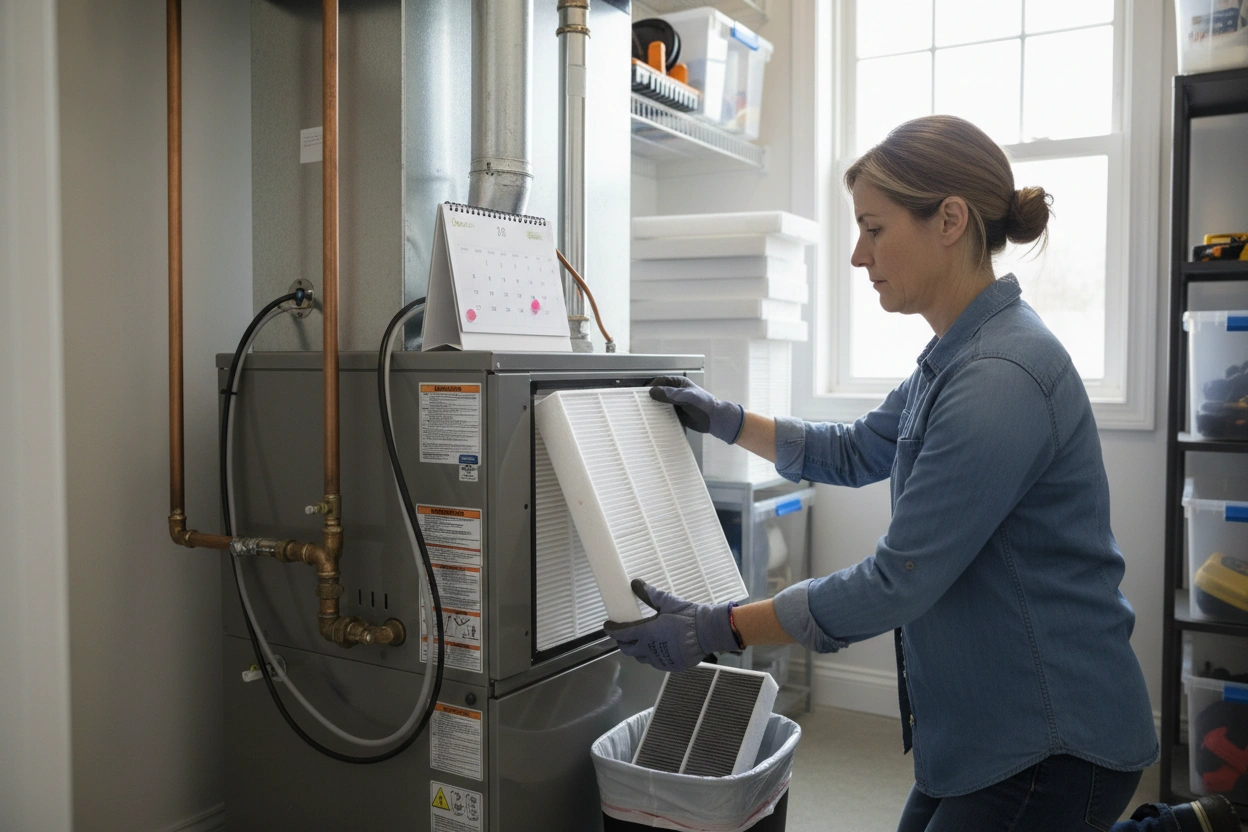
Replacing your furnace filter every 30–90 days is the single most effective way to prevent emergency HVAC calls. Fiberglass filters need monthly swaps, while pleated and high-efficiency filters can stretch to 90 days. Pets, high occupancy, and seasonal climate shifts can compress that timeline considerably. A clogged filter strains your blower motor, triggers overheating, and can crack your heat exchanger. Nail your schedule now, and everything downstream gets easier to manage.
Key Takeaways
- Replace 1-inch filters every 60–90 days; homes with pets or high occupancy may need monthly replacements to prevent clogs.
- Clogged filters force blower motors to overwork, leading to repairs costing $400–$1,500 or heat exchanger failures up to $3,500.
- Monthly filter checks during peak heating season catch dangerous buildup before it triggers thermal shutdowns or carbon monoxide leaks.
- Label filters with replacement dates and document each change to maintain a consistent, trackable maintenance schedule.
- Educate tenants on filter inspection signs—visible dirt, reduced airflow, or uneven heating—to catch issues before emergency repairs arise.
How Often Should You Actually Replace Furnace Filters?
Most furnace filters need replacement every 1–3 months, but that range shifts depending on filter type, household conditions, and system usage. Fiberglass filters typically last 30 days. Pleated filters handle 60–90 days. Thicker media filters can stretch 6–12 months. These aren't suggestions—they're functional thresholds.
Filter lifespan factors include pets, occupancy levels, local air quality, and how frequently your system runs. A single-occupant home in a low-dust environment won't load a filter the same way a pet-heavy household does. Your climate matters too—high-use heating seasons in Denver or Seattle accelerate clogging faster than mild conditions allow.
Apply these filter maintenance tips by checking filters monthly, regardless of schedule, and replacing them based on visual condition rather than calendar date alone. Using high-quality air filters that capture finer particles can also reduce the frequency of emergency HVAC calls by keeping the system running cleaner between scheduled replacements.

How Filter Type Sets Your Replacement Timeline
The filter type you install sets the structural baseline for your replacement schedule before any other variable comes into play. Filter materials determine both particle capture capacity and airflow resistance, which directly controls how quickly a filter becomes restrictive.
Fiberglass panel filters operate on a 30-day replacement frequency. They capture large particles but clog fast. Pleated polyester or cotton filters extend that cycle to 60–90 days because their increased surface area holds more debris before airflow degrades. High-efficiency MERV 11–13 filters run 90 days under normal conditions. Electrostatic filters require monthly washing rather than replacement.
Matching your replacement frequency to the correct filter material prevents you from either replacing too early and wasting money or replacing too late and straining your HVAC system. Semi-annual HVAC inspections complement proper filter schedules by catching additional system issues before they escalate into costly repairs.
How Pets, Occupancy, and Climate Shift Your Furnace Filter Schedule
Filter type establishes your baseline replacement schedule, but real-world conditions inside and around your rental property will compress that timeline considerably. Three variables consistently accelerate filter degradation regardless of filter quality:
- Pet hair and dander shed continuously, saturating filter media two to three times faster than pet-free units
- Tenant habits like frequent cooking, candles, or poor ventilation increase particulate load markedly
- Seasonal changes in Denver, Portland, and similar climates drive heating system runtime spikes that shorten filter lifespan during peak months
Audit these conditions when setting replacement intervals. A high-occupancy unit with pets in a cold climate may require monthly replacements, even with a premium filter installed. Failing to keep up with these compressed schedules can cause utility bills 20-30% higher than they would be with a clean, unrestricted filter in place.
Warning Signs Your Furnace Filter Is Overdue for a Change
Even when you're following a consistent replacement schedule, your filter can reach its limit ahead of schedule—and your system will tell you. A filter that's visibly gray, packed with dust, or coated in pet hair is a clear sign it's past due, regardless of when you last swapped it out. You should also watch for reduced airflow from your vents, longer run times, or rooms that aren't reaching set temperatures, all of which point to a filter that's restricting air movement through the system. In Denver, reduced air density at high altitude means your system is already working harder than average, so a clogged filter compounds the strain and can accelerate wear on key components.
Visible Dirt and Debris
One of the most obvious signs that a furnace filter is overdue for a change is visible dirt and debris on its surface. During filter maintenance checks, inspect the filter under adequate lighting. You'll immediately identify overdue replacements by three conditions:
- Gray or black discoloration covering more than 50% of the filter surface
- Visible dust clumps or matted debris embedded in the filter media
- Bent or collapsed pleats caused by restricted airflow pressure
Tenant education plays a direct role here. When tenants know how to visually inspect filters monthly, they catch buildup before it escalates into restricted airflow or system strain. Provide tenants with a simple photo reference showing clean versus dirty filters so identification remains straightforward and actionable. Encouraging tenants to report filter concerns promptly aligns with proactive tenant reporting practices that prevent minor HVAC issues from escalating into costly emergency repairs.
Reduced Airflow Signs
Reduced airflow is one of the clearest functional indicators that a filter has reached capacity. When a filter becomes clogged, your HVAC system works harder to pull air through the restricted media, reducing airflow efficiency across the entire system. You'll notice this through weak output at supply registers, uneven heating between rooms, or a furnace that cycles more frequently than normal. Check registers by holding your hand near the vent during operation — sluggish or barely perceptible airflow signals an overdue filter change. Consistent filter maintenance prevents the system from operating under this strain. Left unaddressed, restricted airflow forces the heat exchanger to overheat, potentially triggering safety shutoffs or accelerating component failure. Don't wait for these symptoms to compound before swapping the filter. Incorporating a routine filter inspection schedule into your broader property maintenance plan helps landlords detect airflow issues early, avoiding costly emergency HVAC repairs down the line.
What Happens When Tenants Ignore Furnace Filter Replacements
When you skip furnace filter replacements, the filter's media becomes saturated with particulate matter, restricting airflow through the return air duct system. Reduced airflow forces the blower motor to work harder, raising internal temperatures and pushing the heat exchanger toward thermal overload. Left unaddressed, that overheating cycle accelerates component wear and drives up repair costs that could've been avoided with a scheduled filter change. Landlords who include HVAC systems in their lease agreements are legally obligated to maintain them in proper working condition, making filter replacement schedules a direct legal concern, not just a maintenance preference.
Airflow Gets Restricted
Neglecting furnace filter replacements forces the blower motor to work harder to pull air through a clogged filter medium, reducing the volume of conditioned air reaching each room. This restricted airflow compounds into three measurable problems:
- Reduced air quality — trapped particulates recirculate instead of getting captured, degrading indoor air quality for your tenants.
- Declining energy efficiency — the system runs longer cycles to hit thermostat setpoints, driving up utility costs.
- Uneven heating and cooling — rooms farthest from the air handler receive inadequate airflow, creating comfort complaints.
Each issue escalates the longer the filter stays clogged. What starts as a $10 filter replacement becomes a diagnostic service call, a blower motor repair, or a full system replacement if you let it go unchecked. In climates like Portland, local weather patterns such as persistent humidity and rain can accelerate HVAC wear, making a neglected filter even more costly over time.
HVAC Systems Overheat
A clogged filter doesn't just restrict airflow—it traps heat inside the system. When heat can't dissipate properly, your furnace's limit switch triggers a shutdown to prevent damage. Repeated cycling from overheating causes accelerated wear on components like the heat exchanger, blower motor, and control board.
Here's what you need to understand about overheating causes: a cracked heat exchanger from thermal stress can leak carbon monoxide into living spaces—a serious safety hazard, not just a repair bill.
Follow these maintenance tips to prevent thermal damage:
- Replace filters every 30–90 days based on occupancy and pet activity
- Check filters monthly during peak heating season
- Document each replacement with a date label on the filter housing
Consistent filter replacement eliminates the primary overheating trigger entirely.
Repair Costs Escalate
Overheating damage sets the stage for repair bills that compound quickly. A clogged filter triggers a cascade of mechanical failures that devastate your repair budget.
- Blower motor replacement: $400–$1,500, caused by sustained overheating from restricted airflow.
- Heat exchanger failure: $1,000–$3,500, the most expensive consequence of repeated thermal stress cycles.
- Control board burnout: $300–$900, resulting from voltage irregularities during overheating events.
These costs accumulate when maintenance planning doesn't include scheduled filter replacements. A $10–$30 filter, changed every 60–90 days, prevents each failure listed above. Landlords who skip structured replacement schedules frequently face stacked repair invoices from a single HVAC breakdown. Proactive filter management isn't optional—it's the lowest-cost intervention in your entire preventative maintenance strategy.
How Landlords Can Stay Ahead of Furnace Filter Problems
Staying ahead of furnace filter problems starts with building a simple, repeatable system rather than reacting to issues after they surface. Schedule filter replacements at fixed intervals—every 60 to 90 days for standard 1-inch filters—and document each service date per property. Consistent furnace maintenance depends on structure, not memory.
Tenant education plays an equal role. When tenants understand why filter changes matter and what a clogged filter costs them in comfort and air quality, compliance improves. Provide written instructions, label the filter housing with the correct filter size, and include replacement reminders in lease renewal communications.
Track filter specifications, replacement history, and HVAC service records for each unit. That data helps you identify problem properties early and schedule preventative work before a breakdown forces an emergency call.
Frequently Asked Questions
Can Landlords Deduct Filter Replacement Costs From Security Deposits?
Generally, you can't deduct filter maintenance costs from a security deposit unless your lease explicitly assigns tenant responsibility and you've documented neglect. Security deposit deductions require proven tenant damage, not routine upkeep.
Who Is Responsible for Buying Furnace Filters, Landlords or Tenants?
Your lease determines furnace filter ownership. Typically, you're responsible for tenant responsibilities like routine filter replacements, while landlords supply the initial filter. Always confirm obligations in your lease agreement before assuming either party's role.
Do Smart Thermostats Send Alerts When Furnace Filters Need Replacing?
Many smart thermostats do send filter maintenance alerts, using smart technology to track runtime hours and airflow efficiency. You'll receive notifications via app when it's time to replace your filter, helping you prevent costly HVAC breakdowns.
How Do I Access the Furnace Filter Location in My Rental Unit?
Locate your furnace's filter compartment by checking the blower door panel or return air duct. These furnace maintenance tips apply during rental unit inspections—you'll typically slide or unclip the panel to access and replace the filter directly.
Are There Tax Deductions Available for Furnace Filter Maintenance Expenses?
Yes, you can deduct furnace filter maintenance costs as a rental property expense. These tax benefits fall under ordinary business expenses on Schedule E, reducing your taxable rental income when you're actively managing your property.
Conclusion
Replacing your furnace filter on a consistent, documented schedule is the most straightforward way to prevent emergency HVAC failures. You'll protect system components, maintain airflow efficiency, and reduce tenant complaints — all by staying ahead of a routine maintenance task. Factor in your filter type, occupancy conditions, pet presence, and local climate to dial in the right interval. Don't wait for a breakdown to establish your protocol; build it now, track it systematically, and enforce it consistently.