
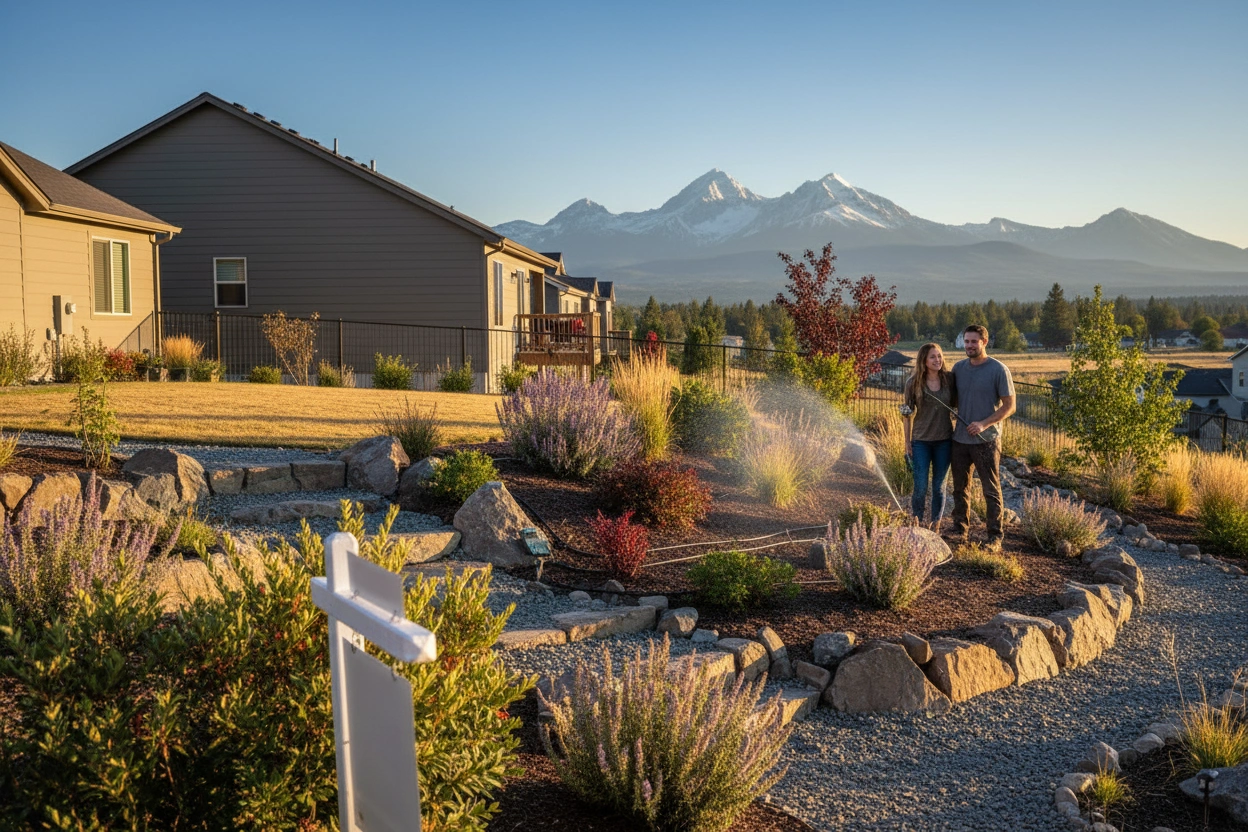
Managing a Bend rental yard means you're up against 12 inches of annual rainfall, 40°F temperature swings, and freeze-thaw cycles that destroy conventional irrigation systems. You'll need to replace traditional turf with drought-tolerant natives like sagebrush, creeping thyme, and rabbitbrush, paired with drip irrigation zoned by plant water needs. Smart moisture sensors and mulching complete a system that cuts costs and maintenance. The strategies ahead will sharpen your approach considerably.
Key Takeaways
- Bend's 12-inch annual rainfall and extreme temperature swings make drought-tolerant xeriscaping far more practical than conventional landscaping for rental properties.
- Replacing turf with gravel, decomposed granite, or native plants like sagebrush significantly reduces water consumption and eliminates mowing responsibilities.
- Drip irrigation with pressure-compensating emitters and smart moisture sensors delivers water efficiently directly to root zones, minimizing waste.
- Grouping plants by water needs into designated irrigation zones optimizes water usage and simplifies maintenance for landlords and tenants alike.
- Providing tenants a simple care guide with labeled irrigation controls ensures proper landscape upkeep and reduces unnecessary maintenance calls.
Why Bend's High Desert Climate Demands a Different Approach
Bend's high desert climate sits at roughly 3,600 feet elevation and delivers temperature swings that can exceed 40°F in a single day, creating stress on irrigation systems, hardscaping, and plant material that most temperate climates never produce.
Annual precipitation averages just 12 inches, making water conservation not optional but structurally necessary for any functional rental yard.
These climate challenges compound across seasons: freeze-thaw cycles crack irrigation lines, summer UV intensity degrades exposed materials rapidly, and low humidity accelerates soil moisture loss faster than standard watering schedules account for.
If you're managing a rental property in Bend, you can't apply conventional landscaping logic and expect it to hold.
The environment demands drought-tolerant plant selection, precision irrigation, and a maintenance strategy built specifically around high desert conditions. Implementing water usage assessments can optimize your irrigation strategy and ensure efficient resource management.
Xeriscaping Basics Every Bend Rental Owner Should Know
Xeriscaping isn't just a water-saving trend—it's the most practical landscaping framework for Bend's high desert conditions.
Core xeriscaping methods include soil amendment with compost to improve water retention, strategic plant grouping by hydration needs, and replacing turf with gravel, decomposed granite, or native groundcovers.
Mulching around plants reduces evaporation and moderates soil temperature during Bend's extreme seasonal swings.
Select drought-tolerant natives like sagebrush, Oregon grape, and bitterbrush—plants already adapted to the region's precipitation patterns.
Drip irrigation paired with these plantings maximizes efficiency.
Don't overlook tenant education; clearly document watering schedules, plant care expectations, and what not to disturb.
When tenants understand the system's logic, they're far less likely to overwater or damage the landscape between your property visits. Additionally, implementing proactive care can help maintain the landscaping's health and aesthetic appeal over time.
The Best Drought-Tolerant Plants for Bend Rental Yards
When selecting plants for your Bend rental yard, you'll get the best results by prioritizing natives like sagebrush, bitterbrush, and rabbitbrush, which are already adapted to the region's freeze-thaw cycles and low precipitation. For ground cover, low-water options like creeping thyme, blue grama grass, and stonecrop suppress weeds, reduce bare soil erosion, and require minimal irrigation once established. Rounding out a resilient landscape, drought-hardy shrubs like Apache plume and ornamental grasses like blue oat grass add structure and seasonal interest without demanding consistent watering. Additionally, incorporating drought-resistant landscaping principles can further enhance the sustainability and beauty of your rental yard.
Top Native Plant Choices
Choosing the right plants makes or breaks a low-maintenance rental yard in Bend. Native plant benefits are substantial — species adapted to the high desert require minimal irrigation, resist local pests, and survive temperature swings without intervention.
For your rental property, prioritize these proven performers:
- Sagebrush (Artemisia tridentata) – drought-hardy, low-growing, and nearly maintenance-free
- Bitterbrush (Purshia tridentata) – nitrogen-fixing shrub that stabilizes soil
- Idaho Fescue (Festuca idahoensis) – a ornamental grass requiring minimal water
- Rabbitbrush (Ericameria nauseosa) – late-season color with zero supplemental irrigation needs
Strategic seasonal plant selections extend visual interest year-round while keeping tenant complaints low.
Pair cool-season groundcovers with summer-blooming natives to maintain curb appeal across Bend's distinct seasons without increasing your maintenance workload.
Low-Water Ground Covers
Ground covers do the heavy lifting in a low-maintenance Bend rental yard — they suppress weeds, reduce bare soil erosion, and eliminate the need for turf irrigation.
Your ground cover options should tolerate high desert heat, alkaline soils, and minimal supplemental water once established.
Strong-performing selections include:
- Creeping thyme — forms a dense, fragrant mat with purple blooms that choke out weeds effectively
- Blue grama grass — a native, clumping low-profile grass that curls into delicate seed heads
- Stonecrop sedum — succulent rosettes that spread across rocky or compacted soil
- Prairie sage — silvery, low-growing foliage that reflects heat and deters foot traffic damage
Key maintenance tips: cut back dead growth in early spring, avoid overwatering during establishment, and spot-treat aggressive weed intrusion immediately.
Drought-Hardy Shrubs And Grasses
Once your ground layer is established, shrubs and ornamental grasses give the yard its structure and visual weight — and in Bend's high desert climate, your selections need to perform with little to no supplemental irrigation after the first growing season.
Prioritize drought resistant varieties like rabbitbrush, Apache plume, and blue grama grass, all of which thrive in Bend's alkaline soils and temperature extremes. Sagebrush cultivars anchor larger beds while providing year-round structure.
For ornamental grasses, choose blue oat grass or Idaho fescue — both offer movement, texture, and minimal water demand. These selections form the backbone of sustainable landscaping strategies that reduce long-term maintenance costs and tenant complaints.
Space plants according to mature spread to eliminate crowding and unnecessary competition for limited soil moisture.
How to Design a Low-Maintenance Irrigation System in Bend
Designing a low-maintenance irrigation system in Bend starts with understanding the region's high desert climate—hot, dry summers, low annual precipitation around 12 inches, and sandy, fast-draining soils that lose moisture quickly.
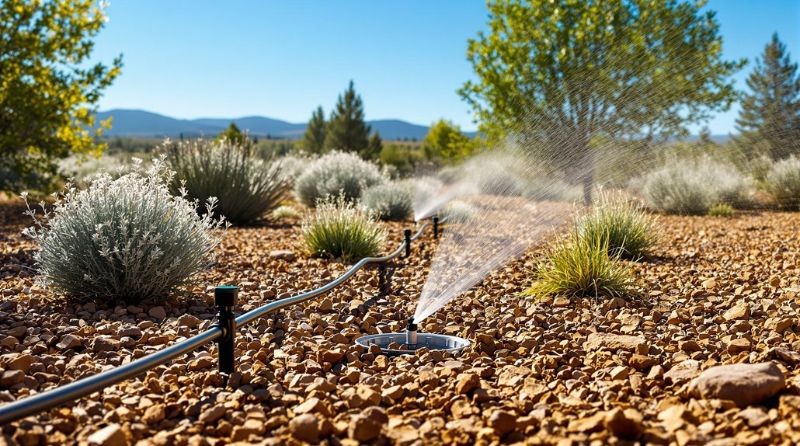
Drip irrigation delivers water directly to root zones, minimizing evaporation and runoff. Supplement supply using rain barrels connected to downspouts during spring precipitation windows.
- Zone plants by water needs, grouping drought-tolerant species separately from higher-demand plantings.
- Install pressure-compensating drip emitters to maintain consistent flow across uneven terrain.
- Use smart timers with soil moisture sensors to automate watering schedules based on real-time conditions.
- Mulch heavily around drip lines to slow evaporation and insulate roots from Bend's temperature swings.
Additionally, understanding moisture control techniques can help prevent excess water from accumulating and ensure the health of your rental yard's plants.
Xeriscape vs. Traditional Lawn: What Makes Sense for Rentals?
When you're managing a rental property in Bend, the choice between xeriscape and traditional lawn directly affects your maintenance costs, water bills, and tenant satisfaction.
Traditional lawn maintenance in Bend's high desert climate demands consistent irrigation, fertilization, and mowing—expenses that compound quickly given the region's low rainfall and hot summers.
Xeriscape benefits become immediately measurable: water consumption drops considerably, mowing disappears from your maintenance schedule, and drought-tolerant plantings remain stable through Bend's temperature extremes.
Tenants also respond well to low-maintenance yards that don't require weekend upkeep.
Traditional grass makes sense only if your tenant demographic specifically values it and your lease clearly assigns lawn maintenance responsibility.
Otherwise, xeriscaping delivers superior long-term ROI for Bend rental properties—lower operating costs, reduced turnover friction, and stronger property resilience. Additionally, engaging tenants in water conservation practices fosters a sense of community and responsibility among residents.
Keeping Tenants Happy With a Low-Water Yard
Switching to a low-water yard doesn't mean sacrificing tenant satisfaction—it means managing expectations and delivering a yard that genuinely requires less from them. Communicate what the landscape includes and how it functions. Tenants appreciate clarity. Frame water conservation as a benefit, not a restriction.
Set tenants up for success by providing:
- A simple one-page care guide showing seasonal watering schedules and plant zones
- Clear labeling on irrigation controllers with basic run-time instructions
- A list of what's intentional—gravel, mulch, and native plants aren't neglect
- A direct contact for reporting irrigation issues before small problems escalate
When tenants understand the design, they respect it. A well-explained xeriscape reduces maintenance calls, protects your investment, and keeps tenant satisfaction high throughout the lease. Additionally, incorporating drought-tolerant plants enhances the landscape's appeal while conserving water resources.
Frequently Asked Questions
What Permits Does Bend Require Before Removing an Existing Lawn?
Bend doesn't typically require permits for lawn removal itself, but you'll need to follow lawn removal regulations for irrigation modifications. Check the permit application process with Bend's Building Department before starting any underground system changes.
How Much Does a Typical Xeriscape Installation Cost in Bend?
You'll typically spend $8–$15 per square foot for xeriscape benefits like reduced water costs. The installation process covers grading, weed barrier, rock, and drought-tolerant plants—your RentalRiff specialist can help coordinate qualified Bend contractors.
Can Xeriscaping Increase My Bend Rental Property's Market Value?
Yes, xeriscaping can increase your Bend rental property's market value. It boosts property appeal by reducing water costs and maintenance demands, making your listing more competitive in Bend's growing rental market.
Are There Bend City Rebates Available for Drought-Tolerant Landscaping Upgrades?
Bend's drought incentives and landscaping grants exist through the City of Bend and Watermaster programs. You'll want to check with Bend Utilities directly, as rebate availability and eligibility requirements frequently update for rental properties.
Who Is Responsible for Maintaining Xeriscape Landscaping, Landlord or Tenant?
Your lease determines landlord responsibilities and tenant expectations. Typically, you're responsible for installing and repairing irrigation systems, while tenants handle routine upkeep like weeding and watering. Always specify xeriscape maintenance duties explicitly in your rental agreement.
Conclusion
Xeriscaping your Bend rental isn't just a trend — it's a practical response to a climate that punishes water waste and rewards smart planning. By combining drought-tolerant natives, efficient drip irrigation, and strategic ground cover, you're building a yard that performs year-round with minimal intervention. You'll cut water costs, reduce maintenance calls, and deliver a functional outdoor space tenants actually appreciate. In Bend's high desert, working with the climate is always the smarter investment.