

When you own a condo in San Diego, you're responsible for everything inside your unit, while your HOA covers common areas, building exteriors, and shared systems. Your CC&Rs define these boundaries clearly, so you'll need to review them before starting any repair. You must also follow HOA approval processes to avoid project delays. Understanding this division protects your tenants and your investment—and the details matter more than most owners realize.
Key Takeaways
- CC&Rs define whether maintenance responsibilities fall on the HOA or the individual condo owner, covering common areas, exteriors, and unit interiors.
- HOAs handle shared spaces like roofs and hallways, while owners manage appliances, fixtures, and systems within their unit walls.
- Submit HOA approval requests early to avoid project delays, keeping thorough records of all correspondence and repair estimates.
- Document maintenance issues with photos, dates, and written requests referencing CC&Rs to effectively address HOA repair delays.
- A property specialist can coordinate communication between tenants, the HOA, and owners, ensuring timely repairs and accountability.
Who Owns What: HOA vs. Condo Owner Responsibilities in San Diego
When you own a condo in San Diego, understanding the division of maintenance responsibilities between you and your HOA isn't optional—it's essential.
Your HOA typically maintains common areas, building exteriors, roofs, and shared systems. You're responsible for everything inside your unit—appliances, interior plumbing, electrical fixtures, and flooring.
Owner obligations extend beyond simple interior upkeep. You must comply with HOA rules while managing your unit's condition independently.
Maintenance clarity becomes critical when issues arise in shared spaces or along boundaries—such as pipes serving multiple units or walls separating common areas from private ones.
Review your HOA's Covenants, Conditions, and Restrictions (CC&Rs) carefully. These documents define exactly where HOA responsibility ends and yours begins, preventing costly disputes and ensuring your property stays properly maintained. Additionally, being aware of tenant rights can help you navigate potential conflicts with the HOA effectively.
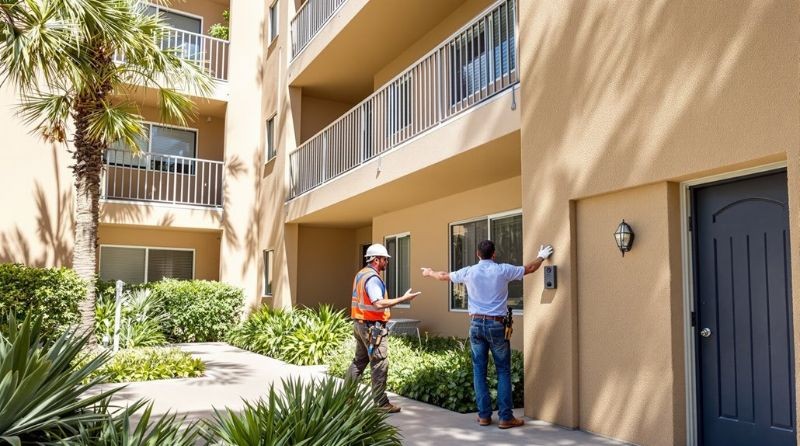
How to Read Your CC&Rs Before Any Repair Starts
Before scheduling any repair in your San Diego condo, pull out your CC&Rs and read them carefully. This CC&Rs overview establishes the legal boundaries between your responsibilities and the HOA's. Skipping this step risks costly violations or denied claims.
Focus on these key areas:
- Maintenance definitions – Identify whether the affected component falls under unit, exclusive-use, or common area classification.
- Repair limitations – Note any restrictions on materials, contractors, or modification types permitted within your unit.
- Approval requirements – Determine whether your repair requires advance HOA board authorization.
- Insurance provisions – Confirm which party's policy covers the damage or defect.
If the language is ambiguous, consult your HOA manager directly before proceeding. Acting without clarity exposes you to liability and potential fines. Additionally, be aware that tenant rights to habitability can influence repair obligations and expectations.
Getting HOA Approval Without Delaying Your Maintenance
HOA approval doesn't have to stall your maintenance timeline if you approach the process strategically.
Review your HOA's approval procedures early so you understand exactly how long decisions take and what documentation the board requires.
When repairs are on the horizon, submit your requests ahead of schedule and keep thorough records of all correspondence, estimates, and supporting materials to avoid back-and-forth delays. Additionally, ensure that you are aware of your tenant repair responsibilities to facilitate smoother communication with the HOA.
Know Approval Timelines Early
One of the most overlooked steps in HOA condo maintenance is learning the HOA's approval timeline before scheduling any work. Most associations operate on defined review cycles—some weekly, others monthly—and submitting a request outside that window delays your entire project.
Timeline awareness prevents you from booking contractors before you've secured authorization. Once you understand the approval process, you can build those review periods directly into your maintenance schedule, eliminating last-minute rescheduling and contractor fees.
Contact your HOA board or management company at the start of each quarter to confirm current review dates and any updated submission requirements. Knowing these details in advance keeps your maintenance on track and guarantees you're never waiting on approvals that could've been anticipated weeks earlier.
Submit Requests Proactively
Submitting your HOA approval request before a maintenance need becomes urgent is the most effective way to keep your schedule intact.
Proactive maintenance requires you to identify repair needs early and submit association paperwork well ahead of any planned work. Don't wait until a tenant reports a worsening issue to begin the approval process.
Use your tenant communication channels to gather early feedback on property conditions. When tenants flag minor concerns, treat those reports as your cue to assess whether HOA approval is required before scheduling a contractor.
Build submission into your standard workflow rather than treating it as a reactive step. You'll avoid schedule disruptions, contractor delays, and tenant dissatisfaction by making early HOA requests a consistent part of your maintenance process.
Document Everything Beforehand
Strong documentation accelerates HOA approval by giving the association everything it needs to make a decision without requesting follow-up information.
Use document templates and maintenance logs to build a complete submission package before you contact the HOA.
Include these four items in every approval request:
- Contractor credentials – licenses, insurance certificates, and bonding documentation
- Scope of work – a written description detailing materials, methods, and project boundaries
- Timeline – projected start and completion dates with scheduling flexibility noted
- Supporting visuals – photographs or diagrams illustrating existing conditions and proposed changes
Organized submissions signal professionalism and reduce back-and-forth delays.
When your package is thorough from the start, the HOA can approve your request faster, keeping your maintenance timeline on track.
Inside the Unit: What's Always the Owner's Problem
Once the HOA's boundary ends at your unit's walls, you take on full responsibility for everything inside.
Appliances, fixtures, and interior systems—plumbing connections, electrical outlets, HVAC components, and finishes—fall squarely on you as the owner to maintain and repair.
Keeping these elements in working order isn't optional; tenant habitability and your property's long-term value depend on it. Regular maintenance, especially for essential systems, is crucial to prevent costly repairs and ensure a habitable environment.
Appliances and Fixtures
Even in an HOA-governed condo, appliances and fixtures inside your unit are your responsibility as the owner—full stop. The HOA won't cover repairs, replacements, or fixture upgrades—that obligation falls entirely on you.
Track and manage the following:
- Appliance warranties — Register all appliances upon installation and retain documentation for future claims.
- Fixture upgrades — Obtain HOA approval before replacing faucets, lighting, or hardware that may affect shared systems.
- Repair timelines — Address malfunctions promptly to prevent damage from spreading to neighboring units.
- Vendor coordination — Hire licensed contractors who understand HOA access protocols and building requirements.
Neglecting these responsibilities creates liability exposure and potential HOA violations.
Stay proactive, keep records organized, and know exactly what's inside your unit.
Interior Repairs Responsibility
When it comes to interior repairs, you're solely responsible for everything within your unit's walls. Flooring, drywall, interior doors, trim, and paint all fall under your jurisdiction—not the HOA's. Any damage to these elements, whether from tenant use or general wear, requires your prompt attention.
Maintaining interior aesthetics isn't optional; it directly affects tenant retention and property value. Scuffed walls, damaged baseboards, or deteriorating flooring signal neglect and create liability exposure.
Follow maintenance best practices by conducting routine interior inspections between tenancies. Document existing conditions at move-in and move-out, address repairs immediately, and keep records of all completed work.
This disciplined approach protects your investment and positions your unit competitively within the building.
When the HOA Drops the Ball on Common Area Repairs
HOAs are responsible for maintaining shared spaces—hallways, elevators, parking lots, roofs—but they don't always act quickly when something breaks.
Common issues like water intrusion, lighting failures, or structural deterioration can affect your unit and your tenants directly. Effective communication with your HOA board is your first line of defense.
When the HOA delays action, follow these steps:
- Document the problem with photos, dates, and written descriptions.
- Submit a formal written request to the HOA board referencing your CC&Rs.
- Escalate in writing if no response comes within the stated timeframe.
- Consult an attorney if the delay causes damage to your unit or tenant disruption.
It's also important to remember that regular inspections can help identify these issues early and prevent further complications.
Don't wait—delays compound costs and tenant dissatisfaction.
How a Property Specialist Handles HOA Coordination for You
Managing HOA disputes on your own takes time, documentation, and persistence—resources most landlords don't have in abundance. A RentalRiff property specialist steps in to handle that burden directly.
Through consistent maintenance communication, your specialist tracks open HOA requests, follows up on delayed repairs, and documents every exchange on your behalf.
When the association fails to act, your specialist escalates appropriately—referencing governing documents, citing timelines, and maintaining a clear paper trail. This specialist expertise guarantees nothing slips through the cracks and that your unit isn't neglected due to HOA inaction.
You stay informed without managing the back-and-forth yourself. Your specialist becomes the point of contact, bridging the gap between tenant needs, HOA obligations, and your responsibilities as the unit owner. Additionally, they can help you create a home maintenance plan to ensure timely inspections and repairs are prioritized.
Frequently Asked Questions
Can HOA Fees Increase if Major Common Area Repairs Are Needed?
Yes, your HOA fees can increase if major common area repairs arise. Emergency repairs often trigger fee escalation, as the association may levy special assessments or raise dues to cover unexpected, significant expenses.
What Happens if a Tenant Violates HOA Rules Without the Owner Knowing?
You're still liable for tenant responsibilities under HOA rules. When violations occur, the HOA holds you accountable through your owner obligations, potentially issuing fines. Address this by including HOA rules in your lease agreement.
Are San Diego Condo Owners Liable for HOA Fines During a Vacancy?
Yes, you're responsible for vacancy responsibilities, including HOA fines, even when your unit sits empty. Review your HOA's bylaws carefully, maintain compliance proactively, and pursue fine disputes promptly through your association's formal appeals process.
Can an HOA Legally Deny a Rental Property Owner's Maintenance Request?
Yes, an HOA can legally deny your maintenance request if it falls outside their maintenance obligations. You must review your CC&Rs to understand owner responsibilities before submitting requests, ensuring they're within the HOA's scope.
Does Renters Insurance Cover Damage Caused by HOA Common Area Failures?
Renters insurance can cover property damage to your belongings from HOA common area failures, but insurance coverage varies by policy. You'll want to review your specific policy terms and consult your insurance provider for clarification.
Conclusion
Managing maintenance in a San Diego HOA condo doesn't have to be overwhelming. When you understand your CC&Rs, act promptly, and communicate clearly with your association, you'll protect your investment and keep your tenants satisfied. You've got defined responsibilities on both sides — use that structure to your advantage. And when coordination becomes too complex, partnering with a qualified property specialist guarantees nothing falls through the cracks. Take control of the process before small issues become costly problems.