

Property specialists reduce after-hours heating emergencies in October by scheduling seasonal inspections before the first cold snap hits. They replace clogged filters, calibrate thermostats, test carbon monoxide detectors, and identify worn components that fail under demand. When tenants do report no heat, a dedicated specialist answers directly—no voicemail—and triages the issue fast to avoid costly emergency dispatch fees. The strategies they use go much deeper than a quick filter swap.
Key Takeaways
- Property specialists conduct seasonal inspections, replacing filters and calibrating thermostats before October's first cold snap triggers system failures.
- Dedicated specialists familiar with each property's heating systems diagnose issues faster, reducing costly after-hours emergency dispatches.
- Regular preventative maintenance identifies worn components early, preventing minor issues from escalating into expensive after-hours emergencies.
- Consistent tenant communication encourages early warning sign reporting, avoiding complete system failures during cold nights.
- Immediate after-hours response with remote diagnosis reduces unnecessary technician dispatches, lowering overtime labor and emergency service costs.
Why October Triggers More Heating Emergencies Than You'd Expect
October catches most landlords off guard because heating systems fail during the first cold snap—not after months of winter use. Seasonal temperature fluctuations create the perfect conditions for dormant equipment to break down—systems that sat idle all summer suddenly face heavy demand when temperatures drop overnight.
Ignition components corrode, filters clog, and thermostats malfunction after months without use. Clogged filters alone can force systems to run longer to meet demand, with utility bills rising 20-30% while simultaneously pushing overworked blower motors toward failure. Your tenants aren't prepared either. Without tenant preparedness tips communicated in advance, renters often don't report early warning signs like unusual cycling or weak airflow until the system fails completely.
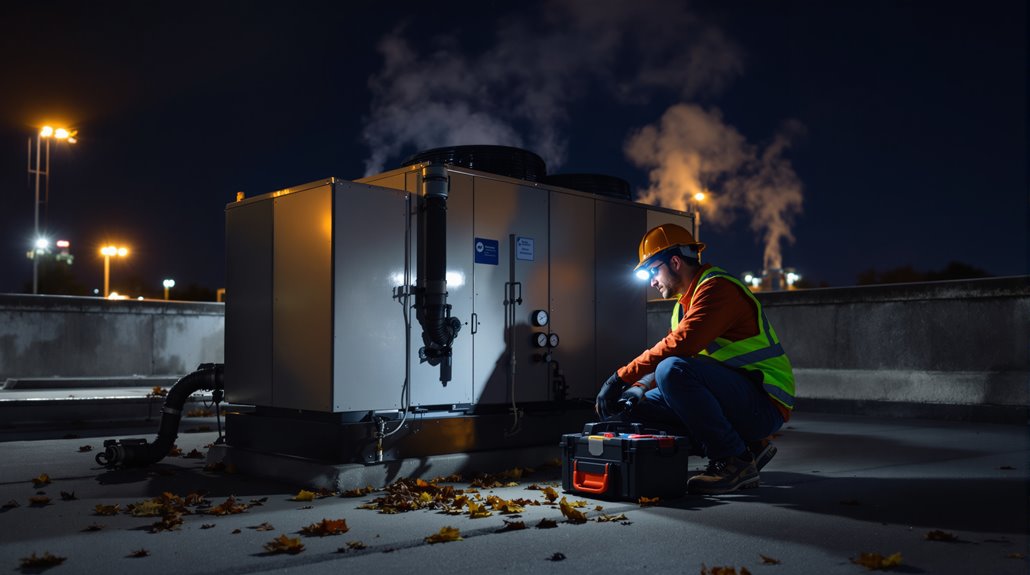
What After-Hours Heating Emergencies Actually Cost Landlords
When a heating system fails after hours, you're not just paying for the repair—you're facing overtime labor rates that can double or triple the standard cost of the same fix done during business hours. If the emergency disrupts your tenant enough to push them toward leaving, you then absorb turnover costs that typically run $1,000–$3,000 or more once you account for vacancy loss, cleaning, and re-leasing. For context, an HVAC system on a bi-annual service schedule costs roughly $150 per year—a fraction of the $400–$1,000 an emergency repair commands, often at peak summer or winter rates. Breaking down these compounding costs makes clear why a single preventable heating failure often costs landlords far more than a full season of routine maintenance.
Emergency Repair Bill Breakdown
After-hours heating emergencies carry a predictable cost structure that most landlords underestimate until the first bill arrives. Emergency costs stack quickly, and repair estimates rarely reflect the full financial hit you'll absorb.
Here's what typically drives the bill:
- After-hours labor rates – HVAC technicians charge 1.5x to 2x standard rates for evenings, weekends, and holidays.
- Emergency dispatch fees – Expect $150–$300 added before a technician touches anything, separate from repair estimates entirely.
- Expedited parts procurement – Sourcing components outside normal supply chains adds 20–40% to standard part costs.
A single October heating failure can run $800–$2,500 before the repair is complete. Multiply that across one tenant-occupied winter season, and the emergency costs become a serious margin problem. Property specialists who follow quarterly HVAC filter changes and scheduled servicing routines dramatically reduce the likelihood of these failures reaching emergency status in the first place.
Tenant Turnover Financial Impact
The repair bill is only part of what a heating emergency costs you. Tenant turnover costs are where landlords feel the real financial hit. When a tenant leaves because of a poorly handled emergency, you're looking at lost rent, cleaning, listing fees, and screening costs — often totaling one to two months of rental income.
Tenant retention strategies exist precisely to prevent this cycle. A tenant who experiences a heating failure on a cold October night and gets no response by morning starts looking for a new place. It's that straightforward.
Property specialists interrupt this pattern by ensuring after-hours heating issues get handled quickly and professionally. Tenants who feel supported stay longer, renew leases, and cost you far less than finding a replacement ever would. In fact, landlords who avoid costly property management firms by using streamlined platforms report stronger retention outcomes precisely because tenants have direct access to a familiar property specialist who knows their home.
Overtime Labor Rate Costs
Most landlords don't realize how steep after-hours HVAC labor rates run until they're already on the phone with a technician at 11 p.m. on a Friday. Overtime costs hit fast and compound quickly.
Here's what you're typically paying outside business hours:
- 1.5x–2x standard labor rates for evenings and weekends
- Emergency dispatch fees ranging from $75–$200 on top of hourly labor
- Minimum hour charges of 2–4 hours regardless of actual repair time
Without proactive labor management, a single October heating failure can run $400–$900 before parts. Multiply that across multiple units or back-to-back cold snaps, and the financial exposure becomes significant. Preventing these calls isn't just about tenant comfort—it's a direct cost-control strategy. A tailored preventative maintenance plan can identify heating vulnerabilities before temperatures drop, eliminating the conditions that lead to these costly emergency calls in the first place.
Preventative Steps Property Specialists Take Before the First Cold Night
Before the first cold night hits, property specialists run through a structured preventative checklist designed to catch heating problems before they become emergencies. Seasonal inspections typically cover furnace filter replacements, thermostat calibration, pilot light verification, and duct integrity checks. Specialists also test carbon monoxide detectors and confirm that emergency shutoffs are accessible and functional.
This preventative maintenance approach identifies worn components, failing igniters, or restricted airflow before temperatures drop and tenant demand spikes. Catching a cracked heat exchanger in September costs far less than an emergency HVAC call at midnight in October. Inspections also include ductwork cleaning and lubrication of moving parts to ensure consistent airflow and system efficiency heading into the colder months.
You get fewer after-hours calls, lower repair costs, and tenants who aren't left without heat during the coldest nights of the year. Prevention isn't optional—it's the core of what property specialists do.
How Property Specialists Catch Heating Problems Early
Catching heating problems early depends on more than seasonal inspections—it requires consistent, systematic monitoring between visits. Your property specialist uses proactive maintenance protocols and early detection methods to identify issues before they become after-hours emergencies.
Three indicators specialists monitor between visits:
- Tenant-reported performance changes – Unusual cycling, uneven heat distribution, or rising energy costs often signal developing mechanical failures.
- Filter and airflow tracking – Restricted airflow accelerates system strain, making scheduled filter checks a critical early detection checkpoint.
- Equipment age and service history – Older systems with irregular maintenance records get flagged for closer monitoring as temperatures drop.
This approach keeps small inefficiencies from turning into cold-night breakdowns that disrupt your tenants and your schedule. Regular inspections by local, licensed specialists can catch developing heating issues early, reducing the likelihood of costly emergency repairs during the coldest months of the year.
What Happens When a Tenant Reports No Heat at 10 PM
When your tenant reports no heat at 10 PM, your property specialist responds immediately—no waiting until morning. Your specialist contacts the tenant directly to gather details: thermostat settings, error codes, recent system behavior, and whether the outage is isolated or affecting the whole unit. Using that information, your specialist diagnoses the likely cause remotely before deciding whether a same-night dispatch or a next-morning repair is the right call. Landlords are legally obligated to maintain essential services like heating, which means after-hours response isn't optional—it's a baseline requirement for keeping the property habitable.
Immediate Specialist Response Protocol
A 10 PM no-heat call doesn't go to voicemail—your dedicated RentalRiff property specialist picks it up directly. Their response strategies follow a structured sequence designed to diagnose fast and act faster, keeping tenant communication clear and stress-free throughout.
Here's what happens immediately:
- Triage the issue — The specialist asks targeted questions to determine whether it's a thermostat fault, pilot light failure, or a system-wide HVAC breakdown.
- Deploy a vetted technician — If on-site intervention is needed, a qualified technician gets dispatched within the hour.
- Provide interim solutions — Tenants receive immediate guidance, including temporary heating options, while repairs are arranged.
Your tenant stays informed. Your property stays protected. Nothing waits until morning.
Diagnosing the Problem Remotely
Before a technician ever sets foot on the property, your RentalRiff specialist works through a structured remote diagnostic to isolate the cause. Using tenant communication as a diagnostic tool, your specialist asks targeted questions: Is the thermostat displaying power? Have circuit breakers tripped? Is the furnace producing any sound or airflow? Are multiple units affected or just one?
These remote diagnostics aren't guesswork—they're a structured triage process that narrows the failure point before anyone rolls a truck. If the issue is a tripped breaker or incorrect thermostat settings, your specialist walks the tenant through the fix immediately. If it's a mechanical failure, your specialist arrives already knowing what parts and tools the job likely requires, cutting repair time considerably.
Why a Dedicated Property Specialist Is Your Best Defense Against Heating Emergencies
Having a single, dedicated property specialist assigned to your rental means someone already knows your heating system before a problem starts. They've reviewed your maintenance tracking history, understand your equipment's age and quirks, and have already built rapport through tenant communication. That familiarity cuts response time dramatically when October temperatures drop overnight.
A dedicated specialist gives you three critical advantages:
- Faster diagnosis — no time wasted learning your system's layout or history during an emergency
- Proactive scheduling — maintenance tracking flags aging components before they fail mid-winter
- Consistent tenant communication — tenants already trust their specialist, so they report issues earlier instead of waiting until it's urgent
That continuity isn't a convenience. It's what separates a minor repair call from a full heating emergency.
Frequently Asked Questions
Does Rentalriff Handle Heating Emergencies for Multi-Unit Buildings or Only Single-Family Rentals?
RentalRiff's rental property management covers both multi-unit buildings and single-family rentals. Your dedicated property specialist handles heating system maintenance and emergencies across all property types, ensuring tenants stay supported regardless of your portfolio's size.
Which Cities Does Rentalriff Currently Serve for After-Hours Heating Emergency Support?
You'll find RentalRiff's after-hours heating emergency support across Seattle, Tacoma, Bend, Portland, Denver, and San Diego—cities where rental market trends demand reliable tenant safety solutions your dedicated property specialist actively manages.
How Quickly Can a Property Specialist Respond to a Tenant's No-Heat Complaint?
Your dedicated property specialist prioritizes emergency response to no-heat complaints, contacting your tenant promptly—often within hours. This swift action maintains tenant satisfaction and prevents minor heating issues from escalating into costly, uncomfortable situations.
Can Landlords Track What Their Property Specialist Does During After-Hours Emergencies?
Yes, you can track your property specialist's after-hours activity through RentalRiff's property management updates. They'll log all tenant communication, repair actions, and emergency responses, keeping you informed without requiring your direct involvement.
Does Rentalriff Coordinate Directly With HVAC Contractors, or Does the Landlord Arrange That?
Your property specialist handles all HVAC Coordination and Contractor Communication directly—you don't arrange anything. They contact, schedule, and manage qualified HVAC contractors on your behalf, keeping you informed without requiring your direct involvement in the process.
Conclusion
Heating emergencies don't have to define your October. With a dedicated property specialist managing preventative maintenance, early detection, and tenant communication, you're eliminating the conditions that create after-hours crises in the first place. You're not just reacting faster — you're preventing the problem entirely. If you're still handling heating issues alone, this is the season to change that approach before the temperature drops and your phone starts ringing.