
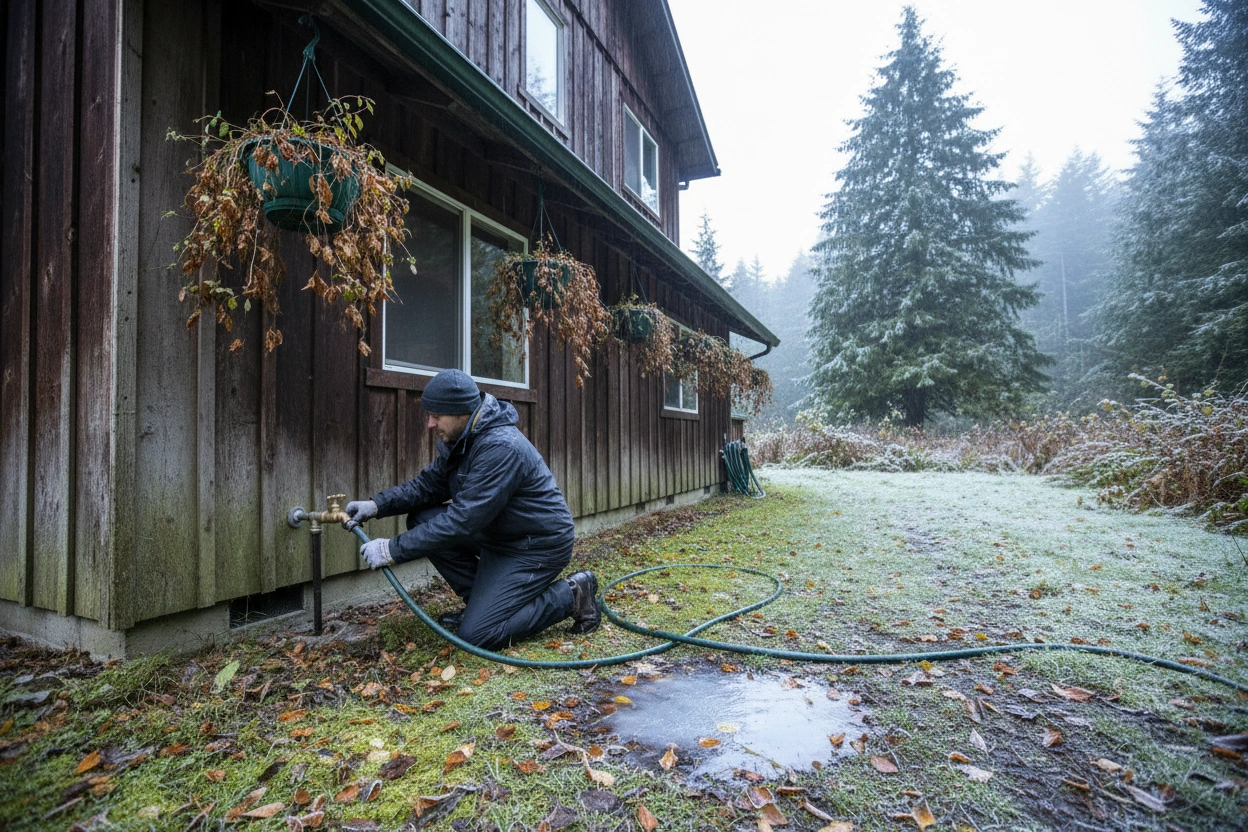
You'll want to shut off and drain your exterior hose bibs the moment nighttime temperatures drop below 35°F. In Seattle and Portland, that window typically opens in late October through November. Bend landlords need to act earlier, around mid-October. Don't let mild fall weather lull you into waiting—one overnight freeze can burst a pipe and trigger costly repairs. The details on timing, faucet types, and who's responsible are all ahead.
Key Takeaways
- Shut off and drain exterior hose bibs when nighttime temperatures consistently drop below 35°F to prevent freeze damage.
- Seattle and Portland face freeze risks from late November to February, but October cold snaps can occur unexpectedly.
- Bend, Oregon experiences earlier and longer freeze seasons, requiring winterization starting around mid-October.
- Leaving a hose attached to a frost-free bib eliminates its freeze protection, making disconnection essential before winter.
- Landlords should educate tenants about shutoff valve locations and winterization responsibilities during move-in, documented in writing.
Does Your Rental Have a Frost-Free Hose Bib or a Standard Outdoor Faucet?
Before you can determine when to shut off your hose bib, you need to know which type you have. Standard outdoor faucets sit flush with the exterior wall, leaving water in an exposed pipe that freezes once temperatures drop below 32°F. Frost-free hose bibs, by contrast, have a stem that extends 6–12 inches into the conditioned wall, so the shutoff point stays above freezing.
Check the spigot's depth by measuring how far the body extends into the wall. Frost-free benefits include reduced burst risk and simpler faucet maintenance through winter, but they're not foolproof—leaving a hose attached traps water in the stem and eliminates that protection entirely. Knowing your faucet type determines your winterization timeline and how much intervention your rental actually needs. Older rental units are especially vulnerable to freeze-related plumbing failures, as construction that predates current building code standards often lacks the insulation and sealing necessary to protect pipes running through exterior walls.

Signs Your Hose Bib Froze Last Winter and Already Needs Replacement
If your hose bib froze last winter, it may already be failing before you even start this season's winterization. Inspect it now rather than waiting for a tenant to report a problem. Common signs of freeze damage include:
- Reduced water flow when the bib is fully open
- Water dripping from the handle or packing nut
- Interior wall staining or moisture near where the pipe penetrates the wall
- Corrosion or cracking on the faucet body
These are critical maintenance tips to act on before temperatures drop again. Frozen pipes that thawed undetected often leave behind hairline fractures that worsen under pressure. If you're seeing any of these indicators, replace the hose bib now. Delaying increases your liability and repair costs considerably. Interior wall moisture from a damaged hose bib can also create the excessive moisture conditions that lead to mold growth, compounding your repair costs and landlord obligations under Washington state law.
When Seattle, Portland, and Bend Landlords Need to Start Worrying About Frozen Hose Bibs
Once you've addressed any existing hose bib damage, the next step is knowing when to act before freeze risk returns. Timing varies across markets. In Seattle and Portland, sustained freezes typically hit between late November and February, but surprise cold snaps can occur in October. Bend runs colder and higher in elevation, so freeze risk starts earlier—often mid-October—and lasts longer into spring.
A practical maintenance tip: shut off and drain exterior hose bibs when nighttime temps consistently drop below 35°F. Don't wait for a hard freeze warning. Frozen pipes don't care about forecasts. Code in Oregon and Washington doesn't mandate tenant notification for shutoffs, but clear communication reduces confusion and prevents tenants from reconnecting hoses mid-winter, which defeats the purpose entirely. Beyond hose bibs, insulating exposed pipes throughout the property is a critical cold-weather step that can prevent costly damage before temperatures bottom out.
Why Landlords Always Wait Too Long to Shut Off Hose Bibs
Even when you know the freeze risk is real, it's easy to convince yourself you've got one more week before it matters. Fall weather in the Pacific Northwest and Colorado tends to stay mild long enough to make outdoor faucets feel like a low-priority item, and since hose bibs sit outside the unit, they don't show up in your day-to-day line of sight the way a leaky faucet or broken heater would. That combination of forgiving temperatures and physical distance from the problem is exactly why most landlords end up acting after the damage rather than before it. Fluctuating temperatures cause expansion and contraction in plumbing that can silently stress pipe connections long before a visible failure gives you any warning.
The "One More Week" Trap
Most landlords know they should shut off exterior hose bibs before freezing temperatures hit—but knowing and doing are two different things. The "one more week" trap is real, and it's how pipes burst. You push it off because:
- The forecast looks mild and you assume you have more time
- Maintenance reminders get buried under other urgent property tasks
- Seasonal preparations feel less pressing when tenants haven't complained
Each delay increases your exposure. A single overnight freeze is enough to crack a hose bib or split the pipe behind the wall. That repair typically runs $300–$800, not counting drywall, water damage, or tenant displacement. The math isn't complicated—waiting costs more than acting early. Using property management software to schedule seasonal shutoffs in advance removes the human tendency to delay until it's too late.
Fall Weather Feels Forgiving
Fall weather is deceptive—60-degree afternoons make it hard to justify crawling into a crawlspace or tracking down the interior shutoff for an exterior bib that still feels months away from being a problem. But that's exactly how freeze damage happens. Pacific Northwest temperatures don't drop gradually—they spike overnight, often before you've completed your fall maintenance checklist. A hose bib left pressurized during an early freeze can crack the valve body or split the supply line behind the wall, neither of which is visible until water damage surfaces inside. Weather preparedness means acting on the calendar, not the thermometer. When overnight lows start brushing 35°F, the decision window is already closing. Waiting for it to "feel" like winter is the most reliable way to miss the shutoff entirely.
Out of Sight, Out of Mind
Hose bibs don't fail loudly—they fail silently, behind drywall, under subfloor, or inside a crawlspace you won't enter again until something's already wrong. Without structured maintenance reminders, winter preparations get delayed until a tenant reports water damage. Scheduled inspections can identify potential issues before they escalate into costly cold-weather failures.
Here's why landlords consistently wait too long:
- No visual cue triggers action. Exterior bibs look identical whether they're winterized or not.
- Tenant schedules create hesitation. Coordinating access feels complicated, so you defer.
- Mild stretches mask urgency. A warm October convinces you there's more time.
How to Shut Off and Drain a Hose Bib Before It Freezes
Shutting off and draining your hose bibs before freezing temperatures arrive is one of the simplest ways to prevent a costly burst pipe. Start by locating the interior shutoff valve—typically found in a crawl space, basement, or utility room along the same wall as the exterior spigot. Turn it clockwise until fully closed. Next, head outside and open the hose bib to release any remaining pressure and drain residual water from the line. Leave the bib open briefly, then close it. If your property has frost-free sillcocks, drainage happens automatically once you shut off the valve—but only if no hose is attached. Following these maintenance tips each fall is straightforward frost protection that takes minutes and can prevent thousands in water damage repairs. Landlords who delay minor repairs risk allowing small plumbing vulnerabilities to escalate into significant water damage that far exceeds the cost of seasonal preventive care.
Who Shuts Off Hose Bibs When You're Not Near Your Rental
If you own a rental property in Seattle, Portland, or Denver but don't live nearby, you can't count on tenants to shut off and drain hose bibs before a freeze. Tenants often don't know where the shutoff valve is, don't recognize the urgency, or simply forget. Having a local support contact who can step in and handle it directly closes that gap before a burst pipe turns into an expensive repair. Regular property walkthroughs and inspections can also help identify vulnerable hose bibs and shutoff valve locations before winter arrives, giving you a documented record of the property's condition and reducing the likelihood of freeze-related damage going unnoticed.
Tenants Rarely Handle It
Most tenants won't shut off hose bibs before the first freeze—not because they don't care, but because they don't know it's their responsibility, don't know how to do it, or simply aren't thinking about it.
Without clear tenant responsibilities outlined and proactive maintenance reminders sent, this task almost always falls through the cracks. Here's what typically happens:
- Tenants assume the landlord or property manager handles it
- Tenants don't know where the shutoff valve is located
- Tenants overlook it entirely as temperatures drop
You can't rely on tenants to catch this. Even well-intentioned renters miss seasonal maintenance tasks that aren't explicitly assigned to them. If you're not near your rental when the first freeze hits, no one's covering it unless you've planned ahead.
Remote Owners Need Help
Owning a rental property from a distance creates a real operational gap when freeze season hits. You can't rely on remote monitoring alone to handle a task that requires someone physically on-site to locate the interior shutoff valve, drain the line, and confirm the bib is winterized correctly. Without local hands, that job doesn't get done.
That's where structured property management support changes things. Rather than scrambling to find a last-minute handyman or hoping your tenant steps up, you need a reliable local contact who understands freeze timelines, knows your property's plumbing layout, and executes shutoffs before temperatures drop. If you're managing from Seattle, Portland, or anywhere outside your rental's zip code, having that on-the-ground coverage isn't optional—it's how you avoid a preventable and costly pipe failure.
Local Support Fills Gaps
When you're not near your rental, the shutoff still has to happen—and it has to happen on schedule. Local resources close that gap without putting it on you or hoping tenants figure it out.
Your options for keeping the shutoff on track:
- Assign a local contact — a trusted neighbor or handyman with clear written instructions and access.
- Use tenant education — walk tenants through the shutoff process at move-in and document it in writing.
- Hire a property support service — a dedicated local specialist handles the task, confirms it's done, and flags any issues.
Each option requires a defined trigger date and clear accountability. Without both, the task drifts—and a frozen pipe doesn't wait for convenience.
Frequently Asked Questions
Can a Frozen Hose Bib Void My Rental Property Insurance Coverage?
Yes, frozen pipes from a neglected hose bib can jeopardize your insurance claims. If you've ignored seasonal shutoff requirements, your insurer may deny coverage, citing lack of preventative maintenance as the reason.
How Much Does Replacing a Burst Outdoor Faucet Typically Cost Landlords?
You'll typically spend $150–$300 on outdoor faucet maintenance and repair cost estimates for a burst hose bib, covering parts and labor. Frost-free replacements run higher but reduce your long-term risk considerably.
Should Hose Bib Shutoff Instructions Be Included in the Tenant Lease?
Yes, you should include hose bib shutoff instructions in your lease agreements. Embedding tenant education directly into the lease guarantees tenants know their winterization responsibilities before the first freeze, reducing your liability and costly burst faucet repairs.
Are Landlords or Tenants Responsible for Winterizing Outdoor Faucets Legally?
State law doesn't clearly assign hose bib winterization, so it defaults to your lease terms. You'll want to define tenant responsibilities explicitly—otherwise, landlord obligations under habitability codes may make the repair cost yours.
Can I Install a Smart Shutoff Valve on My Rental's Hose Bib?
You can install a smart shutoff valve, and you'll gain real smart valve benefits like remote freeze protection. Watch for installation challenges—you'll need to guarantee compatibility with existing plumbing and verify it meets local code requirements.
Conclusion
Don't let the Pacific Northwest's mild reputation catch you off guard. You've got a narrow window before the first freeze hits, and waiting too long means burst pipes, water damage, and repair bills that kill your margins. Shut off your hose bibs before overnight temps approach freezing, drain the lines completely, and document it. If you can't get there yourself, a RentalRiff property specialist handles it before the damage is already done.