
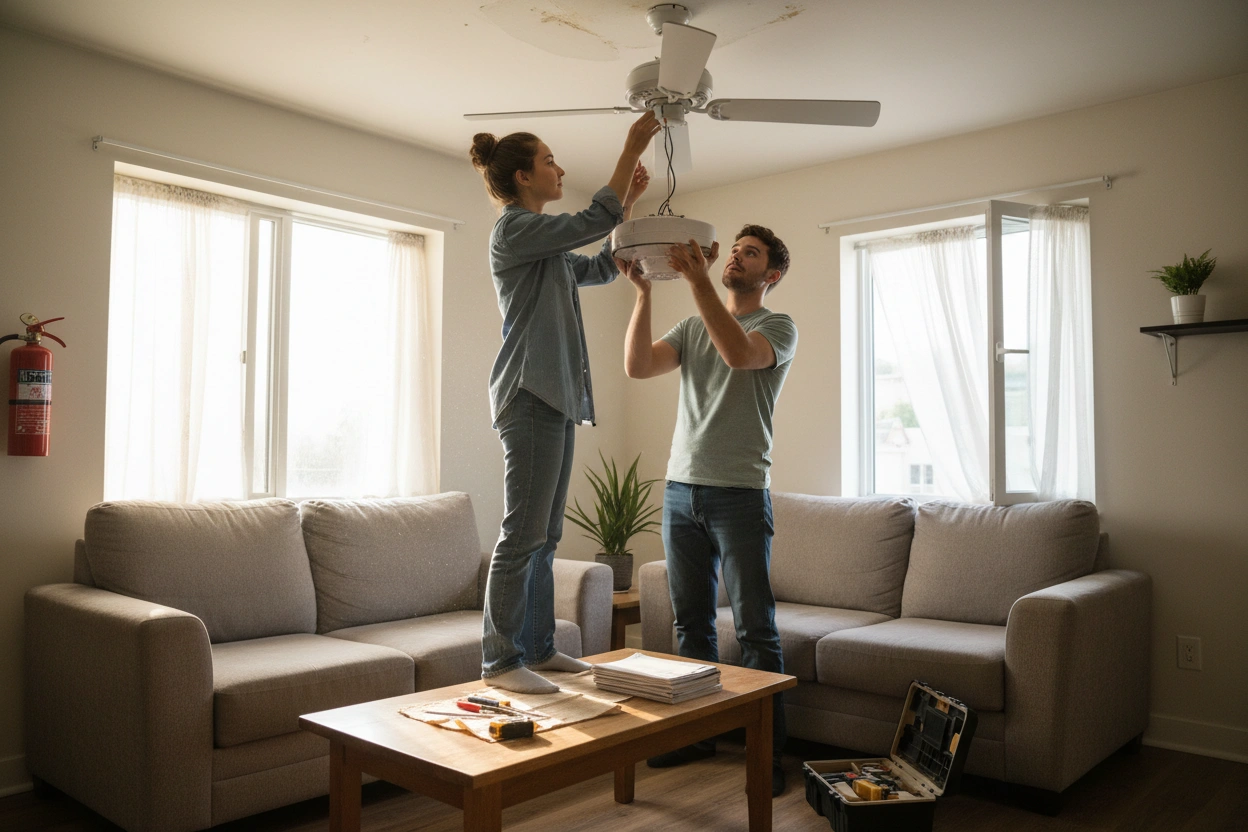
Installing a ceiling fan in a rental property means you'll need to meet National Electrical Code standards, use a UL-listed fan-rated electrical box, and maintain proper blade clearances. You're also responsible for selecting energy-efficient models, educating tenants on safe operation, and scheduling routine inspections at every turnover. Local housing codes may create additional compliance obligations you can't ignore. Keep exploring to guarantee your installation, safety protocols, and maintenance practices fully protect your investment.
Key Takeaways
- Shut off the circuit breaker and verify power is off with a non-contact voltage tester before beginning any ceiling fan installation.
- Use a UL-listed, fan-rated electrical box to safely support the fan's weight and ensure National Electrical Code compliance.
- Fan blades must hang at least 7 feet above the floor with 18 inches of clearance from walls.
- Inspect fans at every tenant turnover, checking for blade warping, loose screws, and dust buildup to prevent costly repairs.
- Set blades counterclockwise in summer for cooling and clockwise at low speed in winter to redistribute warm air.
Do Rental Properties Actually Need Ceiling Fans?
Ceiling fans aren't legally required in most rental properties, but local housing codes and lease terms can complicate that answer. Some jurisdictions require adequate ventilation in bedrooms and living areas, and existing ceiling fan wiring or fixtures may trigger compliance obligations if left non-functional.
Check your local housing code before removing or disabling installed units.
Beyond regulatory considerations, energy efficiency and tenant preferences carry practical weight. Ceiling fans reduce HVAC load, lowering utility costs in climate-sensitive markets like San Diego or Denver.
Tenants increasingly expect them, particularly in bedrooms. If your lease lists ceiling fans as included appliances or amenities, you're contractually obligated to maintain them.
That classification matters—it shifts the fan from optional feature to required functional equipment, with maintenance responsibilities attached. Additionally, landlords have an obligation to provide a habitable living environment, which can include ensuring that ceiling fans are functional and effectively installed.
Choosing the Right Ceiling Fan for a Rental
Once you've confirmed whether ceiling fans are required or expected at your rental, selecting the right unit becomes a practical decision with long-term cost implications.
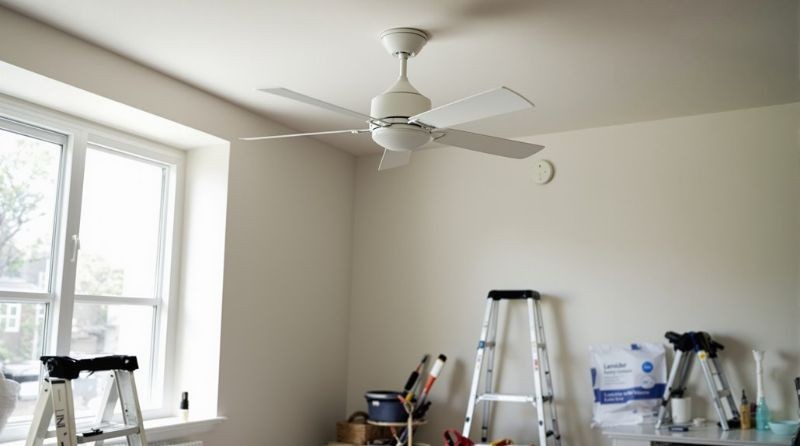
Prioritize ENERGY STAR-certified models, as energy efficiency directly affects tenant utility costs and your property's marketability. Fan styles should match the room's ceiling height and square footage—low-profile hugger fans suit rooms with ceilings under eight feet, while standard or extended-rod fans work for higher clearances.
For rentals, choose brushed nickel or matte black finishes that resist visible wear and clean easily. Avoid ornate or fragile designs that increase maintenance liability.
Select models with integrated LED lighting and remote or wall-switch compatibility to reduce long-term bulb replacement costs and minimize tenant support calls related to operation. Additionally, being aware of maintenance responsibilities ensures that both landlords and tenants understand their roles in keeping the fan in good working order.
How to Install a Ceiling Fan Safely
Before you touch any wiring, shut off the circuit breaker controlling the fan's junction box and confirm the power is dead using a non-contact voltage tester.
Match your wiring connections by color—black to black, white to white, and bare copper to the ground screw—then secure each with a wire nut and wrap it with electrical tape.
Once your wiring is confirmed solid, attach the mounting bracket to the ceiling box, verifying the box is rated for fan support, since a standard light fixture box won't handle the torque and weight a spinning fan generates. Additionally, it's important to ensure that the installation aligns with excellent service principles to support a positive tenant experience.
Wiring and Electrical Basics
Installing a ceiling fan safely starts with one non-negotiable step: cutting power to the circuit at the breaker panel and confirming it's dead with a non-contact voltage tester before touching any wiring.
Electrical safety depends on correctly identifying your wiring types—older homes may have two-wire setups without a neutral, while modern installations typically include black (hot), white (neutral), and green or bare copper (ground) conductors.
Match wires by function, not just color—always verify with your tester. If you're adding a separate light kit with independent switching, you'll need a three-wire cable run from the switch.
Never exceed the circuit's amperage rating. If the existing wiring doesn't support the fan's requirements, bring in a licensed electrician rather than improvising a connection.
Mounting and Bracket Setup
With the wiring confirmed safe and conductors properly identified, your next concern is whether the ceiling can physically support the fan.
Standard electrical boxes aren't rated for fan loads—you'll need a UL-listed fan-rated box capable of supporting at least 35 pounds, with 70 pounds preferred for heavier units.
Mounting techniques vary based on ceiling construction. For joist-mounted installations, secure the box directly to framing.
When joists aren't accessible, use an expandable brace bar rated for ceiling fans—never a standard retrofit box.
Bracket types include flush mounts for low ceilings, downrods for standard height, and angled mounting kits for vaulted surfaces.
Each requires specific hardware. Confirm all fasteners are torqued to manufacturer specifications and that the canopy fully conceals the box before proceeding to blade attachment.
Ceiling Fan Safety Rules Every Landlord Should Know
Before you install a ceiling fan in any rental unit, you need to understand the safety requirements that govern the installation.
Blades must hang at least seven feet above the finished floor. The ceiling box must be rated to support the fan's weight and motion load, and all wiring must comply with the National Electrical Code as well as any local amendments enforced in your jurisdiction.
Skipping any of these requirements puts your tenants at risk and exposes you to liability.
Minimum Blade Height Requirements
Ceiling fan blade height is governed by clear safety standards that landlords must meet before installation. The National Electrical Code (NEC) requires fan blades to sit a minimum of 7 feet above the finished floor.
In rooms with lower ceilings, you'll need a flush-mount or "hugger" fan to meet this requirement. Blades must also maintain at least 18 inches of clearance from surrounding walls.
When accounting for blade height considerations, don't let tenant preferences override code compliance. A tenant may request a specific fan style, but if it can't be installed at the required height, it's not an option.
Always verify ceiling dimensions before purchasing equipment, and document your measurements to confirm every installation meets local and NEC standards.
Weight And Ceiling Support
Most standard electrical boxes aren't rated to support a ceiling fan's combined weight and dynamic load. A typical fan generates continuous movement that stresses mounting points far beyond what a stationary light fixture requires.
You must install a fan-rated electrical box capable of supporting a minimum of 35 pounds, though heavier models require boxes rated for 50 pounds or more.
Weight distribution matters across the entire mounting assembly, not just the box itself. If your ceiling joists don't align with the installation point, use UL-listed support brackets designed specifically for fan installations between joists.
These brackets anchor directly into structural framing and handle both static weight and rotational force. Never use standard brace bars intended for light fixtures—they won't maintain structural integrity under a fan's dynamic load.
Electrical Code Compliance
Every ceiling fan installation in a rental property must comply with the National Electrical Code (NEC), local amendments, and jurisdiction-specific permit requirements.
You'll need a dedicated circuit if the fan includes integrated lighting, and all wiring connections must meet NEC Article 422 standards for appliance installations. Use only UL-listed fixtures rated for the specific application—damp-rated for covered patios, wet-rated for exposed outdoor areas.
Schedule electrical inspections before tenant occupancy to confirm compliant wiring, proper grounding, and secure junction box mounting. Keep inspection records on file as documentation of code adherence.
Prioritize tenant education by providing written instructions covering safe speed settings, blade direction adjustments, and prohibited modifications.
Tenants who understand operational limits are less likely to cause electrical hazards or void equipment warranties.
Seasonal Settings That Keep Tenants Comfortable
Although it's a small detail, ceiling fan direction directly affects tenant comfort and energy efficiency across seasons. Most fans include a wall switch or pull chain that reverses blade rotation.
In summer, set blades to rotate counterclockwise when viewed from below. This pushes air downward, creating a wind-chill effect that lets tenants raise thermostat settings without sacrificing comfort.
In winter, reverse the rotation to clockwise at low speed. This pulls cool air up and redistributes warm air trapped near the ceiling.
Document the correct seasonal settings in your tenant welcome materials. Clear instructions reduce support calls and align with tenant preferences without requiring ongoing intervention.
A simple laminated card near the fan switch is a practical, low-cost solution. Additionally, ensuring optimal HVAC performance enhances the overall comfort and satisfaction of tenants in the property.
Ceiling Fan Maintenance That Prevents Bigger Problems
Regular ceiling fan maintenance prevents minor issues from escalating into costly repairs or tenant complaints. Scheduling regular inspections and applying proper fan cleaning techniques keeps units operating safely and efficiently.
During each inspection, address these three maintenance priorities:
- Blade condition — Check for warping, cracks, or imbalance. Unbalanced blades strain the motor and create wobbling that tenants will report.
- Hardware tightness — Retighten mounting screws, blade brackets, and canopy bolts. Vibration gradually loosens fasteners over time.
- Dust and debris removal — Clean blades using a damp microfiber cloth or a blade duster. Buildup adds weight imbalance and reduces airflow efficiency.
Inspect ceiling fans at every turnover and at least once annually.
Catching small mechanical issues early extends equipment lifespan and reduces your overall maintenance costs. Additionally, regular inspections align with a proactive approach to property management, ensuring tenant satisfaction and preserving property value.
Frequently Asked Questions
Can Tenants Install Their Own Ceiling Fan Without Landlord Permission?
You shouldn't make tenant modifications like installing ceiling fans without landlord permission. Different fan types require electrical work that affects the property's structure, so you must get written approval before proceeding with any installation.
Who Is Responsible for Paying for Ceiling Fan Repairs?
Your lease dictates repair costs responsibility. If you've caused damage through misuse, you're liable under tenant obligations. For landlord-installed fans with normal wear, they're typically responsible for covering repairs.
Are Ceiling Fans Considered a Permanent Fixture in Rental Agreements?
Generally, ceiling fans are considered permanent fixtures in rental agreements once installed, as they're bolted to the structure. You'll want to reference your specific lease terms, since local regulations can affect fixture classification.
Can a Ceiling Fan Increase the Rental Value of a Property?
Yes, a ceiling fan can increase your rental value. It enhances aesthetic appeal, signals energy efficiency to prospective tenants, and justifies higher rent by reducing cooling costs—making your property more competitive in the rental market.
What Should Landlords Do if a Tenant Damages a Ceiling Fan?
Document the damage, review your lease for tenant responsibilities, and charge repair or fan replacement costs accordingly. You'll want photographic evidence and move-in inspection records to support any deductions from the tenant's security deposit.
Conclusion
When you install and maintain ceiling fans correctly, you're protecting your investment and staying compliant with safety standards. Always verify that junction boxes are fan-rated, confirm proper blade clearance meets code requirements, and schedule routine inspections between tenancies. You're responsible for ensuring electrical connections remain secure and motors operate within manufacturer specifications. Don't treat ceiling fans as a set-and-forget upgrade — consistent maintenance keeps you liability-free and your units competitive in demanding rental markets.