
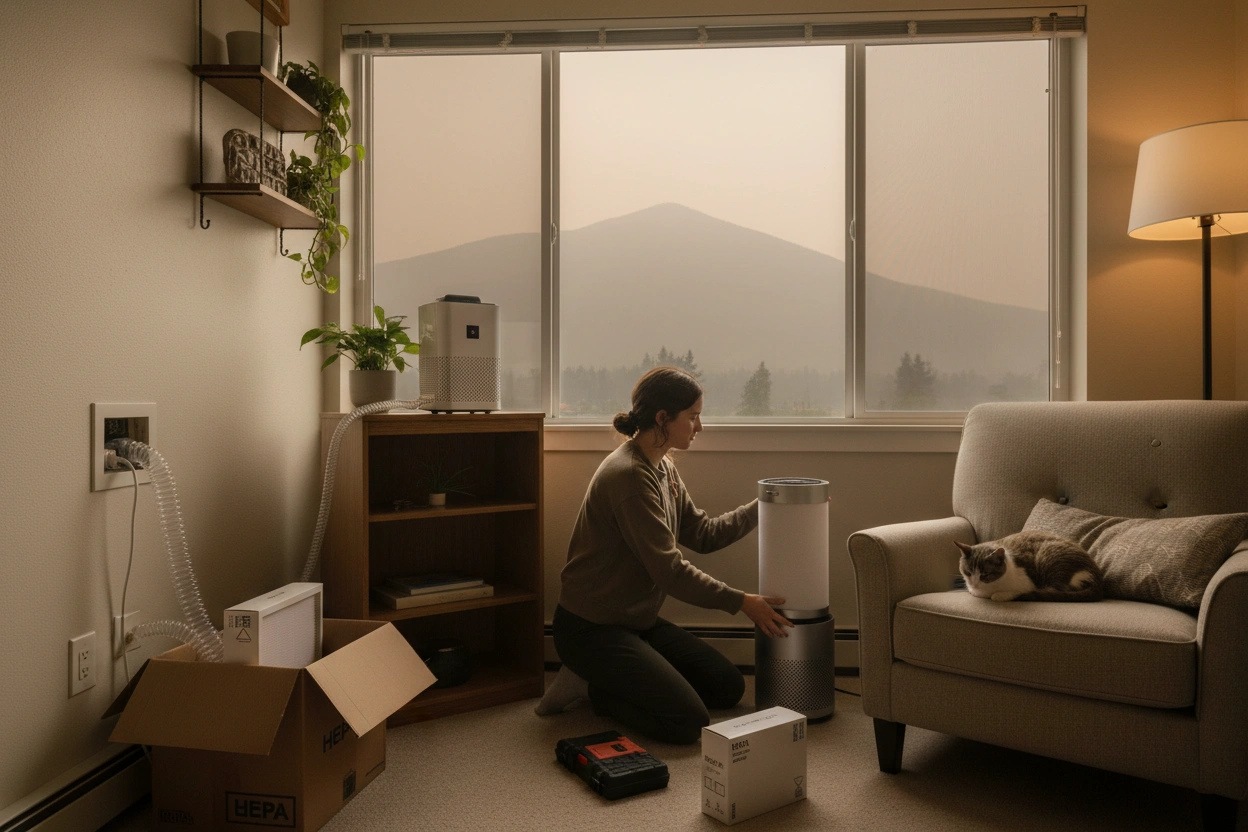
Wildfire smoke carries PM2.5 particles and VOCs that your standard HVAC filter can't adequately capture. You'll need at minimum a MERV 13-rated filter to intercept particles as small as 0.3–1.0 microns, and pairing it with a portable HEPA air purifier adds critical room-level protection. Activated carbon layers help neutralize odors and chemical compounds standard filters miss entirely. The right upgrade depends on your system type, budget, and how many units you're protecting—all of which break down further ahead.
Key Takeaways
- MERV 13 filters effectively capture wildfire smoke particles as small as 0.3–1.0 microns, making them the minimum recommended upgrade for forced-air HVAC systems.
- True HEPA air purifiers capture 99.97% of particles at 0.3 microns, providing reliable room-level protection in units without central HVAC.
- Combining MERV 13 HVAC filters with portable HEPA purifiers creates layered filtration, maximizing indoor protection during active wildfire smoke events.
- Filters require monthly inspection and replacement during smoke season, as heavy particulate exposure significantly shortens standard filter lifespan.
- Activated carbon filter layers address VOCs and odors from wildfire smoke that standard MERV or HEPA filters alone cannot capture.
Why Wildfire Smoke Is Harder to Filter Than Regular Air Pollution
Wildfire smoke is more chemically complex than typical urban air pollution, making it considerably harder to filter. Its smoke composition includes fine particulate matter (PM2.5), volatile organic compounds, carbon monoxide, and polyaromatic hydrocarbons—a mixture that standard HVAC filters aren't designed to capture effectively.
These filtration challenges matter because conventional fiberglass filters target larger particles, leaving sub-micron compounds to circulate freely. The health impacts are serious, with PM2.5 penetrating deep into lung tissue and triggering cardiovascular stress.
Environmental factors like wind patterns and fire proximity can shift air quality conditions rapidly, sometimes within hours. For property considerations, you're dealing with a dynamic threat that demands layered filtration strategies—not a single filter swap. Understanding what you're filtering against is the necessary first step. Additionally, integrating IAQ considerations into the renovation planning process can further enhance the effectiveness of filtration systems in multifamily housing.
MERV Ratings and HEPA Filters: What Actually Works for Smoke
Knowing what wildfire smoke contains shapes which filtration tools can actually stop it. MERV ratings measure a filter's ability to capture particles across specific size ranges.
For wildfire smoke, you'll need a minimum MERV 13 rating, which captures particles as small as 0.3–1.0 microns. MERV 11 and below won't intercept fine combustion particulates effectively.
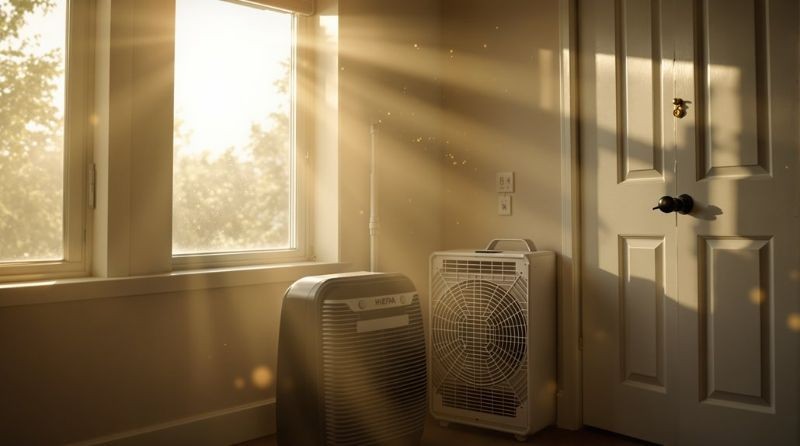
HEPA effectiveness surpasses standard HVAC filters because true HEPA captures 99.97% of particles at 0.3 microns—the most penetrating particle size. However, HEPA filters require standalone air purifiers since most HVAC systems can't handle their airflow resistance.
For rental units, combining a MERV 13 HVAC filter with a room-level HEPA purifier gives you layered protection that addresses both recirculated air and localized smoke infiltration during active wildfire events. Additionally, educating tenants on proper ventilation can further enhance indoor air quality and mitigate smoke effects.
The Best Air Filtration Upgrades for Rental Units
When upgrading air filtration in a rental unit, your two primary options are upgrading the HVAC system's built-in filter or adding a standalone portable air purifier—and in high-smoke environments, both together outperform either alone.
For HVAC systems, you'll want to match filter selection to the system's airflow capacity, since a MERV 13 filter that restricts airflow in an undersized system creates more problems than it solves. Regular maintenance of HVAC systems enhances efficiency and prevents breakdowns, ensuring optimal indoor air quality.
Portable units with a true HEPA filter and an activated carbon pre-filter give you the most targeted protection in specific rooms, particularly bedrooms and living areas where tenants spend the most time.
Top Filtration Upgrade Options
Choosing the right filtration upgrade depends on your HVAC system type, unit size, and tenant needs, but a few options stand out for rental applications.
For forced-air systems, upgrading to MERV-13 filters is one of the most cost-effective filtering techniques available—these capture fine particulate matter from smoke sources like wildfires without greatly restricting airflow.
Portable HEPA air purifiers work well in units without central HVAC, providing room-level filtration rated to capture 99.97% of particles at 0.3 microns.
For higher-end units, whole-home air purifiers that integrate directly into existing ductwork offer broader coverage.
ERV and HRV systems add another layer by controlling fresh air intake during high-smoke events.
Each option addresses different property configurations, so matching the upgrade to your specific setup determines its effectiveness.
Choosing the Right Filter
Selecting the right air filter starts with understanding your HVAC system's compatibility and your tenants' specific exposure risks.
Filter types vary considerably in performance, so match the MERV rating to your system's airflow capacity before purchasing.
Key factors to evaluate:
- MERV 13 filters capture fine wildfire smoke particles without overloading most residential HVAC systems.
- Filter lifespan shortens dramatically during active smoke events—inspect monthly and replace every 30–60 days seasonally.
- Static pressure ratings must align with your blower motor's capacity to prevent system strain.
- Filter dimensions should match the housing exactly to eliminate bypass gaps.
- Activated carbon layers add odor and VOC reduction that standard particulate filters don't provide.
Cross-reference your system's manual with filter specifications before committing to any upgrade.
How Much Do Indoor Air Quality Upgrades Cost Landlords?
Costs for indoor air quality upgrades vary widely depending on the scope of work, equipment tier, and whether installation requires HVAC modifications.
For budget planning purposes, here's a practical cost comparison to reference:
- Portable HEPA air purifiers: $100–$500 per unit
- Upgraded HVAC filters (MERV 11–13): $20–$60 per filter, replaced every 60–90 days
- Whole-home media air cleaners: $400–$1,200 installed
- ERV/HRV ventilation systems: $1,500–$4,000 installed
If your HVAC system requires duct modifications to handle higher-MERV filters, expect additional labor costs ranging from $200–$800.
Portable units offer the lowest entry point, while whole-system solutions deliver broader, more consistent air quality improvements. It's important to approach these upgrades with a commitment to making owners and tenants feel heard to ensure satisfaction and longevity.
Prioritize solutions that match your property's existing infrastructure to control costs effectively.
Which Upgrades Require a Pro vs. a Weekend Afternoon
- Replacing HVAC filters (MERV 11–13)
- Installing freestanding HEPA air purifiers
- Sealing window and door gaps with weatherstripping
Pro installation required:
- Whole-home air purifiers integrated into existing HVAC ductwork
- ERV or HRV ventilation systems requiring electrical and mechanical connections
Ductwork modifications and system-level integrations involve refrigerant lines, electrical panels, or structural penetrations—work that requires licensed HVAC technicians to maintain code compliance and warranty validity. Additionally, understanding the importance of preventative maintenance can help you prioritize air quality upgrades that protect both tenant health and property value.
Mishandled installations can void equipment warranties, reduce system efficiency, or create safety hazards that ultimately cost more to correct than the original pro installation would have.
How to Talk to Tenants About Air Quality During Smoke Season
Once you've sorted out which upgrades need a pro and which ones you can handle yourself, the next step is making sure your tenants actually know how to use those systems when air quality deteriorates.
Proactive communication strategies reduce tenant concerns and prevent misuse of filtration equipment. Send written guidance before smoke season begins—include filter replacement schedules, how to identify when portable air purifiers need servicing, and instructions for keeping windows sealed during high AQI events.
Reference local air quality indexes like AirNow.gov so tenants can self-monitor. Establish a clear reporting channel for air quality-related maintenance requests.
When tenants understand both the equipment and the conditions driving its use, they respond more effectively, and you reduce reactive service calls during the periods when outdoor air quality is most compromised. Additionally, fostering open communication ensures that tenants feel empowered to voice concerns and seek assistance as needed.
Frequently Asked Questions
Can Wildfire Smoke Filtration Upgrades Increase My Rental Property's Value?
Yes, wildfire smoke filtration upgrades can increase your property's value. These property enhancements improve indoor air quality, boosting tenant satisfaction and retention—making your unit more competitive, commanding higher rents, and reducing costly vacancy periods.
Are Landlords Legally Required to Provide Air Filtration During Wildfire Season?
There's no universal law requiring you to provide air filtration during wildfire season, but tenant rights laws and local air quality standards may obligate you to maintain habitable, smoke-free living conditions.
Does Renters Insurance Cover Health Issues Caused by Wildfire Smoke Exposure?
Renters insurance typically won't cover health risks from wildfire smoke exposure. Most policies exclude illness-related insurance claims. You'll need to consult your specific policy and a health insurance provider for medical coverage tied to smoke-related conditions.
How Long Does Wildfire Smoke Contamination Linger Inside a Rental Unit?
Wildfire smoke contamination can linger in your rental unit for days to weeks. Fine particles and gases from smoke penetration embed into surfaces, consistently degrading indoor air quality long after outdoor conditions improve.
Can Poor Indoor Air Quality During Smoke Season Justify a Tenant Breaking Their Lease?
Possibly. If you've failed to maintain habitable air quality, tenant rights laws may support lease termination. Review your lease agreements carefully—in states like Oregon and Washington, habitability standards can legally justify a tenant's early exit.
Conclusion
Wildfire smoke season isn't slowing down, and neither should your approach to indoor air quality. You've got actionable options — from MERV-13 filter upgrades to portable HEPA units — that deliver measurable protection for your tenants. Prioritize the upgrades that match your building type, budget, and tenant vulnerability. Document what you install, communicate clearly with renters, and reassess your filtration strategy each season. Proactive landlords don't just protect tenants — they protect their investment.