

When you manage repairs from a distance, your biggest mistakes include delaying responses until minor issues become major damage, trusting tenant diagnoses over professional evaluations, and hiring cheap, unvetted contractors who cut corners. You also risk missing silent property failures that compound unnoticed, and mismanaging tenant turnover in ways that expose deferred maintenance. Each mistake quietly erodes your cash flow, your property's condition, and your tenants' trust—and there's far more to unpack here.
Key Takeaways
- Delayed responses to repair requests cause minor issues like small leaks to escalate into costly, extensive damage over time.
- Relying on tenant descriptions for diagnosis often leads to misidentification of problems and incorrect contractor selection.
- Hiring cheap, unvetted contractors increases the risk of repeated failures, corner-cutting, and difficult accountability without on-site oversight.
- Neglecting routine property monitoring allows silent failures, such as roof leaks or HVAC issues, to worsen undetected.
- Poor maintenance management during tenant turnover exposes deferred repairs, inflating costs and extending costly vacancy periods.
The Hidden Cost of Delayed Repair Responses
When a repair request goes unanswered, the clock starts running against you. Every hour of delay compounds the problem—financially, legally, and relationally. A minor leak ignored becomes water damage. A broken HVAC unit in summer becomes a habitability complaint.
Repair urgency isn't just about fixing things quickly; it's about protecting your investment and your income. Slow responses erode tenant satisfaction faster than almost any other factor. Dissatisfied tenants leave, and turnover is expensive.
Distance amplifies every delay. You can't assess the situation directly, so small problems escalate before you even know they exist.
Without a reliable local system handling maintenance requests promptly, you're constantly reacting instead of managing. That reactive cycle costs you more than any repair ever should.
Why Tenants Cannot Diagnose the Problem for You
Tenants aren't property experts, and you shouldn't expect them to be. When a tenant reports "something leaking under the sink," that description tells you almost nothing actionable. Tenant expertise stops at noticing a problem — it rarely extends to identifying its source, severity, or urgency.
Communication barriers compound this further. A tenant describing symptoms through a text message creates interpretive gaps that lead to misdiagnosis, wrong contractors, and wasted money.
You can't rely on secondhand observations to make informed repair decisions from hundreds of miles away. Without a trained local professional evaluating the issue directly, you're fundamentally guessing. That guesswork delays resolution, frustrates tenants, and turns minor problems into expensive ones.
Accurate diagnosis requires eyes on the property — not a tenant's best guess.
Cheap, Unvetted Contractors Cost More in the Long Run
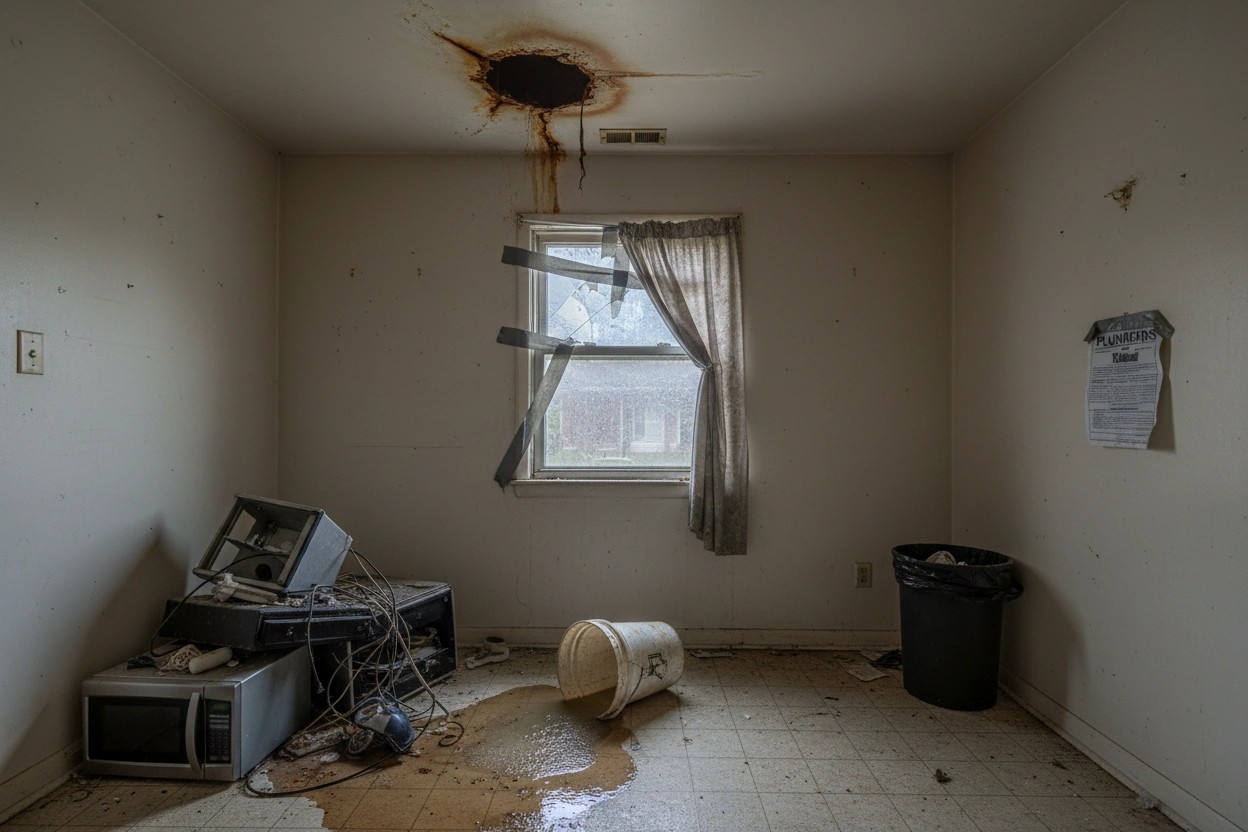
Finding a cheap contractor feels like a win until the callbacks start. Without proper contractor vetting, you're gambling with your property. Unlicensed, uninsured workers often cut corners, use substandard materials, or misdiagnose problems entirely—leaving you with repeated failures and compounding repair bills.
As a long-distance landlord, you can't physically inspect the work afterward. That makes accountability nearly impossible without a vetted professional on the ground.
The math is straightforward: a qualified contractor costs more upfront but delivers long term savings through durable repairs, fewer repeat visits, and reduced liability exposure. An unvetted contractor does the opposite.
Don't let the invoice be your only filter. Licensing, insurance, and a verifiable track record are non-negotiables—not optional upgrades.
What Breaks When No One Is Watching the Property
Contractor quality is only half the equation—the other half is knowing what's quietly deteriorating between visits. Unattended damage compounds fast, and seasonal wear doesn't pause because you're three states away.
These are the silent failures that blindside long-distance landlords:
- A slow roof leak soaks insulation for months before anyone notices.
- Clogged gutters from fall debris flood foundations by spring.
- HVAC filters go unchanged until the system burns out entirely.
- Minor plumbing drips rot subfloors beneath tenant-placed rugs.
- Weatherstripping fails silently, spiking utility costs and tenant frustration.
You can't catch what you can't see. Without consistent, local eyes on your property, small problems become expensive emergencies—and your tenants feel every bit of that neglect.
Every Tenant Turnover Is a Money Leak in Disguise
Every time a tenant walks out, the clock starts running on your cash flow. Vacancy days stack up fast, and without a structured approach, turnover drains more than you expect.
The problem isn't just repairs — it's the absence of maintenance scheduling that leaves you scrambling instead of executing. You don't know what broke, what was ignored, or what the next tenant expects until you're already behind.
Unmanaged turnovers expose deferred maintenance, failed inspections, and gaps between tenant expectations and actual property condition. Each delay costs rent, and each surprise repair inflates your budget.
RentalRiff systematically handles turnover maintenance so you're not reacting blind from across the country. They document, repair, and prepare your property before the next lease begins — on schedule, not whenever you can get someone there.
Managing Remotely Without Local Support Is the Biggest Mistake of All
When you manage a rental property remotely without local support, you're not just inconvenienced — you're structurally exposed.
Communication barriers compound every problem, and without boots on the ground, small issues become costly emergencies fast.
Without reliable remote support, you're vulnerable to:
- Tenants who stop reporting problems because nothing gets fixed
- Contractors who overbill because no one's verifying their work
- Repairs that drag on for weeks while your property deteriorates
- Emergencies that escalate overnight with no local point of contact
- Lease renewals lost because tenants feel ignored and undervalued
RentalRiff eliminates this exposure. Their local property specialists serve as your on-the-ground presence — handling tenant communication, coordinating repairs, and responding to emergencies before they spiral.
Remote ownership doesn't have to mean remote control.
Frequently Asked Questions
How Do I Handle Emergency Repairs When I Live Out of State?
You'll need solid repair response strategies and trusted local contractor relationships in place before emergencies strike. RentalRiff connects you with licensed, local property specialists who handle urgent repairs and tenant communication 24/7, so distance doesn't delay critical responses.
What Insurance Coverage Should Long-Distance Landlords Carry for Rental Properties?
You'll need landlord insurance, liability coverage, and loss-of-rent protection as essential insurance types. Umbrella policies add extra protection. Since you're remote, confirm your coverage includes contractor work through services like RentalRiff's vetted property specialists.
Can I Legally Require Tenants to Handle Minor Repairs Themselves?
You can legally assign minor tenant responsibilities through your lease, but you'll need clear repair guidelines. State laws vary, so consult an attorney to guarantee your requirements don't violate habitability standards.
How Often Should Long-Distance Landlords Schedule In-Person Property Visits?
You should schedule property management visits at least twice yearly, but your visit frequency depends on property age and tenant history. Partnering with RentalRiff's property specialists guarantees proactive oversight between your in-person inspections, minimizing costly repair surprises.
What Technology Tools Help Long-Distance Landlords Monitor Their Properties Remotely?
You'll improve remote monitoring with smart locks, leak detectors, security cameras, and thermostats. These tools streamline property management by giving you real-time data, helping you catch issues before they escalate into costly repairs.
Conclusion
Every repair mistake covered here shares a common thread: distance only breaks what you haven't already built. When you respond fast, verify problems properly, vet your contractors, inspect consistently, protect tenant relationships, and establish local support, you're not just fixing repairs — you're running a real business. Stop letting geography be your excuse. The systems that eliminate these mistakes aren't complicated; you just have to build them before something breaks.