
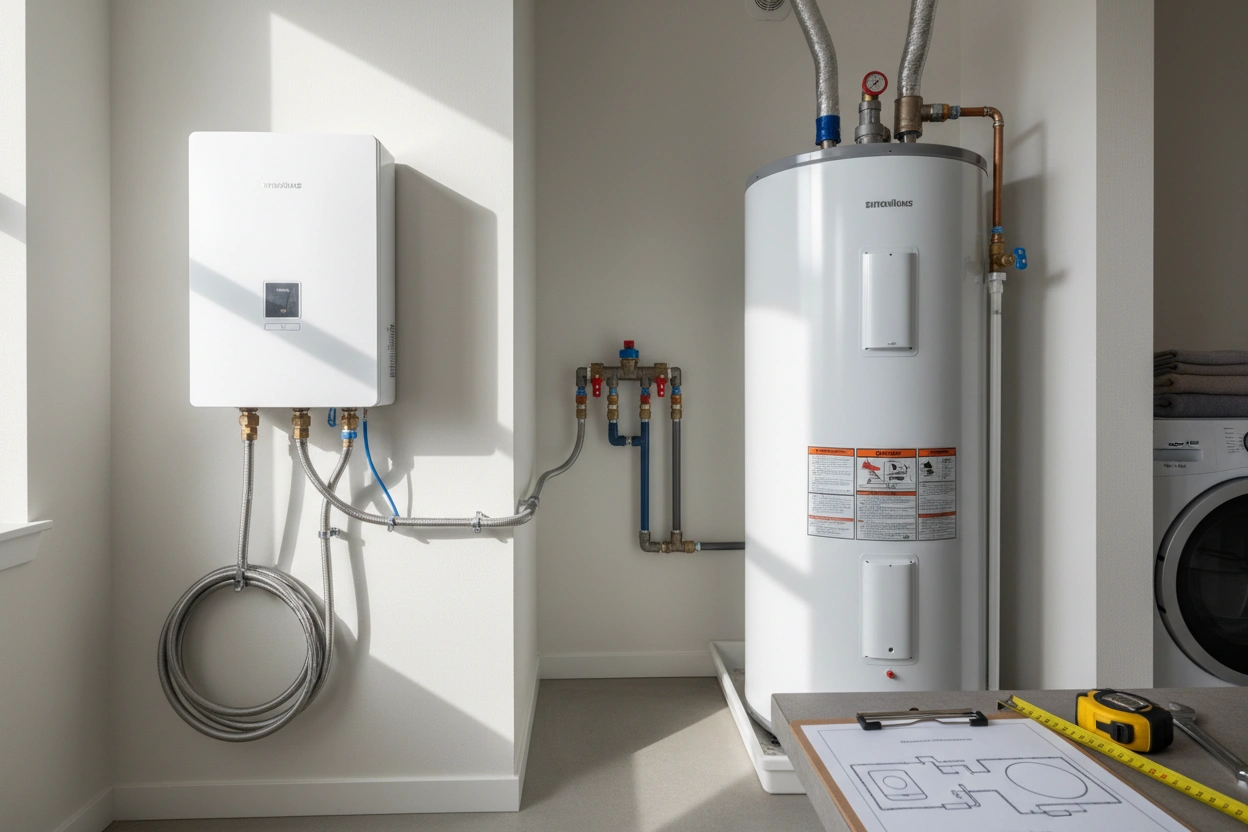
Tank water heaters cost less upfront ($300–$1,500 installed) but burn energy continuously and last only 10–12 years. Tankless units run 24–34% more efficiently, last 20+ years, and can save you up to $100 annually, though they'll cost $1,000–$3,500 to install. Your best choice depends on your rental type, local climate, tenant demand, and budget priorities. The details behind each factor can make or break your decision.
Key Takeaways
- Tankless water heaters are 24–34% more efficient than tank models, offering long-term energy savings but higher upfront costs of $1,000–$3,500.
- Tank heaters cost $300–$1,500 installed, making them budget-friendly for multi-unit buildings where simplicity and lower upfront costs matter most.
- Tankless units last over 20 years versus 10–12 years for tank models, reducing long-term replacement frequency for landlords.
- Colder climates can reduce tankless heater efficiency, making local weather patterns a critical factor in your decision.
- Tankless systems require annual descaling and specialized repairs, while tank heaters offer simpler, more straightforward maintenance overall.
How Tank and Tankless Water Heaters Actually Work
Before choosing between a tank and tankless water heater, it helps to understand how each system actually works.
A tank water heater stores a set volume of water—typically 40 to 80 gallons—and keeps it heated continuously, regardless of whether you're using it. That constant heating cycle drives up energy consumption even during periods of low demand.
A tankless water heater, by contrast, heats water on demand. When you open a hot water tap, cold water flows through a heat exchanger and gets heated instantly by gas burners or electric elements.
There's no storage tank, no standby heat loss, and no reheating cycle. That fundamental difference is what makes water heater efficiency the central argument for going tankless in a rental property.
Upfront Costs vs. Long-Term Savings for Landlords
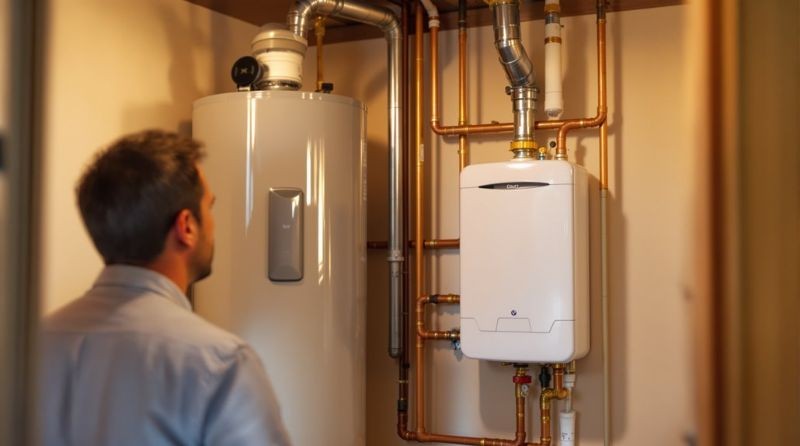
When comparing upfront costs, tank water heaters typically run $300–$1,500 installed, while tankless units can cost $1,000–$3,500 or more depending on fuel type and whether your property needs electrical or gas line upgrades. That gap closes over time, since tankless units operate 24–34% more efficiently than tank models, translating into meaningful energy savings across a multi-year hold. As a landlord, your break-even timeline depends on local utility rates, tenant usage patterns, and how long you plan to hold the property. Implementing preventive maintenance can further enhance your investment by ensuring optimal performance and longevity of your heating systems.
Initial Installation Cost Comparison
Although tankless water heaters carry a higher upfront cost—typically $800–$1,500 for the unit plus $1,000–$3,000 for installation—tank water heaters run $300–$1,000 with installation costs between $300–$500.
That's a significant gap, and installation requirements widen it further. Tankless units often demand upgraded gas lines, dedicated electrical circuits, or improved venting—expenses that stack up fast depending on your property's existing infrastructure.
Regional considerations also matter. In older Portland or Seattle homes, retrofitting for a tankless system can push total costs well above $4,000.
In newer Denver or San Diego builds, infrastructure may already support it, reducing that gap. Before committing, you'll want to assess what your property actually needs—not just the sticker price of the unit itself.
Long-Term Energy Savings
Higher upfront costs only matter if the long-term savings don't close the gap—and with tankless water heaters, they often do, but not always on a timeline that works for every landlord.
Tankless units deliver 24–34% greater energy efficiency than tank models in homes using under 41 gallons daily. That translates to real reductions in utility bills—roughly $100 or more annually depending on fuel type and usage.
Your payback period typically runs 6–12 years. If tenants cover utilities, those savings don't flow to you directly, which changes the math markedly.
Where you do benefit is in lifespan—tankless units last 20+ years versus 10–12 for tank models.
Factor in replacement frequency, and the long-term value proposition for landlords becomes considerably stronger.
Which Water Heater Works Best for Your Rental Type?
Not every rental property has the same hot water demands, and the right water heater depends on your property type, tenant turnover rate, and how hands-on you want to be with maintenance.
For single-family rentals with stable, long-term tenants, a tankless unit aligns well with higher water usage and tenant preferences for consistent, on-demand hot water.
For multi-unit buildings or short-term rentals with frequent turnover, a tank heater offers simpler installation, lower upfront costs, and easier troubleshooting.
Studios and one-bedroom units typically have lower water usage, making tankless systems a practical fit.
Larger units with multiple bathrooms may require a whole-house tankless system sized correctly to avoid performance issues.
Match the heater to the property's demand profile, not just the price tag. Additionally, consider the importance of seasonal maintenance best practices to ensure optimal heater performance throughout the year.
What Tenants Actually Experience With Each System
Everything tenants notice about a water heater comes down to two things: how fast hot water arrives and whether it runs out. Tenant preferences and satisfaction ratings consistently reflect these priorities.
Tank systems deliver immediate hot water but cap out based on capacity. Usage patterns like back-to-back showers or simultaneous appliance use drain the tank fast, dropping comfort levels sharply.
Tankless systems eliminate that cap but introduce a short delay before hot water reaches the fixture. User experiences vary depending on pipe length and flow rate.
Maintenance feedback also differs—tenants rarely notice tank issues until failure occurs, while tankless units can trigger error codes that require faster intervention. Regular maintenance, such as seasonal check-ups, ensures optimal performance and can help mitigate potential issues with both systems.
Understanding both systems helps you set accurate expectations and choose what best matches your tenants' daily routines.
Installation, Repairs, and Maintenance Burden Compared
Both systems carry real maintenance obligations, but the burden falls differently depending on which you install.
Tank heaters have lower installation complexity and straightforward maintenance—you're flushing sediment annually and replacing the anode rod every few years. Repairs are simple and parts are cheap.
Tankless units demand more upfront. Installation complexity increases considerably because you'll likely need upgraded gas lines, dedicated venting, or higher electrical capacity.
Ongoing maintenance frequency is also higher—descaling the heat exchanger annually is essential, especially in hard-water markets like Denver or San Diego. Skipping it shortens the unit's lifespan fast.
When something breaks on a tankless system, repairs cost more and require a technician familiar with the specific unit.
Factoring in proactive care is crucial for ensuring the longevity of whichever system you choose.
Making the Final Call for Your Rental Property
Choosing between a tankless and tank water heater comes down to understanding your property's specific demands—unit size, tenant turnover rate, local utility costs, and available space all factor into the decision.
If you're managing a high-occupancy property or one with older infrastructure, a traditional tank unit often delivers more reliable performance with lower upfront costs.
But if you're playing the long game, a tankless system's efficiency gains and extended lifespan can make it the smarter investment over time. Additionally, investing in preventive maintenance can help ensure that whichever system you choose operates efficiently and lasts longer.
Know Your Property's Needs
Neither water heater type is universally better—it comes down to what your specific rental property demands.
Evaluate your property size, water demand, and budget before committing to either system.
Key factors to assess:
- Unit size and occupancy: Larger units with multiple tenants drive higher water demand, favoring a tank system's consistent output.
- Climate: Colder climates reduce tankless efficiency, impacting performance in markets like Denver or Seattle.
- Budget constraints: Tank heaters cost less upfront; tankless units offer long-term savings.
- Turnover frequency: High-turnover rentals benefit from the lower replacement cost of tank systems.
Match the water heater to your property's actual operating conditions—not just the upfront price tag.
The right choice protects your investment and keeps tenants satisfied.
Weighing Long-Term Value
When it comes to rental property investments, the water heater you choose will affect operating costs, tenant satisfaction, and maintenance demands for years to come.
Tankless units deliver superior energy efficiency and longevity, but their higher upfront cost and installation complexity don't always pencil out for every property.
Tank heaters remain a reliable, cost-effective option for smaller units or tighter budgets.
Base your decision on your property's size, tenant turnover rate, local utility costs, and how long you plan to hold the asset.
If you're managing a high-demand rental in a competitive market, the energy efficiency gains and boost to tenant satisfaction a tankless system provides can justify the investment.
Otherwise, a quality tank unit still gets the job done.
Frequently Asked Questions
Can a Tankless Water Heater Handle Multiple Tenants Using Water Simultaneously?
Yes, it can—if you match the unit's flow rate to your tenant demand. You'll need a high-capacity model to handle simultaneous usage, so size it carefully based on your property's peak needs.
Are There Rebates or Tax Incentives for Upgrading to Tankless Water Heaters?
Yes, you'll find federal tax credits and local utility rebates that offset tankless water heater installation costs. These incentives reward energy efficiency upgrades, so check Energy Star's database and your utility provider for programs available in your area.
How Does Water Heater Choice Affect My Rental Property's Resale Value?
Tankless water heaters boost your property's resale appeal by signaling modern, energy-efficient upgrades to buyers. You'll likely see stronger investment returns, as buyers actively pay premiums for homes with lower utility costs and updated mechanical systems.
What Water Heater Brands Are Most Reliable for Rental Properties?
For reliable brands, you'll want to evaluate Rheem, Bradford White, and A.O. Smith—they're known for durability and lower maintenance costs in rental properties. These manufacturers offer strong warranties and widely available replacement parts.
Does Hard Water Significantly Shorten the Lifespan of Tankless Water Heaters?
Yes, hard water effects can cut a tankless unit's lifespan considerably. You'll want to schedule annual tankless maintenance, including descaling, to prevent mineral buildup from damaging the heat exchanger and reducing efficiency in your rental property.
Conclusion
You've got the facts — now use them. If you're managing a high-turnover property on a tight budget, a tank heater's lower upfront cost makes sense. If you're optimizing a long-term hold for energy savings and tenant retention, tankless is worth the investment. Match the system to your property's demands, your tenants' expectations, and your financial goals. There's no universal right answer — only the right answer for your specific rental.