

San Diego's marine layer regularly pushes relative humidity above 70%, and that moisture doesn't stay outside. It infiltrates your rental's wall cavities, HVAC systems, and furnishings, creating conditions where dust mites, mold spores, and bacteria thrive. Once indoor humidity exceeds 60%, structural degradation accelerates and biological contaminants multiply fast. Active humidity control isn't optional for coastal landlords—it's essential. The specific warning signs, high-risk areas, and proven ventilation strategies can help you stay ahead of the damage.
Key Takeaways
- San Diego's marine layer regularly pushes indoor humidity above 70%, promoting mold, dust mites, and bacteria in coastal rental properties.
- Musty odors, window condensation, and visible discoloration are early warning signs of moisture damage requiring immediate landlord attention.
- Bathrooms, attics, and crawl spaces are most vulnerable, where undetected mold can establish within 24–48 hours of moisture exposure.
- Mechanical ventilation systems and ERVs are essential for coastal rentals, as passive airflow is insufficient against persistent ocean humidity.
- Landlords should maintain indoor humidity between 30–50% using hygrometers, marine-grade sealants, and humidity-sensing exhaust fans to prevent structural degradation.
How Ocean Humidity Damages Air Quality in Coastal Rentals
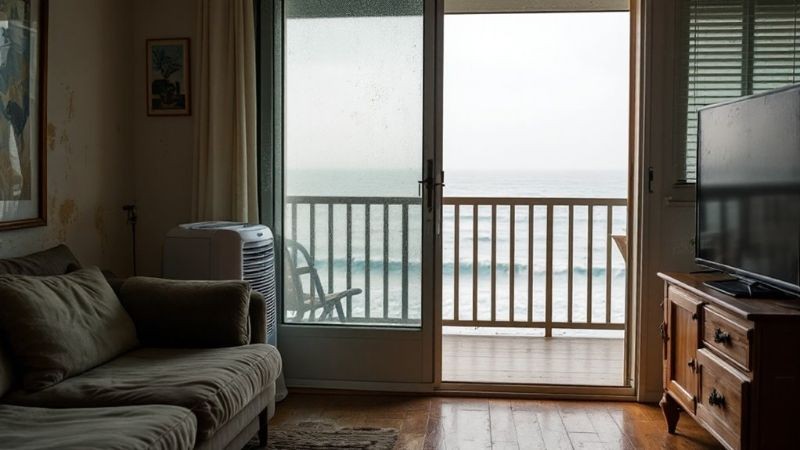
Coastal properties face a relentless humidity challenge that directly degrades indoor air quality. San Diego's marine layer consistently pushes relative humidity above 70%, creating conditions where dust mites, mold spores, and bacterial colonies thrive.
Without active humidity control, moisture infiltrates wall cavities, HVAC systems, and soft furnishings, becoming a reservoir for biological contaminants. Your tenants breathe these particulates daily.
Elevated indoor humidity accelerates off-gassing from building materials, releasing volatile organic compounds that standard ventilation can't adequately dilute. Air filtration systems rated MERV-11 or higher capture the fine particulate matter coastal humidity produces, but they're only effective when you're also managing moisture at the source.
Passive measures alone won't protect your property—you need a coordinated approach combining dehumidification, mechanical ventilation, and high-efficiency filtration. Implementing effective moisture control techniques is crucial for maintaining a healthy living environment.
The Warning Signs Tenants Notice First
When coastal humidity begins compromising your rental's air quality, tenants typically notice musty odors before any visible damage appears—a direct result of microbial volatile organic compounds (mVOCs) released by mold and mildew colonies forming within wall cavities, subflooring, or HVAC systems.
Shortly after, you'll often see condensation forming on interior window surfaces, which signals that indoor dew point levels are high enough to support continued moisture accumulation on building materials.
Both indicators point to elevated relative humidity—commonly above 60%—that, left unaddressed, accelerates structural degradation and worsens tenant respiratory exposure. Additionally, landlords should be aware of their mold prevention responsibilities, as failing to address these issues can lead to significant legal and financial consequences.
Musty Odors Appear First
Musty odors are often the first sign that moisture and mold have taken hold in a coastal rental—long before visible growth appears on walls or ceilings.
These musty smells result from microbial volatile organic compounds (MVOCs), gases released during active mold metabolism. In San Diego's coastal climate, elevated relative humidity accelerates this process, particularly in poorly ventilated spaces like closets, bathrooms, and below-grade storage areas.
Tenants detect these odors before damage becomes structural, which makes their reports a critical early-warning signal.
Don't dismiss complaints as minor inconveniences—treat them as data points indicating a moisture control failure. Investigating promptly lets you identify the humidity source, remediate early-stage growth, and prevent the biological contamination from spreading to adjacent building materials.
Visible Condensation On Windows
Window condensation follows musty odors as the next visible symptom tenants reliably notice and report. It forms when warm, moisture-laden interior air contacts cooler glass surfaces, dropping below the dew point and releasing water vapor as liquid.
Among the primary condensation causes in coastal San Diego rentals are inadequate ventilation, single-pane windows, and elevated indoor humidity from ocean air infiltration.
You'll want to address this quickly. Persistent window condensation accelerates mold colonization along frames, sills, and surrounding drywall.
Effective prevention techniques include installing low-emissivity double-pane windows, running exhaust fans consistently in kitchens and bathrooms, and maintaining indoor relative humidity between 30–50% using mechanical dehumidification.
Wiping condensation temporarily helps, but it doesn't resolve the underlying humidity load driving the problem.
Which Areas of Your Rental Take the Hardest Hit
Coastal properties don't degrade uniformly—certain areas accumulate moisture damage far faster than others.
Your bathrooms, windows, and wall assemblies bear the most visible stress, while attics and crawl spaces quietly absorb humidity and harbor mold long before you're aware of a problem. Understanding which zones are most vulnerable lets you prioritize inspections and catch deterioration before it compromises air quality throughout the entire unit. Regular leak checks and proper ventilation are essential for reducing moisture risks in these areas.
Bathrooms and Moisture Buildup
Bathrooms take the hardest hit when it comes to moisture-driven air quality problems, and in coastal rentals, the conditions are already working against you before a single shower runs.
Ambient humidity from ocean air elevates baseline moisture levels throughout the unit, so when shower steam and standing water enter the equation, your bathroom's moisture load compounds quickly.
Without adequate bathroom ventilation, relative humidity in enclosed bathrooms can exceed 80%, creating ideal conditions for mold colonization on grout, drywall, and caulking within 24 to 48 hours.
Effective moisture management requires exhaust fans rated for the room's square footage, ideally running on a timer or humidity sensor.
Passive ventilation alone won't compensate for the elevated coastal baseline your San Diego property already contends with daily.
Windows and Wall Damage
While bathrooms absorb the most acute moisture damage, windows and walls sustain the most chronic and structurally consequential exposure in coastal rentals.
Salt-laden air accelerates oxidation on window frames, degrades weatherstripping, and compromises seals—allowing humid air to penetrate wall cavities directly. Once moisture breaches the envelope, it saturates insulation, promotes mold colonization behind drywall, and weakens structural framing over time.
Consistent window maintenance—including resealing frames, replacing failed glazing compounds, and inspecting hardware for corrosion—prevents infiltration before it escalates.
For walls, selecting appropriate wall treatments matters greatly. Vapor-resistant primers and marine-grade paints create a barrier against salt air, reducing absorption and surface degradation.
Neglecting either system doesn't just create cosmetic problems—it drives structural repair costs that far exceed routine preventative investment.
Attics and Crawl Spaces
Attics and crawl spaces take on concentrated moisture stress in coastal environments because they sit at the structural extremes of a building—one exposed to heat-driven condensation from above, the other in direct contact with ground-level humidity below.
Without proper attic insulation and crawl space ventilation, moisture accumulates unchecked, degrading structural integrity and air quality throughout your rental.
Watch for these failure points:
- Saturated attic insulation loses R-value and becomes a mold substrate.
- Inadequate crawl space ventilation traps ground moisture, accelerating wood rot and subfloor deterioration.
- Vapor barrier failures allow soil moisture to migrate directly into living spaces.
- Blocked or insufficient vents create stagnant air pockets where mold spores concentrate and spread upward into occupied rooms.
Ventilation Fixes That Actually Work in San Diego
San Diego's mild, coastal climate creates a paradox for rental property ventilation: low temperature swings reduce the natural pressure differentials that drive passive airflow, meaning moisture from cooking, showers, and ocean humidity accumulates faster than most tenants expect.
To counteract this, you need mechanical ventilation systems with verified airflow rates—ASHRAE 62.2 recommends 7.5 CFM per occupant plus 1 CFM per 100 square feet of floor area.
Install Energy Recovery Ventilators (ERVs) rather than simple exhaust fans; ERVs exchange stale interior air with filtered exterior air without sacrificing conditioned air efficiency.
Supplement with HEPA-equipped air purifiers in bedrooms where overnight moisture buildup peaks.
Confirm bathroom fans achieve minimum 50 CFM and kitchen range hoods vent externally, not into recirculating filters. Additionally, regular maintenance inspections are crucial for ensuring these systems operate efficiently and effectively in coastal environments.
How to Stop Mold Before It Starts
Mold colonies establish within 24–48 hours of moisture exposure, so prevention hinges on controlling relative humidity before spores find a viable surface.
Implement these preventative measures to keep humidity control consistent year-round:
- Maintain indoor relative humidity between 30–50% using a calibrated hygrometer to track fluctuations tied to coastal air patterns.
- Seal building envelope penetrations—window frames, door thresholds, and utility penetrations—with marine-grade caulk rated for high-humidity exposure.
- Install exhaust fans with humidity-sensing controls in bathrooms and kitchens to automatically activate when moisture levels spike.
- Inspect HVAC condensate lines and drip pans quarterly, clearing blockages that allow standing water to accumulate near air-handling equipment.
Consistent monitoring eliminates the moisture windows spores need to colonize porous building materials. Additionally, understanding common molds and their health risks can further emphasize the importance of proactive measures.
When to Call a Pro vs. Handle It Yourself
Even minor moisture issues can escalate quickly in coastal climates, so knowing where the DIY threshold ends protects both the property and your health.
For surface condensation on windows or isolated bathroom humidity, DIY repairs are appropriate—improve ventilation, seal gaps, and run exhaust fans consistently.
However, Professional Services become necessary when you identify musty odors without a visible source, discoloration spanning more than ten square feet, or moisture intrusion behind drywall.
These indicators suggest systemic moisture pathways requiring diagnostic equipment like thermal imaging or hygrometers. Attempting remediation without pinpointing the source guarantees recurrence.
In San Diego's coastal corridors, salt-laden humidity accelerates structural degradation, making delayed professional intervention costlier long-term.
Use surface symptoms as data points, not endpoints, when evaluating whether a problem exceeds DIY scope.
Frequently Asked Questions
Does Ocean Humidity Affect My Rental Property's Resale Value Over Time?
Yes, ocean influence can reduce your property's resale value if moisture-related damage accumulates unchecked. Consistent property maintenance prevents corrosion, mold, and structural deterioration, preserving your asset's long-term market value and buyer appeal.
Can High Humidity Cause My Tenants to Break Their Lease Legally?
Yes, high humidity can trigger legal lease termination if it causes mold or uninhabitable conditions. Under tenant rights laws, you're obligated to maintain habitability—failure to remediate moisture issues lets tenants lawfully break their lease.
Are There San Diego City Regulations on Indoor Air Quality for Rentals?
San Diego doesn't have specific indoor air quality standards for rentals, but you're required to maintain habitable conditions under California's implied warranty of habitability, which covers ventilation, moisture control, and mold prevention.
Does Renters Insurance Cover Humidity-Related Damage to Tenant Belongings?
Most renters coverage excludes gradual humidity damage, as insurers classify it as a maintenance issue rather than a sudden loss. You'll want to review your policy's exclusions carefully, since mold and moisture deterioration typically don't qualify.
How Does Coastal Humidity Impact My Landlord Insurance Premiums?
Coastal humidity management directly affects your premiums—insurers factor moisture-related risk into their insurance considerations. You'll likely face higher rates if you don't document mitigation efforts like dehumidifiers, ventilation upgrades, and routine inspections that demonstrate proactive property maintenance.
Conclusion
Coastal humidity isn't a seasonal inconvenience — it's a persistent threat to your rental's air quality and structural integrity. You've got the tools to combat it: proper ventilation, proactive mold prevention, and knowing when to bring in a professional. Act on the warning signs early, prioritize the high-risk areas, and you'll protect both your tenants' health and your long-term investment. In San Diego's marine environment, prevention always costs less than remediation.