
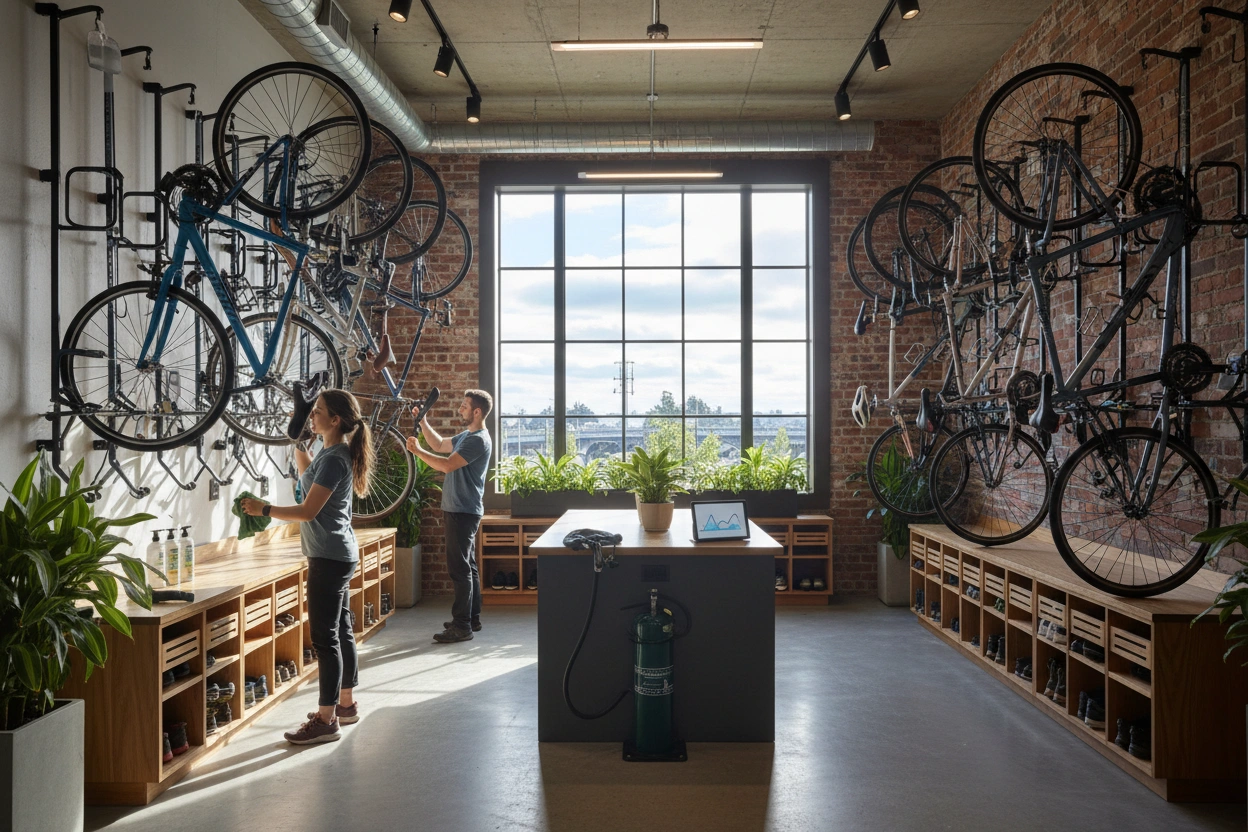
If you're renting in Portland, bike storage isn't just a nice-to-have—it's essential. Secure indoor options like lockable bike rooms protect your ride from theft and weather far better than outdoor racks. Placement matters too, with entryways and well-lit exterior areas making daily access easier. Regular maintenance keeps everything functional and frustration-free. Whether you're a daily commuter or weekend rider, the right amenities can make or break your rental experience—and there's much more to take into account.
Key Takeaways
- Secure, lockable bike rooms significantly reduce theft risk and are more effective than standard outdoor racks for Portland renters.
- Entryways, mudrooms, and unused utility areas offer ideal indoor bike storage spots, protecting bikes from weather deterioration.
- Vertical mounts and foldable bikes maximize small storage spaces; always review lease agreements before installing wall-mounted hardware.
- Regular maintenance, including lubricating rack joints and inspecting for rust, keeps bike amenities functional and tenants satisfied.
- Bike-friendly upgrades lower vacancy rates, strengthen tenant retention, and support competitive rent pricing in Portland's rental market.
Why Portland Renters Prioritize Bike Storage
Portland consistently ranks among the most bike-friendly cities in the country, and for many renters here, a bike isn't just a hobby—it's a primary mode of transportation.
Portland's bike culture runs deep, with dedicated lanes, trails, and a commuter mindset that makes cycling a practical daily choice. When you're relying on your bike for urban commuting, secure and accessible storage becomes a real priority—not a bonus amenity.
Leaving a bike outside exposes it to Portland's frequent rain, theft, and general wear. If your rental doesn't offer protected, convenient storage, you're constantly working around the problem.
That's why bike storage ranks high on renters' must-have lists. It directly affects how functional your living situation is when cycling is central to how you get around every day. Additionally, having access to exceptional customer service can enhance the overall rental experience for bike-commuting tenants.
Secure Bike Storage Options That Actually Work
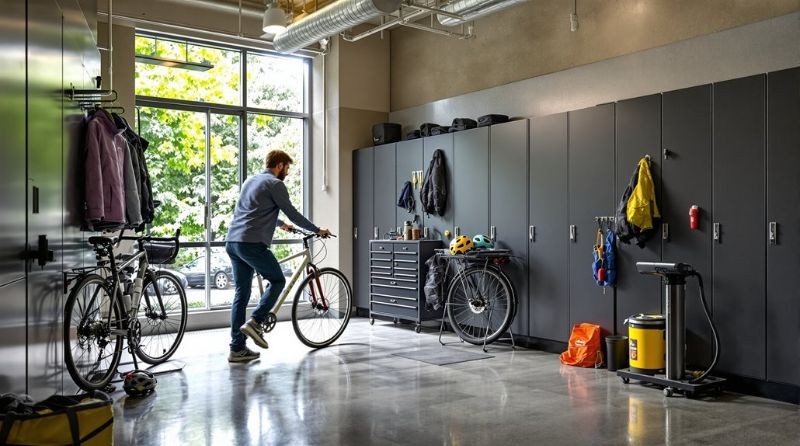
When it comes to keeping your bike safe, not all storage solutions are created equal—indoor options and lockable bike rooms consistently outperform outdoor racks or unsecured spaces.
If your rental has an unused utility area, basement corner, or garage bay, you can work with your landlord to convert it into a dedicated indoor storage spot with wall mounts or floor-standing racks.
Lockable bike rooms take security a step further by restricting access to residents only, which greatly reduces theft risk and gives you real peace of mind every time you leave your bike behind. Additionally, implementing preventative maintenance services can ensure that the storage areas remain clean and functional for all tenants.
Indoor Storage Solutions
Secure indoor bike storage starts with understanding what your rental actually offers—and what you can add without violating your lease. Many Portland rentals include basement access, utility rooms, or covered entryways that work well for compact storage.
Use that space strategically before investing in equipment.
If you're working with a small apartment, innovative designs like vertical wall mounts, ceiling hoists, and freestanding floor racks let you store one or two bikes without sacrificing livable square footage. Foldable bikes also solve the problem entirely in tighter units.
Before installing any wall-mounted hardware, check your lease. Some landlords approve minor installations with advance notice, while others require written permission.
Always communicate clearly with your property contact to avoid deposit deductions or lease violations down the road.
Lockable Bike Rooms
If your building has a lockable bike room, it's one of the most secure and convenient storage options you can get as a renter.
These dedicated spaces keep your bike out of shared hallways and away from opportunistic theft, making bike security a much smaller concern.
To get the most out of a lockable bike room, always use your own U-lock or heavy-duty cable lock even inside the room.
Don't assume the room lock alone is enough.
From a landlord's perspective, well-maintained bike rooms drive tenant satisfaction and reduce turnover.
If lighting is poor, the door latch is loose, or the space feels neglected, report it promptly.
A functional, secure bike room is a genuine amenity worth protecting.
The Best Spots to Install Bike Storage in a Rental
Once you've chosen the right storage solution, placement makes all the difference between a system tenants actually use and one they ignore.
Indoor spots like entryways, mudrooms, and ground-floor utility areas tend to work best since they're easy to access without hauling a bike up stairs or through common spaces.
If indoor space is tight, outdoor options along a side fence, covered patio, or building exterior near the main entrance can work well as long as they're well-lit and within sight of high-traffic areas. Additionally, ensuring these areas are regularly maintained can prevent deferred maintenance discounts that negatively impact property value.
Indoor Versus Outdoor Storage
Where you store bikes matters just as much as how you secure them. Indoor climate protection keeps frames, cables, and components from deteriorating due to rain, rust, and temperature swings — a real concern in Portland's wet seasons.
A basement, utility room, or dedicated hallway nook works well if you've got the square footage.
That said, outdoor accessibility has its own advantages. Tenants who ride daily don't always want to haul bikes through living spaces.
A covered exterior rack near the entrance, ideally with a lockable enclosure, can be just as practical.
The best setups often offer both. Give tenants options based on how they ride.
One solution rarely fits every household, and flexibility goes a long way toward keeping tenants satisfied and bikes secure.
High-Traffic Placement Spots
Placement makes or breaks a bike storage setup, so think carefully before you drill a single anchor or pour concrete for a rack.
Position storage near the main entry rather than tucked behind the property — tenants won't use what's inconvenient. If your rental sits close to a bike lane or a neighborhood connectivity corridor, align storage access with the direction tenants are most likely arriving from.
Covered side yards, carports, and covered entryways near ground-level doors all work well. Avoid low-visibility corners that feel unsafe after dark.
If you're managing a multi-unit building, place shared racks where foot traffic is naturally high. Accessible, well-lit, and logically positioned storage gets used consistently and reduces the chance tenants resort to dragging bikes indoors.
Repair Stations and Charging Points Tenants Love
A well-placed bike repair station can be the detail that sets your rental apart in Portland's cycling-heavy market.
Mount a wall panel with basic tools — tire levers, a pump, and hex keys — near your storage area so tenants can handle minor fixes without leaving the property. It's a low-cost addition that delivers high perceived value.
For e-bike riders, charging points matter just as much.
Install a weatherproof outdoor outlet or dedicate an interior plug near storage so tenants can charge overnight without running extension cords through doorways. Label the outlet clearly and include a small usage guide.
Both repair stations and charging points show tenants you've thought through their actual needs — and that kind of attention keeps good renters around longer. Additionally, investing in proactive maintenance enhances tenant satisfaction and helps retain quality renters.
How to Keep Bike Amenities in Good Shape Year-Round
Once you've installed bike amenities, keeping them functional takes consistent but manageable upkeep. Apply these bike maintenance tips seasonally to stay ahead of wear.
Lubricate rack joints and hooks each spring, and inspect mounts for rust or loosening hardware before Portland's wet season hits. Wipe down repair station tools monthly and replace missing or worn components quickly—tenants notice neglect fast.
For seasonal storage solutions, adjust your covered storage capacity before fall. Portland winters bring sustained moisture, so sealed lockers and covered racks outperform open alternatives considerably.
Check drainage around storage areas to prevent standing water from damaging frames or flooring.
Schedule a quick quarterly walkthrough of all bike amenities. Catching small issues early keeps repair costs low and gives tenants one more reason to stay. Additionally, incorporating regular checkups into your maintenance routine can enhance the longevity of these amenities and improve tenant satisfaction.
What Bike-Friendly Upgrades Do to Your Rental's Value
Bike-friendly upgrades do more than attract cyclists—they add measurable value to your rental property. When you install secure storage, covered bike parking, or repair stations, you're directly improving rental property appeal to a growing segment of Portland renters who prioritize active transportation.
These bike upgrade benefits translate into real outcomes: lower vacancy rates, stronger tenant retention, and the ability to justify competitive rent pricing.
Renters who bike daily treat these amenities as non-negotiable, meaning they'll stay longer when you provide them well. You also reduce wear on other shared spaces when bikes have a dedicated home.
Every upgrade you make signals to prospective tenants that the property is well-maintained and thoughtfully managed—two qualities that consistently support higher demand and long-term rental performance. Additionally, consistent maintenance ensures that these upgrades remain in excellent condition, further enhancing the property's appeal.
Frequently Asked Questions
Can Landlords Require Tenants to Register Bikes Stored on the Property?
Yes, you can require bike registration as part of your bike policy if it's in the lease. It helps manage storage fairly, and it doesn't violate tenant rights as long as you apply the rule consistently.
Are Bike Amenities Covered Under Standard Rental Property Insurance Policies?
Standard policies don't typically cover bike insurance for your personal bikes. Your landlord's rental liability coverage protects the structure, not your belongings—so you'll want renters insurance to protect your bikes specifically.
What Happens if a Tenant's Bike Is Stolen From the Storage Area?
Your renter's insurance typically covers bike theft, not the landlord's policy. To reduce tenant liability, you should document your bike's serial number and practice bike theft prevention by always securing it with a quality lock.
Can Bike Storage Amenities Be Added Mid-Lease Without Changing Rental Agreements?
You can add bike storage amenities mid-lease without changing rental agreements, but you'll want Tenant Consent documented. Mid Lease Modifications like these typically require a simple written addendum to protect both parties.
Who Is Responsible for Fixing Damaged Bike Storage Equipment Between Tenancies?
Between tenancies, you're responsible for fulfilling landlord responsibilities by fixing damaged bike storage equipment before the next tenant arrives. Tenant obligations end at move-out, so you'll want to document damage and complete repairs promptly.
Conclusion
Bike-friendly amenities aren't just a perk in Portland — they're a competitive edge. When you invest in secure storage, functional repair stations, and consistent upkeep, you're giving tenants a real reason to stay. Don't let a broken latch or neglected bike room undo the value you've built. Stay proactive, respond quickly to maintenance issues, and treat your cycling infrastructure like the asset it is. Your tenants will notice — and your vacancy rates will reflect it.