

For rental properties, LVP is your most practical choice—it lasts 15–20 years, costs $3–$5 per square foot to install, and handles heavy tenant wear without expensive refinishing. Carpet needs replacement every 5–7 years and traps odors, driving up turnover costs. Hardwood looks premium but risks scratches and moisture damage, with refinishing adding $3–$5 per square foot. Each flooring type affects your bottom line differently, and the full cost breakdown might surprise you.
Key Takeaways
- LVP lasts 15–20 years, resists scratches and moisture, and allows individual section replacement, making it the most turnover-resistant flooring option.
- Carpet requires replacement every 5–7 years and traps odors, significantly increasing costs in high-turnover rental properties.
- Hardwood costs $8–$15 per square foot to install and requires $3–$5 per square foot refinishing, making it expensive for high-turnover rentals.
- LVP's low maintenance requirements reduce landlord workload and tenant complaints, improving satisfaction across diverse renter demographics.
- Carpet offers noise reduction benefits in multi-unit buildings but accelerates in wear and cost during frequent tenant turnovers.
How Each Flooring Type Holds Up to Tenant Wear
Flooring takes more abuse in rentals than almost anywhere else—moving furniture, pets, high traffic, and tenants who don't always treat the space like their own all add up fast.
Understanding how each material responds to tenant behavior helps you make a smarter investment.
LVP resists scratches, moisture, and heavy use while keeping cleaning requirements minimal. Current flooring trends favor it for good reason—it balances durability, aesthetic appeal, and straightforward installation complexity.
Hardwood looks premium but demands higher maintenance frequency and shows wear quickly.
Carpet lowers noise reduction complaints between floors and addresses some allergy concerns depending on fiber type, but it traps dirt and typically needs replacement after one or two tenancies. Additionally, investing in preventive maintenance can extend the lifespan of all flooring types, ensuring your property remains attractive to potential tenants.
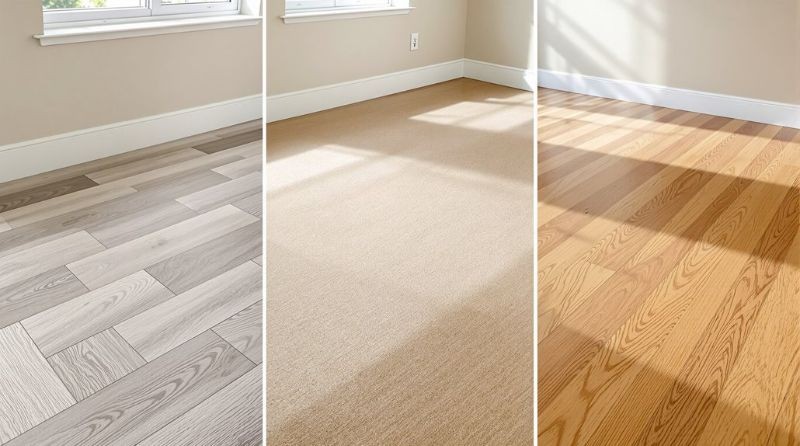
LVP: The Low-Maintenance Case for Rental Properties
Of all the flooring options worth considering for a rental, LVP makes the strongest case on pure practicality.
The LVP benefits stack up fast: it's waterproof, scratch-resistant, and built to handle heavy foot traffic without showing it. LVP maintenance is minimal—regular sweeping and occasional mopping keeps it looking sharp between tenants.
LVP installation is straightforward, often floating over existing subfloor and cutting your labor costs considerably.
LVP styles have also expanded considerably, so you're not sacrificing aesthetics for durability. You can find options that convincingly replicate hardwood or stone at a fraction of the price.
When weighing LVP vs. alternatives, the LVP cost effectiveness becomes clear. Regular property maintenance further enhances the longevity of flooring choices, ensuring that your investment stands the test of time.
You'll spend less upfront, less on repairs, and less during turnovers—and that math matters across a portfolio.
Carpet: Where It Still Makes Sense (and Where It Doesn't)
Carpet isn't obsolete in rental properties—it just belongs in the right rooms. Bedrooms remain its strongest use case. Tenants expect softness underfoot there, and carpet durability holds up reasonably well in low-traffic areas with minimal moisture exposure.
It also adds acoustic insulation, which matters in multi-unit buildings.
Where carpet fails is in high-traffic zones—hallways, living rooms, and entryways take a beating, and replacement cycles shorten fast. Stains, odors, and wear patterns accumulate quickly, driving up your turnover costs.
Budget for professional carpet cleaning between every tenancy. It extends the lifespan and keeps units presentable. If cleaning can't restore it, replace it. Keeping worn carpet to save money often costs you more in vacancy and tenant dissatisfaction. Additionally, timely repairs can prevent further damage and enhance tenant satisfaction, making it crucial to address any issues promptly.
Hardwood: Worth the Investment or Too Much Risk?
Hardwood flooring carries a steep upfront cost compared to most alternatives, often running $8–15 per square foot installed. This makes it a harder sell for lower-rent properties or high-turnover units.
Once it's in, you're also contending with real vulnerability to scratches, moisture damage, and surface wear that tenants can accelerate quickly with pets, furniture, or neglect.
That said, hardwood genuinely adds long-term property value and can justify the investment if you're managing a higher-end rental in a competitive market where buyers and tenants alike expect quality finishes. Additionally, landlords are primarily responsible for maintaining rental properties, which includes addressing any flooring issues that arise during tenant occupancy.
Hardwood's Upfront Costs
Everyone knows hardwood looks great—but that appeal comes with a price tag that can give landlords pause. The upfront investment typically runs $8–$15 per square foot installed, depending on wood species, subfloor condition, and your market. That's considerably more than LVP or carpet.
Beyond installation, maintenance costs add up over time. Hardwood scratches, dents, and water-stains more easily than LVP, meaning tenant turnover can trigger refinishing expenses that range from $3–$5 per square foot. If damage is severe, you're replacing boards entirely.
In higher-end markets like Seattle or Denver, hardwood can justify its cost through stronger rental appeal and long-term durability.
But in standard rentals, the numbers often don't pencil out when cheaper, more resilient options exist.
Scratches and Wear Risks
The real question with hardwood isn't whether it looks good—it's whether it can survive your tenants. Scratch resistance is where hardwood starts showing its weaknesses. Pets, furniture, high heels, and everyday foot traffic leave marks that compound over time. Softer species like pine scratch almost immediately, while harder options like hickory or white oak hold up better—but none are immune.
Wear durability depends heavily on the finish. Aluminum oxide finishes offer stronger protection, but even those require refinishing every several years in high-traffic rentals.
Each refinishing cycle costs money and takes the unit offline. With tenants rotating every one to three years, wear accumulates faster than you'd expect. For rentals, that ongoing maintenance risk is something you can't afford to overlook.
Long-Term Property Value
Longevity is hardwood's strongest argument—but it cuts both ways in a rental.
Done right, hardwood floors can boost property appreciation and command higher rents. Tenants often cite hardwood as a premium feature, which can improve tenant satisfaction and reduce vacancy time. That's real value.
The risk? Hardwood is expensive to install and costly to repair.
One bad tenancy—pets, moisture, heavy furniture—can leave you refinishing or replacing sections you weren't budgeting for. Refinishing buys you another cycle, but it adds labor cost and downtime between turnovers.
If your property sits in a higher-end market like Seattle or San Diego, hardwood may pencil out.
In mid-range rentals, you're often paying for aesthetics that LVP can replicate at a fraction of the cost.
Which Flooring Wins at Turnover Time?
When it comes to turnover, not all flooring holds up equally—and the wrong choice costs you time and money between every tenant.
Aligning with current flooring trends and tenant preferences, LVP consistently comes out ahead for rental properties.
Here's why it wins at turnover:
- Durability: LVP resists scratches, moisture, and heavy foot traffic better than carpet or hardwood.
- Cleaning speed: You can clean and prep LVP faster, shortening your vacancy window.
- Replacement cost: Damaged sections replace individually, cutting repair expenses considerably.
- Broad appeal: Neutral LVP styles satisfy most tenant preferences without feeling dated.
Carpet wears out faster and costs more to clean.
Hardwood looks great but demands costly refinishing.
LVP simply makes the numbers work better across every turnover cycle. Additionally, effective marketing strategies can further enhance the appeal of properties with LVP flooring, attracting more potential tenants.
What to Budget for Flooring Across Your Rental's Lifespan
Knowing which flooring wins is only half the battle—you also need to know what it'll actually cost you over time.
Flooring lifespan directly shapes your budgeting strategies, so run the numbers before you commit.
Carpet runs $3–$5 per square foot installed but needs replacement every 5–7 years in rentals. That's two or three replacements over a 15-year hold.
LVP costs $4–$7 installed and lasts 15–20 years with minimal upkeep—often a single installation across that same window.
Hardwood sits at $8–$14 installed but can be refinished multiple times, spreading costs over decades.
Factor in tenant turnover frequency, your market's wear patterns, and local labor rates.
The cheapest upfront option rarely wins when you calculate total cost of ownership. Additionally, investing in routine maintenance can significantly enhance the longevity and overall value of your flooring choice.
Frequently Asked Questions
Can I Mix Flooring Types in Different Rooms of My Rental?
Yes, you can use mixed flooring across rooms. Keep room aesthetics cohesive by pairing LVP in high-traffic areas with carpet in bedrooms. It's a practical, cost-effective strategy that balances durability and comfort throughout your rental.
Do Certain Flooring Choices Affect My Rental's Insurance Premiums?
Flooring choices rarely directly affect insurance premiums, but flooring durability can reduce your insurance costs indirectly. When you install resilient materials like LVP, you're minimizing damage claims, which helps keep your claims history clean and premiums stable.
Are There Flooring Options That Help Reduce Noise Complaints Between Tenants?
Carpet's your best quiet flooring option for noise reduction. If you prefer LVP or hardwood, you'll want soundproof underlayment and acoustic tiles to incorporate noise reducing materials that minimize complaints and protect your tenant relationships cost-effectively.
How Does Flooring Choice Impact My Rental Listing's Appeal to Prospective Tenants?
Your flooring choice directly drives tenant preferences and rental appeal. Modern LVP boosts aesthetic appeal, attracting quality tenants faster and potentially commanding higher rents, while outdated carpet can turn prospective renters away before they've even toured the unit.
Can Flooring Upgrades Qualify as Tax Deductions for Rental Property Owners?
Yes, flooring upgrades can qualify as tax deductions. You'll typically depreciate the cost over time, revealing real tax benefits. Prioritizing flooring longevity means you're maximizing both your investment's lifespan and its long-term financial returns.
Conclusion
Your flooring choice isn't just aesthetic — it's a financial decision that compounds over every tenancy cycle. LVP wins on durability and turnover costs for most rentals, carpet still earns its place in bedrooms, and hardwood makes sense only when your market demands it. Match your choice to your property type, tenant profile, and maintenance capacity, and you'll protect your margins without sacrificing the quality that keeps good tenants renewing.