
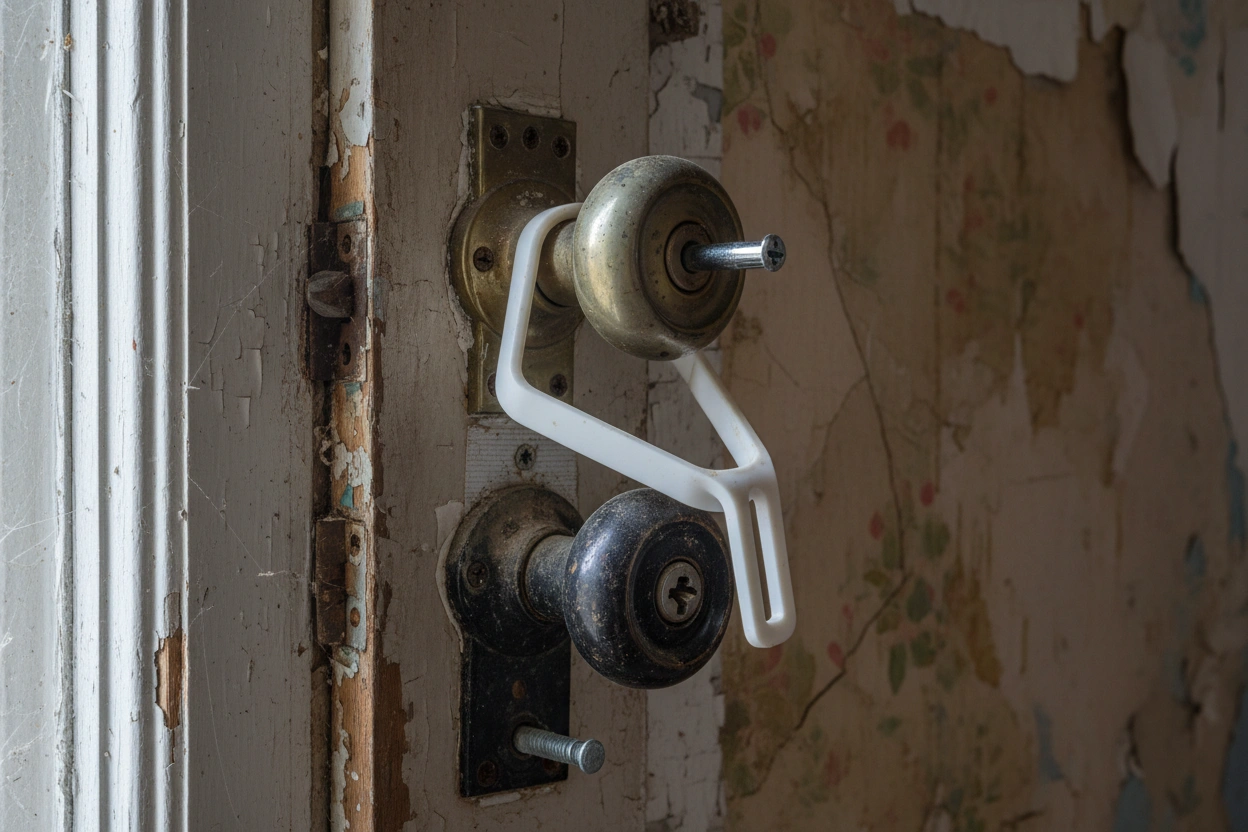
When your rental's interior door hardware starts failing, you're looking at more than a minor inconvenience. Loose handles, sticking latches, and worn hinges signal neglected maintenance cycles that compound quickly into costly repairs. Stripped screws accelerate frame wear, faulty locks frustrate tenants, and persistent alignment issues can indicate structural shifts beneath the surface. Catching these problems early protects your property and your tenant relationships—and there's a systematic approach to staying ahead of every one of them.
Key Takeaways
- Stripped hinge screws, stiff latches, and loose handles are early warning signs of deeper structural or moisture-related property issues.
- Locks requiring jiggling or doors that swing freely may indicate frame shifting, foundation settlement, or water intrusion.
- Diagonal cracks at door corners and uneven gaps around frames signal potential framing deterioration requiring immediate professional assessment.
- Minor hardware neglect, like squeaky hinges or corroded locks, directly damages tenant trust and reduces lease renewal likelihood.
- Regular inspections and quick fixes, such as lubricating latches or tightening set screws, prevent costly compounding repairs over time.
Why Sticky Doors and Loose Handles Are Never Just Cosmetic
When a door sticks or a handle wobbles, most landlords treat it as a low-priority fix—something cosmetic, something minor. It isn't. Poor door alignment often signals frame movement, moisture intrusion, or foundation shifts—conditions that worsen without intervention.
A loose handle indicates fastener failure or spindle wear that, left unaddressed, leads to complete lockset failure and potential tenant lockouts.
These aren't isolated hardware issues. They're indicators of deferred hardware maintenance compounding into structural and security concerns. Tenants notice, and their perception of your property management reflects what they experience daily.
A door that drags or a handle that rattles communicates neglect before a single complaint is filed. Timely repairs catch these symptoms early and let you correct the root cause before it escalates into a costlier, more disruptive repair.
The Interior Door Hardware Problems Landlords Miss Most
Most landlords catch a dragging door or a rattling knob, but the subtler hardware failures tend to go unnoticed until they've already created bigger problems.
Hinges with stripped screws stay partially engaged, creating lateral door movement that wears down the latch strike over time. Privacy locks on bathroom and bedroom doors lose their spring tension gradually, leaving tenants without reliable function before anyone reports it.
Latch bolts retract stiffly due to accumulated dust and dry lubrication, which you'll rarely notice unless you're testing each door systematically. Door stops either go missing or flatten out, allowing knobs to punch through drywall.
Consistent door maintenance requires inspecting these components on a schedule, not just responding to complaints. Catching these patterns early directly supports tenant satisfaction and prevents compounding repair costs, aligning with proactive maintenance strategies that enhance long-term property management.
What Worn Hinges and Faulty Locks Say to Your Tenants
Tenants notice hardware condition before they articulate it. A hinge that squeaks, sags, or shows rust signals that you've deprioritized upkeep. A lock that requires jiggling to engage tells tenants their security isn't reliable.
These aren't minor annoyances—they shape tenant perceptions of how seriously you take the property. Worn hardware communicates your maintenance priorities more clearly than any lease agreement.
When tenants encounter resistance at a bathroom door or a loose deadbolt on move-in day, they form an immediate judgment about how you'll respond when larger problems surface. That judgment affects lease renewals, communication tone, and whether tenants report issues early or let them compound.
Small hardware failures don't stay small—they become the lens through which tenants evaluate everything else about living in your property. Regular preventative maintenance can help address these minor issues before they escalate into larger concerns.
Interior Door Hardware Fixes You Can Handle Quickly
Some of the most common interior door hardware issues respond well to basic tools and a methodical approach. You can tighten loose door handles by removing the faceplate and snugging down the mounting screws, fix sticking latches by adjusting the strike plate position or lubricating the latch mechanism, and replace worn strike plates with a screwdriver and a matching hardware store find. Catching and correcting these small failures early keeps doors functioning properly and prevents minor wear from compounding into costlier repairs. Regular inspections to identify potential hazards in property maintenance can further enhance your proactive approach to home upkeep.
Tightening Loose Door Handles
A loose door handle is one of the simplest interior hardware issues to fix, and it usually comes down to a few backed-out screws.
Start by locating the set screw on the handle's base plate — it's often hidden under a decorative cap you can pop off with a flathead screwdriver. Tighten it with the appropriate Allen wrench or Phillips head until the handle sits firmly without wobble.
If the screws won't hold, the holes may be stripped. Fill them with wooden toothpicks and wood glue, let it cure, then re-drive the screws.
Routine door handle maintenance prevents minor looseness from escalating into full mechanism failure. Document completed fixes and log them through your tenant communication records to keep your property history accurate and current.
Fixing Sticking Door Latches
Once you've addressed a loose handle, the next hardware issue worth knowing is a sticking latch — one that drags, catches, or fails to retract cleanly when the door opens or closes. This typically traces back to door alignment shifts or a misaligned strike plate.
Start by closing the door slowly and watching where the latch contacts the strike plate. If it's hitting high, low, or off to one side, that's a door alignment problem — check the hinges first for looseness.
If the door sits correctly but the latch still binds, a latch adjustment is your fix: tighten the faceplate screws or file the strike plate opening slightly to widen the catch zone. Both repairs take minutes and restore smooth, reliable operation.
Replacing Worn Strike Plates
Strike plates take a beating over time — repeated latch contact, shifting door frames, and years of use wear down the metal, strip the screw holes, or crack the plate entirely.
Replacement is straightforward, and the strike plate benefits are immediate: cleaner latch engagement, improved door security, and a more finished appearance.
Follow these installation tips for a clean swap:
- Remove the old plate and inspect the mortise for damage or wood rot
- Fill stripped screw holes with toothpicks and wood glue before driving new screws
- Use a heavy-gauge replacement plate for better durability
- Align the latch opening precisely before marking and drilling
- Drive 3-inch screws into the door frame stud for maximum holding strength
When Small Door Issues Point to Bigger Structural Problems
When you're seeing door alignment issues that persist across seasons, or when gaps appear unevenly around the frame, you're likely dealing with something structural. Frame stability concerns often show up first through doors—specifically through diagonal cracks at door corners, doors that swing open or closed on their own, or frames that visibly rack out of square.
Check whether the hinge side of the frame has shifted or if the rough opening itself has moved.
These patterns can indicate foundation settlement, framing deterioration, or water intrusion behind walls. It’s important to recognize that landlords are primarily responsible for ensuring structural integrity and addressing such issues promptly.
Don't treat these symptoms with hardware adjustments alone—document what you're seeing and get a structural evaluation before conditions worsen.
How RentalRiff Keeps Rental Properties Ahead of the Damage
Catching structural red flags early is exactly the kind of work that prevents a fixable problem from becoming a costly one—and it's where consistent, attentive property oversight pays off.
RentalRiff's dedicated Property Specialists apply preventative maintenance protocols that identify door hardware failures before they compound into frame or structural repairs.
Each specialist monitors:
- Hinge alignment shifts that indicate settling or moisture intrusion
- Latch and strike plate wear signaling frame movement
- Door gap inconsistencies pointing to subfloor or foundation changes
- Hardware corrosion patterns tied to ventilation or humidity issues
- Tenant-reported sticking or binding logged and tracked over time
This systematic approach protects your investment while directly supporting tenant satisfaction—tenants notice when problems get addressed early. Additionally, effective preventive maintenance reduces the likelihood of costly repairs that can disrupt tenant comfort and satisfaction.
RentalRiff keeps your property functional, documented, and ahead of preventable damage.
Frequently Asked Questions
How Often Should Rental Property Door Hardware Be Fully Inspected?
You should fully inspect your rental property's door hardware twice yearly. Apply door maintenance tips during each walkthrough, and factor in hardware lifespan considerations to catch wear before it signals deeper neglect to tenants.
Can Tenants Legally Withhold Rent Over Broken Interior Door Locks?
It depends on your jurisdiction. Tenant rights vary by state, but broken interior locks rarely justify withholding rent. You'll want to understand your legal responsibilities and consult a local attorney before tenants escalate minor hardware issues into payment disputes.
What Door Hardware Brands Hold up Best in High-Turnover Rentals?
For high-turnover rentals, you'll want Schlage or Kwikset Commercial. Their durability ratings outperform budget brands in head-to-head brand comparisons. Follow manufacturer maintenance tips, and you're maximizing cost-effectiveness across repeated tenant cycles.
Does Rentalriff Handle Door Hardware Issues Across All Service Areas?
Yes, RentalRiff handles door maintenance across all service areas—Seattle, Tacoma, Bend, Portland, Denver, and San Diego. Your dedicated Property Specialist manages repairs and tenant communication directly, ensuring hardware issues are diagnosed and resolved systematically before they escalate.
Are Interior Door Repairs Typically Covered by Landlord or Tenant?
Generally, you'll find landlord obligations cover structural repairs and normal wear, while tenant responsibilities include damage they've caused. Your lease terms ultimately define the boundary, so review it carefully before assuming coverage.
Conclusion
Every sticky lock and loose handle you ignore sends a message to your tenants before you ever say a word. You're not just fixing hardware when you tighten a hinge or lubricate a strike plate — you're demonstrating a maintenance standard. Work through these issues methodically, document what you've repaired, and schedule periodic checks before problems escalate. Small door hardware failures compound quickly. Address them early, and you'll stay ahead of the larger, costlier repairs they often signal.