
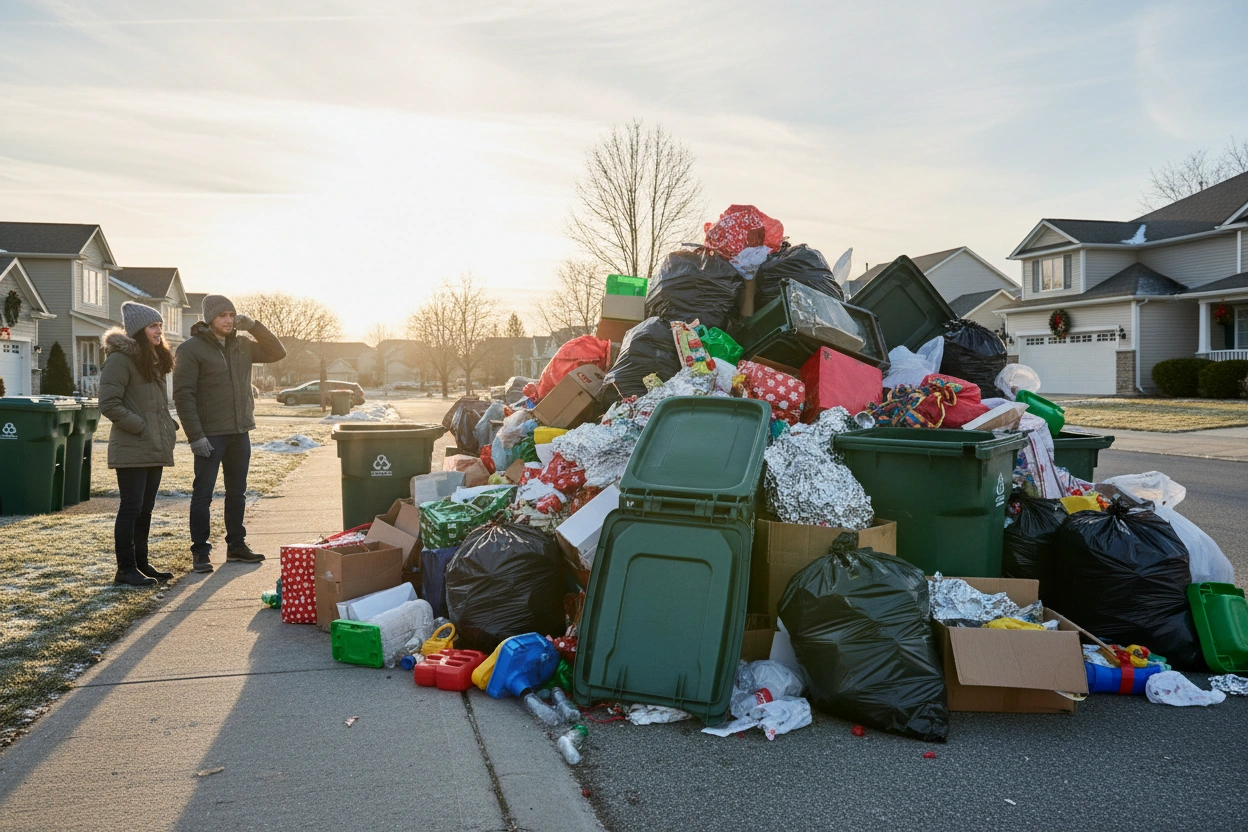
Setting expectations early prevents holiday trash overflow from becoming a sanitation crisis at your rental property. You'll face increased waste volume, delayed municipal pickups, and multiple tenants generating garbage independently from Thanksgiving through New Year's. Send written notices at least one week before major holidays, covering updated collection schedules, bin placement deadlines, and overflow consequences. Understanding local regulations and hauler fees keeps you compliant and dispute-free. The sections ahead break it all down.
Key Takeaways
- Send holiday waste notices at least one week before major holidays, covering updated pickup schedules, bin placement deadlines, and overflow guidelines.
- Inform tenants that municipal collection may be delayed one to three days during holidays, increasing overflow risks.
- Provide clear written rules on recycling, box breakdown, and bin limits to reduce excess waste buildup.
- Specify consequences for noncompliance, such as excess waste fees, to encourage responsible disposal habits among tenants.
- Contact your local hauler early to arrange extra pickups or temporary bin upgrades before holiday waste peaks.
Why Holiday Trash Overflow Hits Rental Properties Hard
Holiday seasons bring a surge in household waste that catches many rental property owners off guard. Between Thanksgiving and New Year's alone, holiday waste increases markedly—packaging, food scraps, and decorations pile up faster than standard collection schedules can handle. Municipal services often run on reduced or modified schedules during this period, creating gaps that compound the problem.
Rental properties face a unique challenge because multiple tenants generate waste independently, without coordinating bin usage or drop-off timing. Without proactive tenant communication, bins overflow, recyclables get contaminated, and waste spills into common areas. This creates sanitation issues, potential lease violations, and neighbor complaints. Sending tenants a notice outlining waste management procedures 2-3 weeks prior to major holidays gives them enough time to adjust habits before problems arise. You can't rely on tenants to self-manage this—clear, early guidance from you is essential to preventing a preventable mess.

How Delayed Holiday Pickups Back Up Trash at Your Rental
When municipal collection schedules shift during the holidays, the backlog at your rental compounds fast. Most cities suspend or delay pickups on major holidays, pushing collection back by one to three days. That delay stacks directly on top of elevated waste volume, and bins overflow before the next scheduled pickup even arrives.
Without proactive tenant communication, tenants default to piling bags beside full bins or blocking access areas. That creates sanitation issues, potential fines, and neighbor complaints you'll be managing well after the holidays end.
Review your city's holiday pickup schedules in advance and share updated collection dates with tenants before disruptions begin. Send reminders through text or email so tenants adjust their disposal timing accordingly. Early communication prevents the backlog before it starts. Properties that offer multiple communication channels for sharing schedule updates make it easier for tenants to receive timely notices and act before waste accumulates.
Set Trash Rules Before the Holiday Rush Starts
Clear trash rules prevent the confusion that turns minor holiday inconveniences into full-blown sanitation problems. Before the holiday rush begins, send tenants written trash guidelines that cover pickup schedule changes, bin capacity limits, and proper breakdown requirements for cardboard and packaging. Don't wait until bins are already overflowing to communicate expectations.
Your holiday reminders should go out at least one week before major holidays. Include specific dates when collection is delayed, alternative drop-off locations if available, and consequences for non-compliance such as excess waste fees. Specify that flattened cardboard must be bundled separately and that oversized items require scheduled bulk pickup.
Setting these boundaries early keeps your property clean, protects you from municipal fines, and removes any ambiguity tenants might otherwise use as an excuse. Maintaining a log of tenant requests and responses related to waste violations also helps you identify recurring issues and build a record if formal action becomes necessary.
What to Include in Your Holiday Tenant Trash Notice
A well-crafted tenant trash notice eliminates guesswork and gives tenants everything they need to stay compliant during the holiday season. Your notice should cover pickup schedule changes, updated collection times, bin placement deadlines, and consequences for noncompliance. Effective tenant communication strategies mean being specific—don't just say "schedules may change." List exact dates when service is altered and when bins must be curbside.
For holiday waste management, include guidelines on breaking down boxes, separating recycling, and handling excess bags that won't fit inside bins. Note whether your city allows overflow bags beside the bin or requires a secondary pickup request. Keep the notice to one page, use bullet points, and send it at least two weeks before the holiday period begins. Sending seasonal maintenance reminders to tenants ahead of major holidays ensures they're informed about both waste management expectations and other property-related responsibilities before issues arise.
Who Pays for Overflow Fines and Extra Hauls
Overflow fines and extra haul fees don't resolve themselves—you need a clear policy that assigns responsibility before disputes arise. Structure your overflow policies so tenants understand exactly what triggers a fine and who absorbs the cost. If a tenant's excess waste causes a municipal citation or requires an unscheduled haul, that cost should fall on them, not you. Document tenant responsibilities in the lease and reinforce them in your holiday notice. Include the utility account number, your city's overflow fee schedule, and the process for contesting charges. If costs stem from a systemic issue—like an undersized bin—you'd typically cover that. Keeping liability clearly separated protects you legally and removes ambiguity when billing disputes surface after the holidays. Properties with high tenant turnover tend to see increased waste volume during peak periods, making written overflow policies even more critical for protecting your bottom line.
How to Handle Holiday Trash Overflow When It Happens Anyway
Even with good planning, overflow happens—when it does, act fast by consolidating waste into large contractor bags and placing them neatly beside the bin to prevent wind scatter and pest access. Contact your local hauler directly to request an extra pickup or a temporary bin upgrade, as many providers offer holiday-season accommodations if you call ahead. Keep your hauler's contact information accessible so you're not scrambling when bins hit capacity the night before collection.
Temporary Overflow Solutions
Despite your best planning efforts, holiday trash overflow can still happen—here's how to manage it fast. Rent temporary bins and place them in accessible areas before peak waste periods hit. Coordinate placement with tenants in advance so there's no confusion about where extra materials should go.
Check whether your city runs community initiatives during the holidays—many municipalities in Seattle, Portland, and Denver offer expanded drop-off programs or additional pickup schedules specifically for the season. Direct your tenants to these resources early.
If overflow becomes a recurring issue, document it and use that data to justify a larger bin size or increased pickup frequency with your waste provider. Acting on patterns prevents the same problem from compounding year after year. Landlords should also be aware that inadequate waste management can contribute to drainage blockages, particularly when debris accumulates near gutters or downspouts during high-use periods.
Notifying Your Local Hauler
When temporary bins and drop-off programs aren't enough, your next call should be to your local hauler. Most haulers publish holiday guidelines covering adjusted pickup schedules, bulk item allowances, and extra bag policies. Contact them directly to confirm what's permitted before overflow becomes a violation.
Ask specifically about:
- Extra bag or bin fees and how they're applied
- Bulk pickup windows available during or after the holiday period
- Local regulations governing overfilled containers or curbside limits
Document every conversation, including the representative's name, date, and what was agreed upon. If a dispute arises over fines or missed pickups, that record protects you. Don't assume hauler websites are current—call directly to verify updated holiday guidelines before your tenants generate the waste. As a landlord, you're also responsible for ensuring common areas remain safe and clean, as landlord habitability responsibilities extend to maintaining sanitary conditions that protect tenant health.
Frequently Asked Questions
Can Landlords Require Tenants to Use Specific Trash Bag Types?
Yes, you can require specific trash bag types in your lease. Outline trash bag regulations clearly to guarantee tenant compliance, specifying size, color, or material requirements to prevent overflow issues and maintain proper waste disposal standards.
Are Holiday Trash Rules Different for Multi-Unit Versus Single-Family Rentals?
Holiday trash rules don't inherently differ, but you'll manage tenant responsibilities differently. In multi-unit properties, coordinate shared bin schedules collectively; in single-family rentals, address holiday waste management directly with individual tenants for compliance.
How Do I Find My City's Holiday Garbage Pickup Schedule?
Check your city's official waste management website for holiday waste schedules and pickup changes. You can also call your hauler directly or search "[your city] holiday garbage schedule" to find exact dates quickly.
Should Holiday Trash Rules Be Added to the Original Lease Agreement?
You don't need lease modifications for holiday trash rules, but you should outline tenant responsibilities in a move-in addendum. It's a practical way to set clear expectations without altering your core lease agreement.
Can Tenants Request a Temporary Extra Bin During the Holiday Season?
Yes, you can make temporary bin requests directly through your local waste hauler for holiday waste management. Contact them early—demand spikes seasonally—and document any approvals to share with your tenants proactively.
Conclusion
Holiday waste overflow is manageable when you act before it starts. Send your tenant notice early, spell out disposal rules clearly, and establish who's responsible for fines and extra hauls. Don't wait until bins are overflowing to have these conversations. With the right communication strategy in place, you'll protect your property's appearance, avoid municipal violations, and keep tenant relationships intact throughout the season.