
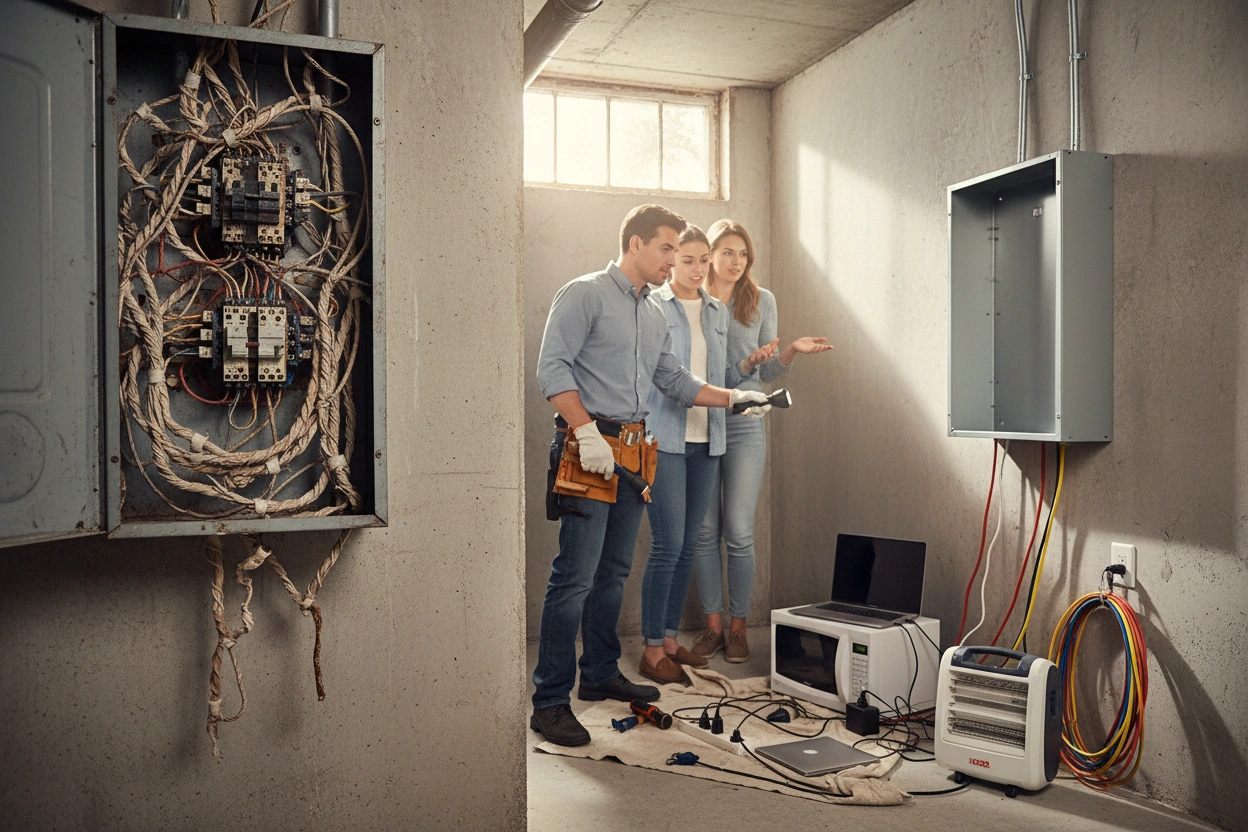
If your rental still runs on a 60- or 100-amp panel, it's already struggling to meet modern electrical demands. Today's tenants use EV chargers, heat pumps, and high-draw appliances that older panels simply can't support safely. You'll notice warning signs like frequent breaker trips and flickering lights when capacity falls short. Upgrades typically cost $1,500–$6,000 depending on scope, and NEC compliance isn't optional. Everything you need to make the right call is covered ahead.
Key Takeaways
- Older rentals with 60- to 100-amp panels often lack capacity for modern high-draw appliances like EV chargers and heat pump systems.
- Frequent breaker trips, flickering lights, and dimming signals indicate an undersized panel operating beyond its rated capacity.
- Federal Pacific or Zinsco panels with documented failures require immediate replacement due to serious safety hazards and code violations.
- Standard 200-amp panel upgrades typically cost $1,500–$3,000, with financing available through utility rebates or PACE financing programs.
- Permits, inspections, and 72-hour tenant notifications are mandatory when scheduling electrical panel upgrades in rental properties.
What Does Electrical Panel Capacity Actually Mean?
Your electrical panel's capacity refers to the maximum amount of electrical current it can safely distribute throughout your property, measured in amperes (amps).
Most older rentals were built with 60- to 100-amp panels—sufficient for the electrical load demands of past decades, but inadequate for modern tenants who rely on high-draw appliances, EV chargers, and multiple connected devices simultaneously.
Panel capacity determines how many circuits your system can support without tripping breakers or creating hazardous overload conditions.
When your electrical load consistently approaches or exceeds the panel's rated capacity, you're operating outside safe parameters.
A licensed electrician calculates your total load by evaluating every circuit, appliance, and system drawing power—then determines whether your current panel capacity meets NEC code requirements for safe, reliable operation.
Warning Signs Your Rental's Panel Is Undersized
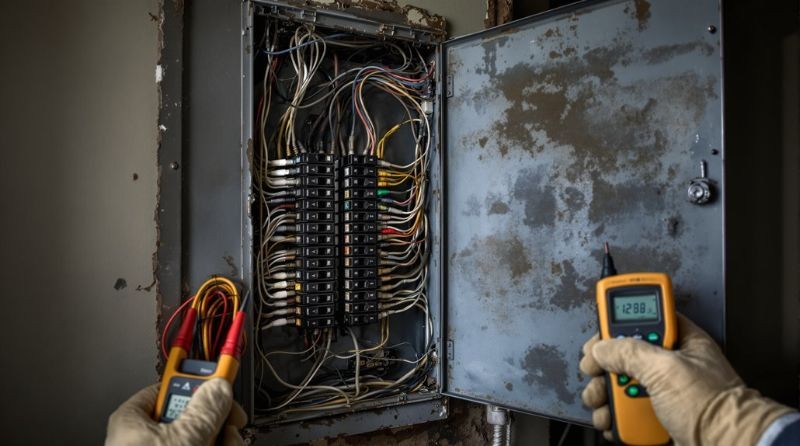
If your rental's breakers trip frequently under normal load conditions, your panel likely lacks the amperage capacity to handle current demand.
You'll also want to pay attention to flickering or dimming lights, which signal voltage fluctuations caused by circuits drawing more current than the panel can reliably supply.
Both symptoms point to an undersized panel that's operating beyond its rated capacity and may not meet NEC load calculation requirements for the dwelling. Regular property assessments can help identify tenant rights related to electrical safety concerns.
Frequent Breaker Trips
Frequent breaker trips are one of the clearest indicators that your rental property's electrical panel is undersized for its current load demands.
When circuits consistently exceed their rated amperage, breakers trip as a protective measure. While that's the intended function, repeated tripping signals that your panel can no longer safely support the property's electrical load.
Relying on breaker maintenance alone won't resolve the underlying capacity deficiency. If tenants regularly reset tripped breakers or you're receiving frequent complaints about power interruptions, treat it as a direct electrical safety concern, not a minor inconvenience.
NEC guidelines require that circuits operate within rated capacity without repeated interruption. Persistent tripping under normal usage conditions confirms your panel's amperage is insufficient and warrants a professional capacity evaluation immediately.
Flickering or Dimming Lights
Breaker trips aren't the only symptom of an undersized panel. If your tenants report flickering lights or dimming fixtures when appliances cycle on, your panel's struggling to distribute adequate voltage across circuits.
This phenomenon—called voltage sag—occurs when high-draw equipment like HVAC systems, refrigerators, or washing machines pull current that the panel can't cleanly supply to remaining circuits.
Persistent flickering lights aren't just an annoyance; they signal unstable voltage that can damage sensitive electronics and degrade wiring insulation over time. Under NEC guidelines, voltage delivered to fixtures should remain within 5% of nominal levels.
If dimming fixtures are a recurring complaint in your rental, have a licensed electrician perform a load calculation to determine whether a panel capacity upgrade is warranted.
How Much Amperage Does an Older Rental Actually Need?
Most older rentals were built with 60- or 100-amp service, but modern tenant lifestyles—EV chargers, home offices, high-efficiency HVAC, and multiple smart devices running simultaneously—routinely push those panels beyond their rated capacity.
The current standard for a single-family rental is a minimum 200-amp service, with larger units or those with electric heating and appliances often requiring more.
If your tenants are tripping breakers regularly, running extension cords as a workaround, or if you're seeing dimming lights when appliances cycle on, your panel's amperage isn't meeting actual load demand.
Additionally, landlords have an obligation to provide a habitable living environment, which includes ensuring that electrical systems meet current standards and tenant needs.
Common Amperage Baselines
When sizing a panel upgrade, three amperage tiers define the realistic options for most residential rentals: 100A, 150A, and 200A. Understanding these common amperage levels helps you match capacity to actual electrical load considerations.
100A suits small units under 1,000 sq ft with gas appliances and minimal electric demand—it's the floor, not the target.
150A bridges the gap for mid-size rentals running a mix of electric and gas systems, handling moderate loads without overbuilding.
200A is the current NEC-recommended standard for most single-family rentals, comfortably supporting electric HVAC, EV charging, and all-electric appliances.
Never size down to save upfront costs.
Undersized panels create recurring breaker trips, tenant complaints, and potential code violations during future inspections.
Modern Tenant Power Demands
Knowing the right amperage tier is only half the equation—the other half is understanding what your tenants are actually plugging in.
Modern tenant technology and energy efficiency upgrades have fundamentally shifted load requirements. What was adequate in 1975 isn't adequate now.
Today's tenants commonly run:
- EV chargers drawing 30–50 amps on dedicated circuits
- Heat pump systems replacing gas appliances with high-draw electric alternatives
- Home office setups with multiple monitors, NAS drives, and workstations
- Smart appliances including induction ranges, heat pump dryers, and connected HVAC
These loads stack quickly. A 100-amp panel that once served a family comfortably now struggles under a single tenant's standard setup.
Upgrading to 200 amps isn't optional anymore—it's baseline.
Signs of Insufficient Capacity
Older rentals rarely announce their capacity problems outright—but 5 warning signs point directly to an undersized panel.
Watch for circuit breakers that trip repeatedly under normal loads—this indicates demand consistently exceeds rated capacity.
Flickering or dimming lights when appliances run signal voltage drop from overtaxed circuits.
Burning smells or warm cover plates suggest outdated wiring is carrying more current than it's rated to handle, creating direct tenant safety hazards.
A panel still running 60–100 amps confirms it predates modern load requirements.
Finally, double-tapped breakers—two conductors sharing a single terminal—indicate someone compensated for insufficient slots rather than upgrading capacity.
Each sign points to the same conclusion: your panel can't meet current demand, and delaying the upgrade compounds both risk and liability.
When an Upgrade Is Required vs. Recommended
There's a meaningful difference between an electrical panel upgrade that's required and one that's simply advisable.
Upgrade necessity applies when code violations, failed inspections, or safety hazards exist. Upgrade benefits apply when modernization improves efficiency and tenant satisfaction.
Required upgrades typically involve:
- Federal Pacific or Zinsco panels with documented breaker failure rates
- Panels under 100 amps serving multi-appliance households
- Active code violations flagged during permitting or inspections
- Evidence of overheating, corrosion, or double-tapped breakers
Recommended upgrades apply when your panel functions but can't support modern electrical loads, EV chargers, or added square footage.
If you're planning renovations or re-leasing a unit, proactively upgrading positions your property for compliance and reduces future liability before issues escalate into emergencies. Additionally, understanding tenant and landlord repair responsibilities ensures that such upgrades are addressed without dispute.
What an Electrical Panel Upgrade Costs Landlords
Once you've identified whether your panel upgrade is required or recommended, the next variable to nail down is cost. A standard 200-amp panel replacement typically runs between $1,500 and $3,000, including labor.
If your property requires a service entrance upgrade or sub-panel installation, costs can reach $4,000 to $6,000 or more.
Before committing, run a cost benefit analysis that weighs upgrade costs against avoided code violations, insurance adjustments, and reduced maintenance calls.
Older panels like Federal Pacific or Zinsco units carry liability exposure that makes upgrading financially justifiable even when not legally mandated.
If upfront costs are a concern, explore upgrade financing options through utility rebate programs, PACE financing, or contractor payment plans.
Permits and inspections are non-negotiable line items—budget for them accordingly. Additionally, investing in preventative maintenance can help identify potential electrical issues before they escalate.
How to Plan a Panel Upgrade Without Displacing Tenants
Planning a panel upgrade while keeping tenants in place requires sequencing work around occupancy, not against it. Coordinate your upgrade timeline early, and prioritize tenant communication before scheduling begins.
Key steps to minimize disruption:
- Schedule the utility disconnect and re-energization within a single workday to limit outage windows.
- Notify tenants in writing at least 72 hours before work begins, per most local code requirements.
- Coordinate temporary power solutions if your jurisdiction or lease terms require continuous service.
- Stage inspections and permit sign-offs in advance to avoid delays that extend tenant impact.
Inspectors typically require a same-day final to restore power. Confirm this with your AHJ before the crew mobilizes.
Tight scheduling protects tenants and keeps your upgrade compliant from start to finish. Understanding habitability standards is crucial to ensure that the upgrade meets safety and quality requirements throughout the process.
Frequently Asked Questions
Can an Outdated Electrical Panel Affect My Rental Property's Insurance Coverage?
Yes, an outdated panel's safety issues can trigger insurance implications—your insurer may raise premiums, limit coverage, or deny claims if panel safety doesn't meet current code standards. Upgrade proactively to protect your policy.
Are Landlords Legally Required to Disclose Electrical Panel Limitations to Tenants?
Yes, you're generally required to disclose known electrical hazards and panel limitations to tenants. Most states mandate landlords reveal conditions affecting tenant safety, ensuring renters understand electrical capacity constraints before signing a lease.
Does Upgrading an Electrical Panel Increase My Rental Property's Market Value?
Yes, upgrading your electrical panel boosts your rental property's market value. You'll increase market appeal by meeting modern code requirements, and improved tenant satisfaction from reliable power directly supports stronger rental income and long-term property worth.
Can Tenants Request an Electrical Panel Upgrade, and What Are My Obligations?
Tenants can request an upgrade, but you're not obligated unless code compliance requires it. You control upgrade costs and decisions. Use clear tenant communication to set expectations around electrical capacity and any planned improvements.
How Long Does a Newly Upgraded Electrical Panel Typically Last in a Rental?
A newly upgraded panel's lifespan typically runs 25–40 years. You'll maximize that with regular maintenance tips like scheduling inspections every 3–5 years, keeping connections tight, and ensuring it stays code-compliant throughout your rental's lifecycle.
Conclusion
Your rental's electrical panel isn't a set-it-and-forget-it component — it's a system that has to keep pace with modern electrical demands. If you're seeing warning signs, don't wait for a failure to force your hand. Assess your current capacity, get a licensed electrician to evaluate your load calculations, and budget for an upgrade before code enforcement or an insurance claim does it for you. Proactive landlords protect their assets; reactive ones pay for it.