
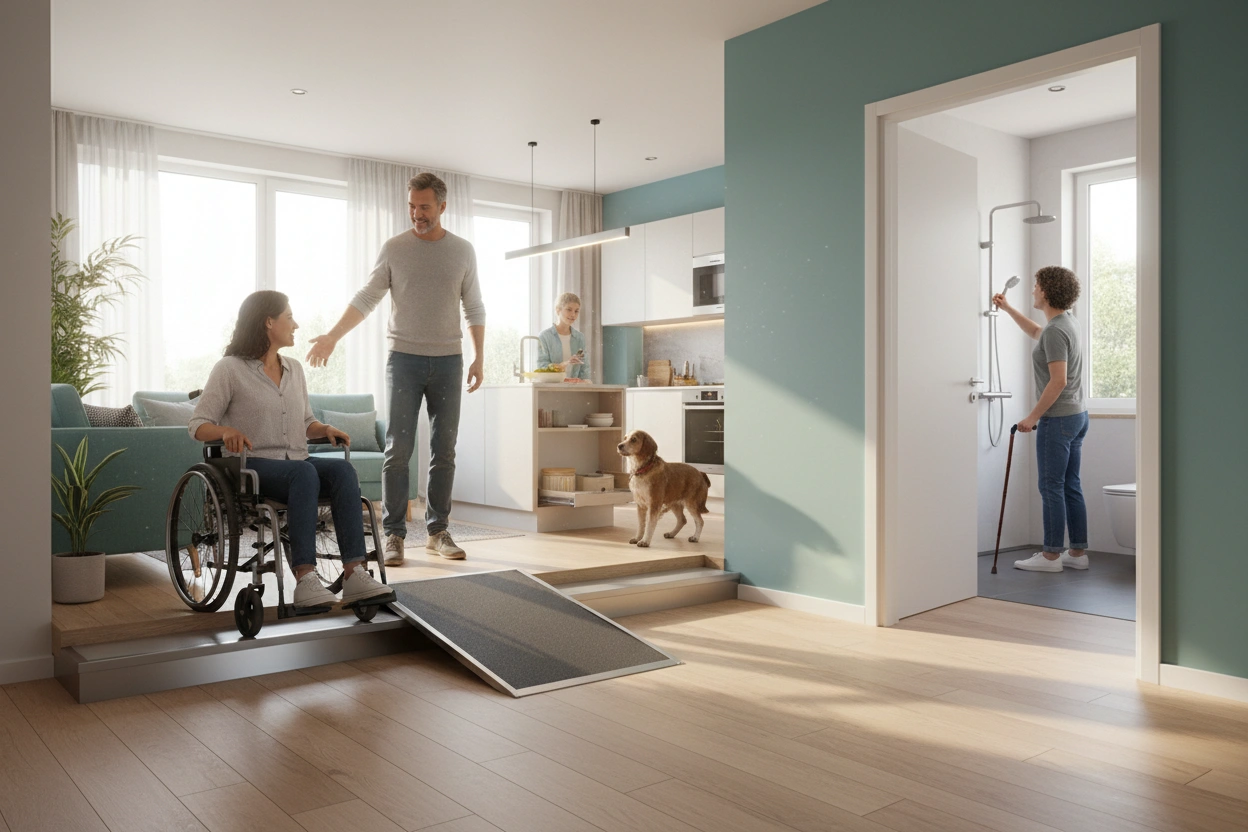
As a landlord, you're legally required to allow tenants with disabilities to make reasonable modifications to your rental property under the Fair Housing Act. You can't deny requests simply because they're inconvenient. Tenants typically cover modification costs, though ADA rules may shift that responsibility depending on your property type. You'll need written agreements, licensed contractors, and proper permits for every approved change. Keep exploring to understand exactly what your obligations are.
Key Takeaways
- The Fair Housing Act requires landlords to allow disability-related modifications, though tenants typically cover installation costs themselves.
- Common modifications include grab bars, wheelchair ramps, widened doorways, lever handles, and accessible alert systems for hearing-impaired tenants.
- Properties with four or more units built after 1991 must meet Fair Housing accessibility design requirements by law.
- Landlords should document all modification agreements in writing, including contractor requirements, scope of work, and restoration obligations.
- Proactive accessibility upgrades during renovations—like curbless showers and reinforced walls—can reduce costs and improve property marketability.
Are Landlords Required to Allow ADA Modifications?
Whether you own a small duplex or a large apartment complex, federal fair housing law shapes what you're required to allow when tenants request disability-related modifications. Under the Fair Housing Act, you must permit reasonable accommodations that allow tenants with disabilities to fully use and enjoy their unit.
Tenant rights in this area are well-established. You can't deny a request simply because the modification feels inconvenient or temporary.
However, you can require tenants to use a licensed contractor, obtain proper permits, and restore the unit to its original condition upon move-out.
You're not required to pay for modifications in most private rental situations, but you're required to allow them. Understanding this distinction keeps you legally protected and helps you respond to requests correctly. Additionally, compliance with laws can foster positive landlord-tenant relationships, further ensuring smooth interactions during the modification process.
Which Rental Units Actually Fall Under ADA Rules
Not every rental property falls under the same set of rules, and knowing where your units land changes how you approach modification requests.
ADA compliance basics apply differently depending on rental unit types and how your property is classified.
Privately owned single-family rentals and smaller multifamily buildings typically fall under the Fair Housing Act rather than the ADA. The ADA primarily governs publicly accessible spaces and housing programs receiving federal funding.
However, if you own commercial rental property or operate through a government-affiliated housing program, ADA standards apply directly.
Buildings constructed after 1991 with four or more units must meet Fair Housing accessibility design requirements by default. Additionally, understanding security deposit regulations can help you navigate tenant accommodation requests within legal frameworks.
Understanding which law governs your property determines what you're legally obligated to provide versus what remains a reasonable accommodation request from a tenant.
Common Accessibility Modifications Tenants May Request
When a tenant submits an accessibility modification request, knowing what to expect helps you respond quickly and prepare your property. Requests typically fall into a few predictable categories based on mobility, sensory, or functional limitations.
Common modifications include:
- Wheelchair ramps at unit entrances or shared building access points
- Bathroom grab bars near toilets, showers, and tubs
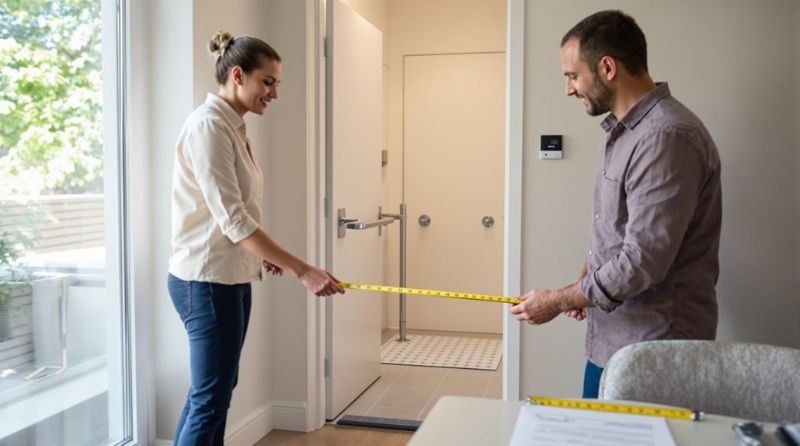
- Widened doorways to accommodate wheelchairs or walkers
- Lever-style door handles replacing round knobs
- Roll-under sink clearance in kitchens and bathrooms
- Visual or vibrating alert systems for tenants with hearing impairments
- Accessible light switches and outlets repositioned to reachable heights
Each request carries different structural implications. Grab bars require blocking behind drywall. Wheelchair ramps must meet slope specifications. Understanding these technical requirements upfront lets you assess scope, cost, and contractor needs efficiently. Additionally, maintaining an habitable living environment for all tenants is crucial to comply with legal responsibilities.
Who Pays for ADA-Friendly Rental Modifications
When a tenant requests an accessibility modification, they're generally responsible for covering the cost under the Fair Housing Act, though your legal obligations shift depending on the nature of the modification and your property type.
If your rental falls under stricter ADA guidelines—such as properties with four or more units built after 1991—you may be required to fund certain accessibility features yourself.
In cases where neither party has a clear-cut obligation, negotiating a cost-sharing arrangement can protect your property value while keeping you on solid legal ground. It's also important to understand your landlord duties as outlined in RCW 59.18.060 to ensure compliance with legal requirements.
Tenant-Requested Modification Costs
One of the most common questions landlords face when a tenant requests ADA-related modifications is straightforward: who foots the bill?
Under the Fair Housing Act, tenants with disabilities hold tenant rights that allow them to request reasonable modifications at their own expense. That means you're generally not required to cover costs for modification examples like grab bars, roll-in showers, widened doorways, or ramp installations.
However, you can require tenants to use a licensed contractor, obtain proper permits, and restore the property to its original condition upon move-out, unless restoration is unreasonable.
Document everything in a written modification agreement before work begins. This protects your property and establishes clear expectations. Knowing these boundaries helps you respond confidently and compliantly when modification requests come in.
Landlord Legal Obligations
While tenants typically cover the cost of their own modifications, your legal obligations as a landlord shift depending on property type, federal law, and local jurisdiction.
Under the Fair Housing Act, you must allow reasonable modifications for tenants with disabilities, though you generally aren't required to pay for them in private housing.
However, legal requirements change if your property falls under the Americans with Disabilities Act—typically applicable to multifamily housing built after 1991. In those cases, certain accessibility features must already exist.
Local jurisdictions in cities like Seattle, Portland, and Denver may impose additional tenant rights protections that expand your financial responsibilities.
Always consult a local attorney familiar with fair housing law to understand exactly what your obligations are before denying or approving any modification request.
Negotiating Shared Expenses
Even though federal law generally places modification costs on the tenant, there's often room to negotiate a cost-sharing arrangement that benefits both parties. Shared responsibility can strengthen tenant retention and reduce turnover costs, making cost sharing strategies worth considering.
Common negotiating approaches include:
- Splitting upfront costs in exchange for a longer lease commitment
- Landlord-funded modifications that add long-term property value, such as wider doorways or accessible bathrooms
- Reduced rent offsets where tenants absorb installation costs incrementally
- Written agreements outlining restoration responsibilities upon lease termination
Document every arrangement clearly in the lease or a separate addendum. Verbal agreements create liability exposure.
A well-structured cost-sharing agreement protects your investment, satisfies accessibility needs, and keeps the landlord-tenant relationship professional and legally sound.
How to Evaluate and Approve Modification Requests
When a tenant submits an ADA modification request, you'll need to assess it against a clear set of criteria before approving or denying it. Start by verifying that the tenant has a documented disability requiring the accommodation.
Then review your modification guidelines to confirm the request is reasonable and structurally feasible for the property.
Evaluate whether the modification affects shared spaces, load-bearing elements, or utility systems, as these require additional scrutiny.
Prioritize tenant communication throughout the review process—acknowledge receipt promptly and provide a clear timeline for your decision.
If you approve the request, document the agreed-upon scope, contractor requirements, and restoration obligations in writing.
If you deny it, state your reasoning clearly to avoid fair housing disputes and maintain a defensible paper trail. Additionally, ensure that any modifications requested do not violate your landlord obligations related to structural integrity or safety.
Proactive Upgrades That Protect Your Property Long-Term
Reactive modifications cost more than planned ones—both financially and operationally. Incorporating accessibility-focused safety upgrades during renovations or turnovers reduces disruption, lowers per-project costs, and positions your property competitively. The long-term benefits extend beyond compliance—you're improving marketability and reducing liability exposure.
Prioritize these proactive upgrades:
- Wider doorways (36"+): Accommodates mobility devices and simplifies future modifications.
- Lever-style door hardware: Replaces round knobs with minimal retrofit cost.
- Curbless shower entry: Eliminates tripping hazards and supports aging-in-place tenants.
- Reinforced bathroom walls: Enables future grab bar installation without structural rework.
You don't need to overhaul everything at once. Staged upgrades tied to natural renovation cycles keep costs manageable while steadily improving your property's accessibility, durability, and long-term value. Additionally, investing in proactive maintenance not only enhances property value but also ensures a better experience for tenants.
Frequently Asked Questions
Can a Tenant Remove Modifications When They Move Out?
Yes, a tenant can remove modifications, but they're responsible for restoring the property to its original condition. You should clearly outline tenant responsibilities and the modification process in your lease agreement beforehand.
Does Renters Insurance Cover ADA Modification Damages?
Renters insurance typically doesn't cover ADA modification costs. You'll need to review the tenant's specific policy, as coverage varies. Consider requiring tenants to carry liability coverage that addresses potential modification-related damages during their tenancy.
Can Landlords Deny Modifications for Historic or Protected Properties?
You can deny modifications on historic properties, but you'll need to weigh historic property considerations carefully against legal compliance factors. Fair Housing laws still apply, so consult an attorney before refusing any disability-related accommodation requests.
Are There Tax Benefits for Landlords Who Make Accessibility Upgrades?
You may qualify for tax deductions on accessibility upgrades, and government incentives like the Disabled Access Credit can offset costs. Consult a tax professional to maximize your benefits based on your property's specific situation.
What Happens if a Completed Modification Fails a Local Inspection?
If a completed modification fails inspection, you'll need to address the cited deficiencies and resubmit for re-inspection. Review inspection appeals processes and guarantee all modification requirements are met before scheduling a follow-up evaluation.
Conclusion
Understanding your obligations around ADA-friendly rental modifications doesn't have to be overwhelming. By knowing which units fall under accessibility rules, handling modification requests properly, and making proactive upgrades, you're protecting your investment while creating genuinely inclusive spaces. Whether you're managing one unit or dozens, staying informed keeps you legally compliant and competitively positioned in today's rental market. Don't wait for a dispute to force your hand — act now and build accessibility into your property strategy from the start.