
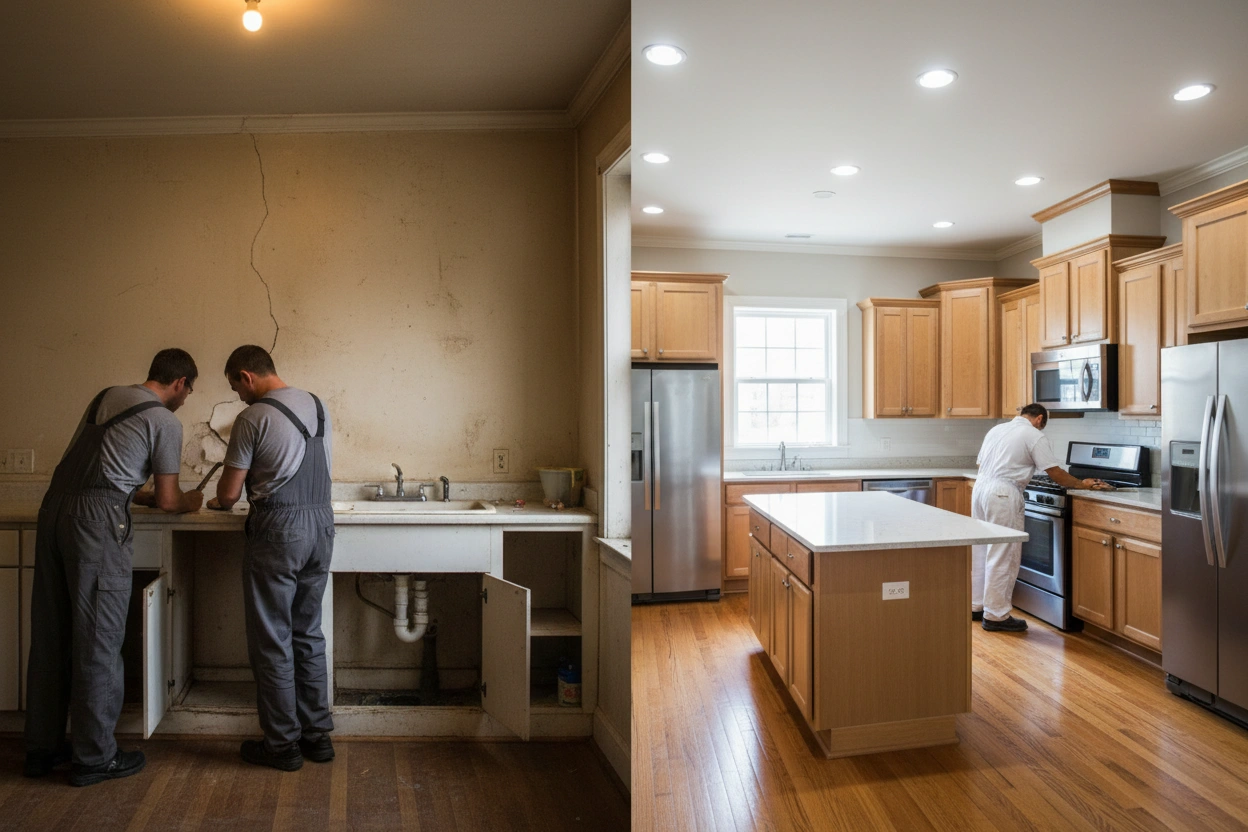
A rental repair becomes a capital improvement the moment it meets any one of the IRS's three BAR tests: Betterment, Adaptation, or Restoration. If your work fixes a pre-existing defect, expands capacity, repurposes the property, or rebuilds a major structural component, it's no longer a repair. That distinction changes everything about how and when you deduct the expense. The full breakdown ahead will sharpen exactly where your specific projects land.
Key Takeaways
- A repair becomes a capital improvement if it meets any IRS BAR test: Betterment, Adaptation, or Restoration.
- Work that adds value, expands capacity, or extends a property's useful life is classified as a capital improvement.
- Replacing a single component is a repair, but replacing an entire system, like all cabinetry, is an improvement.
- Bundling multiple repairs together can trigger betterment aggregation, reclassifying deductible repairs as capital improvements.
- Capital improvements must be depreciated over 27.5 years, while repairs are fully deductible in the current tax year.
Repair vs. Capital Improvement: What the Difference Actually Means
When you're managing a rental property, few distinctions carry more financial and tax weight than the difference between a repair and a capital improvement.
Repair definitions under IRS guidelines describe work that restores a property to its original working condition without adding value or extending its useful life. Replacing a broken faucet or patching drywall qualifies.
Improvement criteria, however, require meeting at least one of three standards: the work must better the property, restore it after a casualty event, or adapt it to a new use. Installing a new HVAC system or adding a bathroom meets these thresholds.
Misclassifying one as the other affects how you deduct costs—repairs are immediately expensed, while capital improvements must be depreciated over time.
The IRS Tests That Decide If It's a Repair or a Capital Improvement
The IRS applies three primary tests—the BAR tests—to determine whether work on your rental property qualifies as a capital improvement: Betterment, Adaptation, and Restoration.
Understanding these IRS guidelines directly shapes your expense classifications and tax implications.
Betterment means the work fixes a pre-existing defect, expands the property's capacity, or increases its value.
Adaptation means you've repurposed the property or a component for a new use.
Restoration means you've rebuilt or replaced a major structural component.
If your property upgrades satisfy any one of these three tests, the IRS classifies the work as a capital improvement—not a deductible repair.
You must then depreciate the cost over time rather than deduct it in the current tax year.

When Repairs Done Together Become a Capital Improvement
Individually, a patched floor, a replaced faucet, and a repainted wall are all deductible repairs—but group them together under a single project, and the IRS may reclassify the entire scope of work as a capital improvement.
This concept, known as "betterment aggregation," means your combined renovations can lose their repair status simply due to their collective scope. The IRS evaluates whether your maintenance investments, when bundled, restore the property beyond its prior condition or adapt it to a new use.
Even preventative enhancements, individually deductible, can trigger capitalization when executed simultaneously.
If you're planning extensive upgrades, structuring the timing and documentation of each task separately may preserve your deduction eligibility—but proceed carefully, as intentional fragmentation to avoid capitalization can raise audit red flags.
Common Rental Expenses: Repair or Capital Improvement?
Categorizing your rental expenses correctly can mean the difference between an immediate deduction and a multi-year depreciation schedule, so understanding how specific, common costs are classified is essential.
Patching drywall, fixing a leaky faucet, or replacing a broken window qualifies as a repair—it restores function without extending repair longevity or increasing investment value.
Conversely, installing new flooring throughout the unit, upgrading an HVAC system, or adding a deck enhances the property's value and useful life, making it a capital improvement.
Gray areas exist. Replacing a single broken cabinet door is a repair; replacing all cabinetry is an improvement.
When you're unsure, ask whether the work restores or enhances. That distinction drives the correct tax treatment and protects your deductions.
How the Repair vs. Capital Improvement Label Changes What You Deduct and When
Once you know whether a cost is a repair or a capital improvement, that label directly controls your deduction timing and cash flow.
Repairs reduce your taxable rental income immediately, giving you a full deduction in the year you pay. That's a straightforward tax implication with immediate impact.
Capital improvements work differently. You'll recover those costs through depreciation, spread across multiple years under IRS recovery periods—27.5 years for residential rental property. Your deduction strategies shift from short-term relief to long-term cost recovery.
The distinction matters because misclassifying an improvement as a repair can trigger IRS scrutiny, penalties, and back taxes.
Conversely, missing legitimate repair deductions costs you money now. Label each expense correctly from the start, and consult a tax professional when the classification isn't clear.
What Landlords Lose by Misclassifying Repairs as Capital Improvements
Misclassifying a repair as a capital improvement doesn't just affect your paperwork—it directly reduces your cash flow. Instead of deducting maintenance costs in the current tax year, you're forced to depreciate the expense over years or decades. That delay has real tax implications: you pay more in taxes now and recover your money slower.
The financial consequences compound when you're managing multiple units. Small misclassifications add up, quietly eroding your annual deductions. Misclassification risks aren't theoretical—audits can trigger penalties, interest, and back taxes if the IRS determines you've improperly categorized expenses.
Getting the classification right protects your bottom line. Every dollar deducted today is worth more than a dollar depreciated over 27.5 years. Precision here isn't optional—it's a core part of smart rental ownership.
Frequently Asked Questions
Can I Deduct Repairs Made Before a Tenant Moves In?
Yes, you can deduct pre-tenancy repairs if they're ordinary maintenance expenses. Track your repair timelines carefully, as costs tied to tenant responsibilities or property readiness typically qualify as deductible expenses under IRS guidelines.
Does a Home Warranty Affect How Repairs Are Classified?
A home warranty doesn't change your repair classifications for tax purposes. Warranty coverage only affects who pays for repairs—the IRS still evaluates whether you're restoring versus improving your property independently.
How Do Capital Improvements Affect My Rental Property's Sale Price?
Capital improvements boost your property's market value by enhancing its condition and functionality, driving property appreciation. When you sell, they'll justify a higher asking price and potentially attract more qualified buyers, maximizing your return.
Should I Document Repairs Differently Depending on Their Classification?
Yes, you should document repairs differently based on classification criteria. For routine repairs, capture costs and dates. For capital improvements, you'll need detailed records supporting depreciation schedules, which strengthens your repair documentation during audits or property sales.
Can Tenants Request Capital Improvements Instead of Standard Repairs?
Tenants can't request capital improvements—they're entitled to habitable conditions, not upgrades. You determine improvement types based on property goals and finances. Tenant requests typically trigger standard repairs, not enhancements that increase your property's long-term value.
Conclusion
Getting the repair vs. capital improvement distinction right isn't optional — it's foundational to managing your rental's tax position effectively. Misclassify a deductible repair as a capital improvement, and you've delayed cash flow you could've claimed immediately. Apply the IRS's materiality, betterment, restoration, and adaptation tests consistently, watch for aggregation traps, and document everything. Your classifications today directly shape your deductions, your depreciation schedules, and ultimately, your bottom line.