

During a mid-lease inspection, you'll want to check walls, ceilings, and floors for damage beyond normal wear, and test all plumbing fixtures and appliances for proper function. Verify that smoke and carbon monoxide detectors are operational. Outside, assess the foundation, roof, gutters, and landscaping for neglect or hazards. Document everything with timestamped photos and a standardized checklist. There's a systematic approach to each of these areas that'll help you stay protected.
Key Takeaways
- Check walls, ceilings, and floors for water stains, cracks, unauthorized paint, or damage beyond normal wear.
- Test all plumbing fixtures for leaks or slow drainage and confirm appliances are functioning properly.
- Verify that smoke and carbon monoxide detectors are operational to ensure tenant safety compliance.
- Inspect the exterior foundation, roof, gutters, driveways, and fencing for structural issues or safety hazards.
- Review landscaping for overgrown vegetation and assess walkways for potential trip or drainage hazards.
Why Mid-Lease Inspections Protect Your Rental Property
Mid-lease inspections give you a clear, documented snapshot of your property's condition before small issues escalate into costly repairs. By scheduling routine walkthroughs, you establish tenant accountability and create a verifiable record of how your property is being maintained throughout the lease term.
These inspections also support property longevity by identifying wear, unauthorized alterations, or maintenance neglect early. Catching a slow leak or damaged fixture mid-lease costs considerably less than addressing the compounded damage discovered at move-out.
Documentation from each inspection strengthens your position in security deposit disputes and gives you leverage when enforcing lease terms. You're not waiting for problems to surface—you're systematically monitoring your investment, protecting its value, and ensuring tenants uphold their responsibilities before minor issues become major financial liabilities.
When Should You Schedule a Mid-Lease Inspection?
Timing your mid-lease inspection strategically determines how effectively it protects your property. For most lease terms, schedule your inspection at the midpoint — six months into a twelve-month lease gives you enough time to identify developing issues before they escalate.
Coordinate timing considerations around your lease agreement's notification requirements, which typically mandate 24 to 48 hours' advance written notice. Factor in tenant availability when setting the appointment, as cooperative tenants provide better access and more accurate information about existing conditions.
Avoid scheduling during peak work hours when tenants are unlikely to be present. If you've received maintenance requests or noticed deferred repairs, prioritize an earlier inspection rather than waiting for the midpoint.
Document everything immediately following the visit while observations remain fresh.
What to Check Inside the Rental Unit
Once you've locked in the inspection date and notified your tenant, the next step is knowing exactly what to look for when you walk through the unit.
Use a structured maintenance checklist to stay consistent and thorough across every room.
Start with the essentials:
- Walls and ceilings: Look for water stains, cracks, or unauthorized paint.
- Floors: Check for damage beyond normal wear.
- Plumbing fixtures: Test faucets, toilets, and drains for leaks or slow drainage.
- Appliances: Confirm everything functions as intended.
- HVAC filters: Replace or flag for replacement.
- Smoke and carbon monoxide detectors: Verify they're operational.
Tenant habits often reveal themselves through deferred damage or neglected upkeep.
Document everything with photos, noting conditions that require immediate attention or future follow-up.
What to Inspect Outside and Around the Property
While the interior inspection covers the living environment directly, the exterior of your rental property presents its own set of maintenance concerns that can escalate quickly if left unaddressed.
Walk the full perimeter and systematically assess each area.
Focus your exterior maintenance review on:
- Foundation and siding – Look for cracks, water intrusion points, or deteriorating materials.
- Roof and gutters – Check for missing shingles, sagging, or debris buildup.
- Driveways and walkways – Identify trip hazards or drainage issues.
- Landscaping concerns – Overgrown vegetation, dying trees, or neglected lawn areas can signal tenant negligence or signal larger drainage problems.
- Fencing and gates – Confirm structural integrity and proper latching.
Document everything photographically and address deficiencies before they compound into costly repairs.
How to Document a Mid-Lease Inspection the Right Way
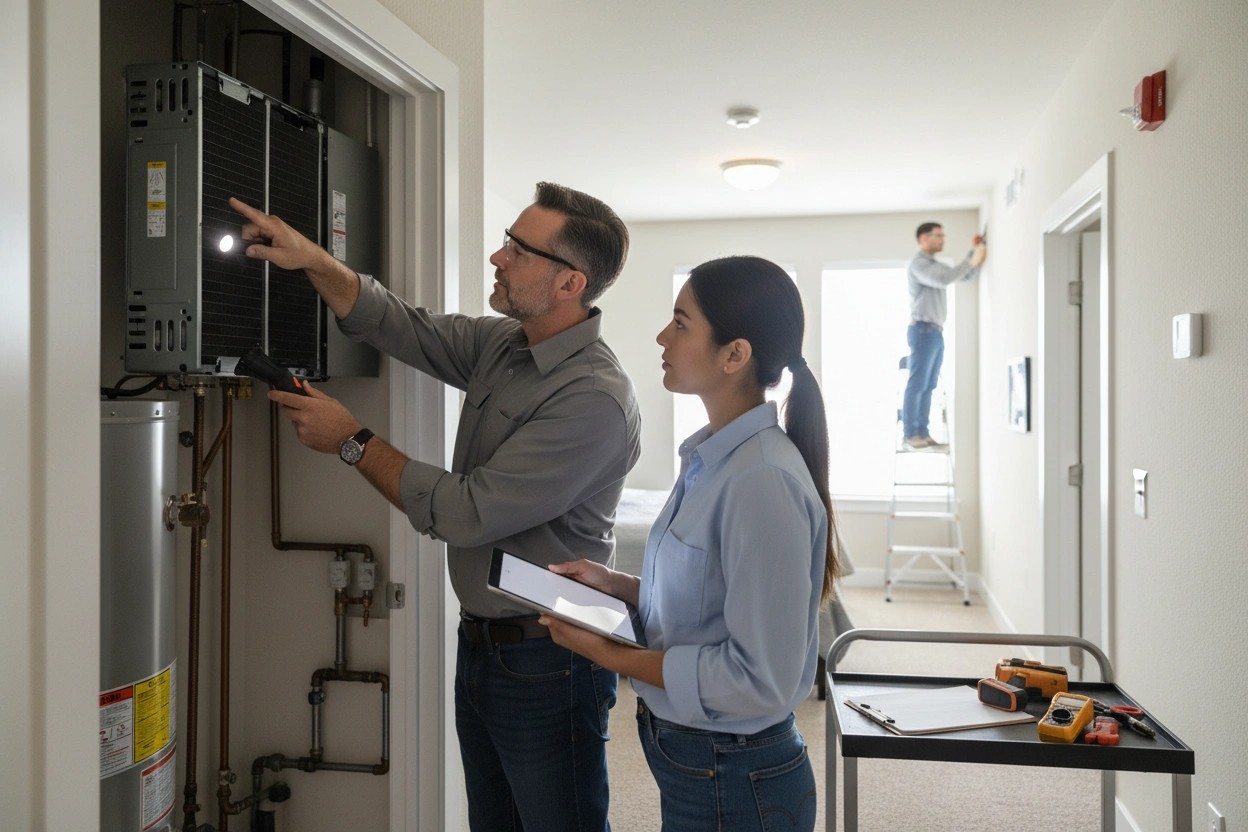
Thorough exterior documentation rounds out a complete mid-lease inspection record, but capturing what you've observed—inside and out—in a clear, defensible format is what gives your inspection real legal and operational weight.
Use a standardized inspection checklist to record each area systematically, noting condition, date, and any identified concerns.
Photograph everything—timestamped images paired with written notes create an audit trail that protects you if disputes arise.
Once documented, share a summary with your tenant through formal tenant communication, confirming findings and any required follow-up.
Keep copies stored digitally and tied to the lease file.
Consistent documentation disciplines your process, supports accountability, and guarantees that maintenance concerns don't fall through the cracks between inspections.
It's not just record-keeping—it's risk management.
How to Handle Repairs, Damage, and Tenant Follow-Up
Repairs and follow-up actions identified during a mid-lease inspection require a structured, prioritized response—not indefinite deferral.
Apply repair prioritization by categorizing issues into urgent, near-term, and scheduled categories. Address safety hazards and code violations immediately, then work through lower-priority maintenance systematically.
Tenant communication must remain consistent throughout this process. Notify tenants in writing about repair timelines, scheduled entry dates, and completed work. This keeps expectations clear and reduces disputes.
If damage is tenant-caused, reference your inspection documentation and lease terms when initiating the conversation. Present findings objectively and outline any cost-recovery procedures per your lease agreement.
Services like RentalRiff can help landlords manage this entire process—coordinating licensed specialists, maintaining timelines, and handling tenant communication directly so nothing falls through the cracks.
Frequently Asked Questions
Can a Tenant Legally Refuse a Mid-Lease Inspection?
Yes, a tenant can legally refuse if you don't provide proper notice. Tenant rights protect privacy concerns, so you must follow state-specific notice requirements—typically 24–48 hours—before entering the property for a mid-lease inspection.
Does a Mid-Lease Inspection Affect the Tenant's Security Deposit?
A mid-lease inspection doesn't directly affect security deposit deductions, but it documents property conditions. You'll protect your tenant rights by addressing flagged issues promptly, preventing minor damage from escalating into costly deductions at lease-end.
Should I Hire Someone to Conduct the Inspection for Me?
You can benefit from hiring a professional for inspection benefits and professional expertise. RentalRiff's property specialists systematically assess your rental's condition, ensuring nothing's overlooked while maintaining regulatory compliance and protecting your investment effectively.
Are Mid-Lease Inspections Required by Law for Landlords?
Mid-lease inspections aren't universally required by law, but you must honor lease agreements and respect tenant rights. Check your local regulations, as requirements vary by state and jurisdiction, to guarantee you're staying compliant.
How Many Mid-Lease Inspections Can I Do per Year?
Most states allow you to conduct 1-2 mid lease frequency inspections annually, but you must respect tenant rights by providing proper notice—typically 24-48 hours—before entering. Always check your local landlord-tenant laws for specific limits.
Conclusion
Mid-lease inspections aren't just a formality — they're one of the most effective tools you have for protecting your rental investment. By inspecting the interior, exterior, and key systems on a regular schedule, you're catching problems early, holding tenants accountable, and maintaining property value over time. Document everything, follow up promptly, and treat each inspection as a critical checkpoint in your property management process.