
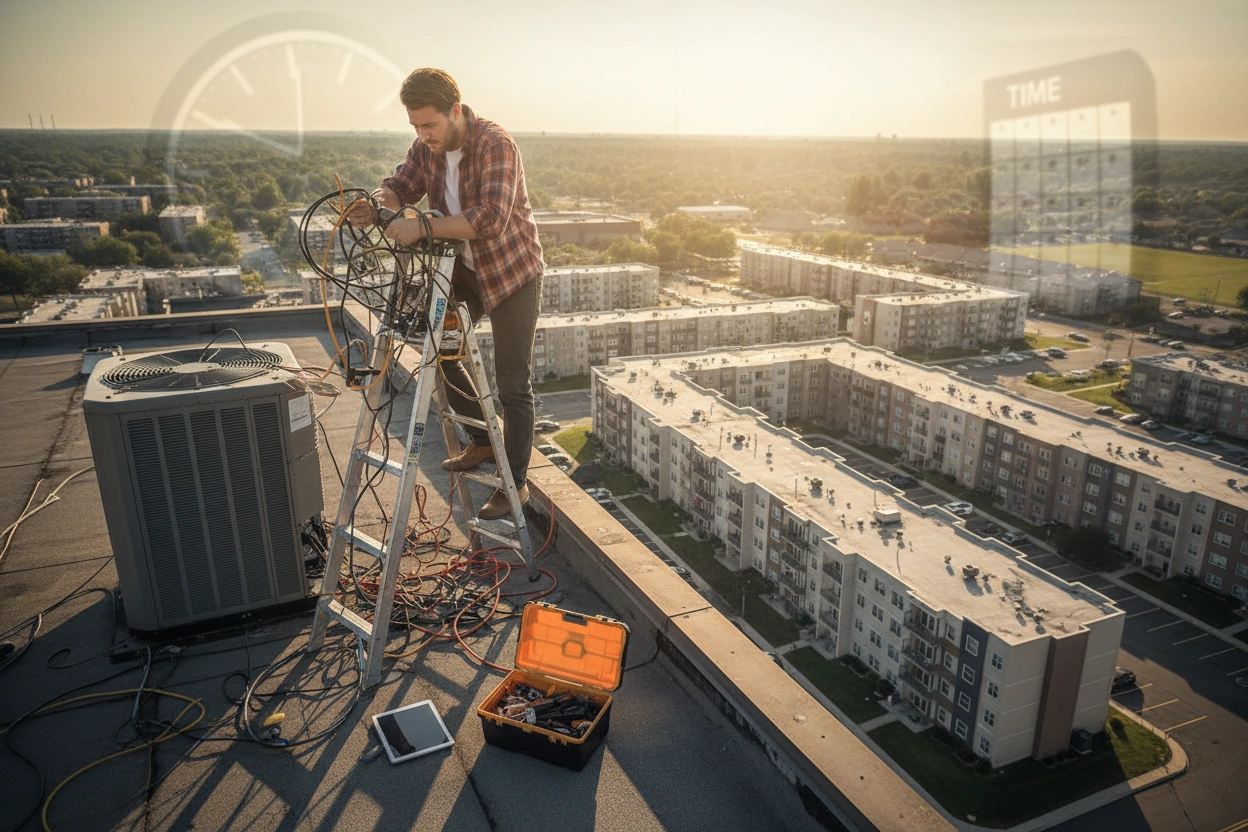
The dream of building a real estate empire often starts with a single property and a heavy dose of "sweat equity" to keep expenses low. While the hands-on approach feels like a badge of honor for many new landlords, it can quickly transform into a restrictive bottleneck that prevents you from reaching the next level of success. We are going to examine the true financial and opportunity costs associated with self-performed maintenance and how shifting your strategy can unlock the door to rapid portfolio expansion.
The Illusion of DIY Savings
At first glance, spending a Saturday fixing a tenant's garbage disposal or patching a hole in the drywall seems like a clear financial win. You avoid a $150 service call and keep those funds in your operating account, effectively "paying yourself" for the labor. However, this calculation is fundamentally flawed because it ignores the most valuable asset in any business: the owner's time. If you are spending your weekends performing manual labor, you are essentially working a low-wage job within your own company rather than acting as the CEO.
When you calculate the true cost of DIY maintenance, you must factor in the time spent sourcing materials, driving to the property, and the inevitable "trial and error" that comes with non-professional repairs. A task that takes a licensed specialist forty-five minutes might take an amateur three hours. When multiplied across a growing portfolio, these hours represent a massive drain on your energy. This exhaustion often leads to burnout, causing landlords to sell off properties prematurely just to reclaim their personal lives, effectively ending their growth journey before it truly begins.
Breaking Down the Invisible Expenses
- Opportunity Cost: Every hour spent under a sink is an hour not spent analyzing new deals, networking with lenders, or optimizing your tax strategy.
- Tool and Equipment Investment: Professional repairs often require specialized tools that are expensive to purchase and maintain for occasional use.
- Material Waste: Lacking the precise knowledge of a trade professional often leads to buying the wrong parts or wasting materials during the learning process.
- Extended Vacancy: DIY turnovers often take twice as long as professional ones, costing you hundreds or thousands in lost rent while the unit sits empty.

The Quality Gap and Long-Term Liability
Beyond the immediate loss of time, DIY maintenance often suffers from a quality gap that can haunt your balance sheet for years. Professional "Property Specialists" are licensed and insured because their work must meet specific safety and building codes. When a landlord performs their own electrical or plumbing work, they assume 100 percent of the liability. A poorly wired outlet might work for months before causing a fire, at which point an insurance company may deny a claim if they discover the work was performed by an unlicensed individual.
Furthermore, "bandage fixes"—the hallmark of the DIYer—tend to fail at the most inconvenient times. A temporary patch on a leaky pipe rarely addresses the underlying corrosion, ensuring that you will be back at the property in six months to deal with the same issue, likely with added water damage. RentalRiff addresses this by providing access to licensed and bonded professionals who focus on proactive property care, ensuring that repairs are durable and compliant with local regulations. This commitment to quality preserves the physical integrity of your buildings and protects your long-term ROI.
Risks of Unprofessional Workmanship
- Insurance Denials: Major claims can be jeopardized if foundational systems were serviced by unqualified individuals.
- Code Violations: Improper repairs can lead to fines during city inspections or complications during a property sale.
- Tenant Safety: Mistakes in gas, electrical, or structural repairs can pose genuine physical risks to your residents.
- Resale Value Erosion: Savvy buyers and professional inspectors can easily spot "landlord specials," which often leads to lower offers during the exit phase.
Overcoming the Maintenance Bottleneck for Scalability
Scaling from three properties to thirty requires a fundamental shift in how you view property upkeep. In a small portfolio, you might be able to survive the occasional emergency call, but in a larger one, maintenance becomes a statistical certainty. If you haven't outsourced this function, your growth will eventually hit a ceiling where you simply run out of hours in the day to handle the volume of requests. This is the "maintenance bottleneck," and it is where most independent landlords stop growing.
To break through, you must implement systems that handle the physical upkeep of the home without your direct involvement. This means having a primary contact for tenant communication and a reliable pipeline of specialists ready to deploy. By delegating the 24/7 maintenance requests and routine repairs, you reclaim the mental bandwidth necessary to manage the high-level aspects of your business. This transition allows you to view your portfolio as a financial instrument rather than a second job.
Steps to Automate Your Upkeep
- Centralize Communication: Move away from direct texts and calls by using a dedicated tenant support system.
- Standardize Repair Protocols: Create a clear set of guidelines for what constitutes an emergency and how non-urgent repairs are scheduled.
- Leverage Specialist Networks: Instead of hunting for contractors on your own, use a service like RentalRiff that has already vetted and insured the professionals.
- Prioritize Preventative Care: Schedule recurring tasks like HVAC servicing and gutter cleaning so they happen automatically, reducing the frequency of reactive "crisis" calls.
Elevating the Tenant Experience Through Professionalism
The way you handle maintenance is a direct reflection of your brand as a landlord. High-quality tenants—those who pay on time and take care of the property—have options. They are attracted to properties that are managed professionally and efficiently. When a tenant has to wait for a landlord to find time after their "real job" to fix a broken appliance, it creates a sense of frustration that leads to turnover.
Consistent, professional maintenance is the most effective tenant retention tool in your arsenal. By providing prompt tenant support and communication, you build a relationship based on trust and reliability. This professional touch is exactly what RentalRiff offers, serving as a cost-effective alternative to full-service management while ensuring that maintenance is handled with the speed and expertise that modern renters expect. Happy tenants stay longer, which reduces your turnover services costs and stabilizes your cash flow, providing a solid foundation for further acquisitions.
Shifting Focus to High-Value Activities
The final step in accelerating your portfolio growth is repurposing the time you’ve reclaimed. If you save ten hours a week by outsourcing maintenance, those hours must be reinvested into activities that move the needle. This might include studying market trends, walking new potential properties, or refining your property management software to better track your rental income.
Success in real estate is rarely about who can swing a hammer the best; it is about who can manage capital and people most effectively. When you stop being the repairman, you start being the investor. This mindset shift is what separates the person who owns a few houses from the person who owns a thriving real estate company. By recognizing the hidden costs of DIY early on, you can build a scalable infrastructure that supports your ambitions rather than limiting them.
High-Value Reinvestment Opportunities
- Market Research: Identifying emerging neighborhoods before they peak in price.
- Financing Optimization: Working with lenders to restructure debt and pull out equity for new purchases.
- Strategic Networking: Building relationships with wholesalers, brokers, and other investors who can bring you off-market deals.
- System Refinement: Improving your tenant screening process to ensure you are only renting to the most reliable individuals.
Building a Sustainable Real Estate Legacy
True wealth in real estate is built through compounding and scale, neither of which is possible if you are tied to the daily minutiae of property repairs. Transitioning away from the DIY model is not an admission of defeat; it is a strategic promotion of yourself to a higher level of management. By investing in professional maintenance systems and focusing on the physical upkeep of your home through experts, you ensure the longevity of your assets and the freedom to pursue new opportunities. Your portfolio should serve your life, not consume it, and a professional approach to maintenance is the key to making that a reality.