

San Diego's coastline loses 6–18 inches of bluff annually, and that erosion directly threatens your property's structural integrity, assessed value, and financing terms. High-risk zones like Encinitas and Del Mar face tightening loan-to-value ratios, insurance premium spikes of 30–80%, and potential policy non-renewals. Yet coastal properties still average 6–8% annual appreciation with vacancy rates below 4%. Understanding exactly where the risks concentrate—and how to manage them—determines whether your investment gains or loses ground.
Key Takeaways
- San Diego bluffs erode 6–18 inches annually, shrinking land area and directly reducing assessed property values over time.
- Insurance premiums spike 30–80% in high-erosion zones, with lenders tightening loan-to-value ratios from 80% to 60%.
- High-risk neighborhoods include Encinitas, Del Mar, Solana Beach, and La Jolla Shores, each facing distinct erosion vulnerabilities.
- Despite erosion risks, coastal properties appreciate 6–8% annually with rental premiums 20–35% above inland comparables.
- Properties with seawalls, riprap revetments, or proper drainage infrastructure typically outperform unprotected coastal properties at resale.
How Coastal Erosion Actually Threatens San Diego Properties
Coastal erosion in San Diego isn't a distant risk—it's an active, measurable process reshaping the region's bluffs and shorelines at rates that directly affect property values and structural integrity.
San Diego County loses an average of 6–12 inches of bluff annually in high-exposure zones, with accelerated rates following storm surge events and El Niño cycles.
If you own coastal property, you're contending with undermined foundations, destabilized slopes, and shrinking setback distances that can trigger permit restrictions or mandatory retrofits.
Beachfront resilience depends on your ability to anticipate these losses rather than react to them.
Without proactive erosion mitigation measures—such as riprap installation, drainage management, or bluff stabilization systems—you risk compounding structural damage, reduced insurability, and long-term depreciation that outpaces any short-term rental income gains. Additionally, the risk of salt air corrosion can further compromise metal fixtures and outdoor components, exacerbating maintenance costs.
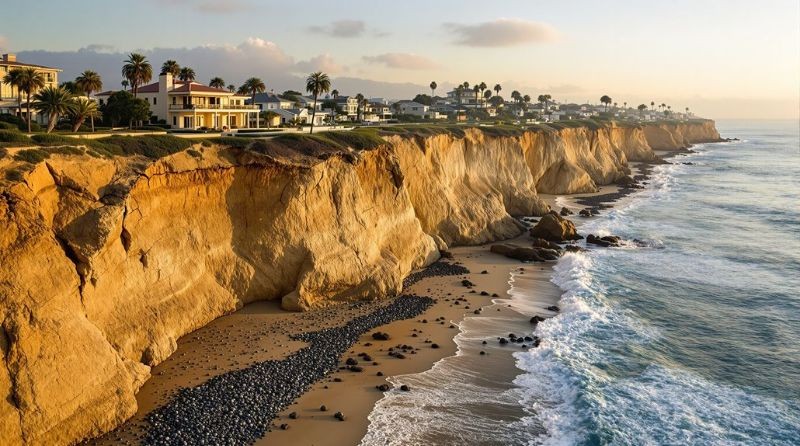
Which San Diego Neighborhoods Face the Highest Erosion Risk
Where you own property along San Diego's coast matters as much as how you manage it. Neighborhood assessments and coastal geology data identify four high-risk zones where erosion indicators are most severe:
- Encinitas/Leucadia – Unstable sandstone bluffs averaging 12–18 inches of annual retreat, with low property elevation accelerating collapse risk.
- Del Mar – Sandy substrate and minimal rock resistance create chronic bluff undercutting during winter swells.
- Solana Beach – Seawalls protect some parcels, but unarmored sections lose measurable footage each storm season.
- La Jolla Shores – Submarine canyon proximity increases wave energy concentration, destabilizing nearshore foundations.
If your property sits within these corridors, coastal geology reports and current erosion indicators should directly inform your maintenance strategy and long-term investment decisions. Regular property maintenance is essential to mitigate the impacts of coastal erosion and protect your investment.
What Erosion Does to Your Property Value Over Time
Coastal erosion steadily chips away at your assessed property value as parcels shrink, structural risk increases, and county assessors adjust valuations downward to reflect diminished land area and usability.
Buyers applying for financing near eroding coastlines face tighter lending criteria, higher down payment requirements, and outright loan denials from lenders unwilling to underwrite properties with documented erosion exposure.
You'll also find that insurers either exclude erosion-related coverage entirely or price coastal policies at premiums that further compress your net returns and complicate future resale. Understanding local housing policies is essential for navigating these challenges effectively.
Declining Assessed Property Values
As San Diego's coastal bluffs retreat at an average rate of 6 to 12 inches per year in high-risk zones, county assessors increasingly factor erosion proximity into property valuations.
Property assessment trends show measurable depreciation patterns tied directly to bluff distance and geological risk ratings. Market value fluctuations follow a predictable sequence:
- Assessors flag properties within 300 feet of active erosion zones
- Comparable sales data reflects 8–15% valuation discounts on affected parcels
- Lenders apply stricter loan-to-value ratios, compressing buyer pools
- Reassessment cycles accelerate as bluff edges visibly advance toward structures
You're fundamentally watching your equity erode alongside the coastline.
Each reassessment cycle that captures new geological surveys can trigger another downward adjustment, compounding losses that standard market appreciation can't reliably offset.
Buyer Hesitation Near Coastlines
Declining assessed values don't just compress your equity—they reshape who's willing to buy your property and on what terms.
Buyer concerns intensify near eroding coastlines, where purchasers increasingly demand independent geological surveys, hazard disclosures, and climate risk assessments before proceeding. This due diligence friction extends closing timelines and narrows your buyer pool to risk-tolerant investors rather than owner-occupants, who typically pay premium prices.
Investment anxiety compounds the problem.
Coastal properties flagged in FEMA flood zone updates or California Coastal Commission erosion reports trigger lender scrutiny, pushing financing terms toward higher down payment requirements or outright loan rejections.
Fewer qualified buyers competing for your property shifts negotiating leverage away from you, often forcing price reductions that exceed the erosion damage itself.
Rising Insurance And Financing Costs
When erosion accelerates, insurance carriers and lenders reprice risk faster than most property owners anticipate. Your insurance premiums and financing options shift dramatically once a property crosses certain coastal proximity thresholds.
Watch for these compounding cost pressures:
- Premium spikes of 30–80% when carriers reclassify your parcel into a high-erosion coastal zone.
- Lender-required flood and hazard riders that stack separate deductible layers onto your existing policy.
- Reduced loan-to-value ratios dropping from 80% to 60% as appraisers discount erosion-exposed parcels.
- Policy non-renewals forcing you into California FAIR Plan coverage at considerably higher rates.
Each of these shifts directly compresses your net operating income, tightens cash flow, and reduces your exit options when it's time to sell.
Insurance, Permits, and Legal Risks Coastal Landlords Face
Coastal landlords in San Diego face a compounding set of legal and financial exposures that inland property owners rarely encounter.
Standard insurance policies frequently exclude erosion-related structural damage, forcing you to source specialized coastal riders that carry considerably higher premiums.
Permit requirements for erosion mitigation work—seawalls, rip-rap installations, or bluff stabilization—involve California Coastal Commission oversight, adding cost and timeline uncertainty.
Inadequate risk assessments expose you to legal liabilities if tenant safety is compromised by documented but unaddressed geological hazards.
Proactive tenant communication about erosion risks isn't optional—it's a legal safeguard.
Integrating maintenance strategies that address coastal-specific deterioration directly strengthens your investment strategies by reducing deferred liability. Regular maintenance, including washing exteriors regularly, helps protect your property from the subtle yet damaging effects of salt corrosion.
Ignoring these intersecting obligations doesn't eliminate exposure; it compounds it at precisely the worst moment.
Can You Protect a Coastal Rental Property From Erosion?
Protecting a coastal rental property from erosion is possible, but the strategies you choose need to match the specific geology of your site. Effective erosion prevention requires targeted property enhancements backed by geotechnical assessments, not guesswork.
Four proven interventions include:
- Riprap revetments — angular rock barriers absorbing wave energy along exposed bluff bases.
- Seawalls — reinforced concrete structures redirecting hydrodynamic force away from foundations.
- Vegetative stabilization — deep-rooted native plants binding sandy or silty soils on gradual slopes.
- Drainage regrading — redirecting surface runoff away from cliff edges, reducing saturation-driven slippage.
Each method carries distinct permitting requirements under California Coastal Commission regulations. You'll need site-specific engineering data before committing capital to any structural solution. Additionally, consistent maintenance of these interventions can enhance long-term value appreciation and ensure their effectiveness over time.
Is San Diego Coastal Property Still Worth the Investment?
Coastal San Diego properties command premium rents and historically appreciate faster than inland counterparts. However, erosion-related risks—shoreline retreat rates averaging 0.5 to 1.5 feet per year in some areas—can erode that value as literally as they erode the bluffs.
You'll need to weigh those returns against rising insurance premiums, potential retrofit costs, and the possibility of regulatory restrictions tightening around coastal construction and armoring. Regular inspections are crucial for identifying early signs of corrosion, which can further impact property value and long-term investment potential.
If you're targeting long-term equity growth, the data still favors coastal investment in stabilized, well-protected corridors. However, marginal bluff-edge parcels carry compounding liabilities that can outpace their appreciation potential.
Weighing Risks Against Rewards
Despite the risks, San Diego coastal properties continue to deliver strong investment fundamentals. Effective risk management and smart investment strategies help you maximize returns while minimizing exposure. Consider what you're actually working with:
- Appreciation rates averaging 6–8% annually in coastal zip codes like La Jolla and Del Mar.
- Rental premiums of 20–35% above inland comparable properties.
- Vacancy rates consistently below 4%, driven by limited coastal inventory.
- Short-term rental yields reaching $4,000–$8,000 monthly in high-demand beachfront corridors.
The data supports continued investment when you position strategically.
Properties set back from the bluff edge, built post-1990, and maintained proactively carry considerably lower erosion-related risk.
You're not avoiding uncertainty—you're pricing it correctly and managing it deliberately.
Long-Term Value Outlook
San Diego's coastal property market holds long-term value when you account for supply constraints, climate trajectory, and infrastructure investment simultaneously. Coastal development restrictions limit new inventory, which supports price floors even as erosion mitigation costs rise.
You'll need to integrate those costs into your acquisition analysis rather than treating them as post-purchase surprises.
Data from SANDAG projects continued population pressure on coastal corridors through 2050, sustaining demand despite physical risk. Your investment strategies should prioritize parcels with documented bluff stabilization, public infrastructure backing, or setback buffers exceeding current FEMA guidelines.
Properties meeting those criteria historically outperform at resale. The coastal premium doesn't disappear—it redistributes toward assets with verified risk management infrastructure.
You're not avoiding risk; you're pricing and positioning around it precisely.
Frequently Asked Questions
How Does Coastal Erosion Affect Tenant Satisfaction and Long-Term Rental Demand?
Coastal erosion directly impacts tenant concerns by threatening property stability and safety, reducing long-term rental demand. You'll see property value decline as erosion risk grows, making it harder to attract and retain quality tenants.
What Maintenance Tasks Should Landlords Prioritize for Coastal San Diego Rental Properties?
Prioritize drainage systems, corrosion-resistant fixtures, and foundation inspections annually. You'll reduce long-term repair costs through strategic property upgrades and storm preparedness measures like reinforced roofing, sealed exteriors, and erosion-control landscaping that protect structural integrity and tenant safety.
How Often Should Landlords Inspect Coastal Properties for Erosion-Related Damage?
You should inspect coastal San Diego rental properties for erosion indicators at least twice yearly—once before and after storm season. Increase your inspection frequency following major weather events to catch structural vulnerabilities early.
Does Erosion Risk Affect a Landlord's Ability to Find Reliable Tenants?
Yes, erosion risk can impact tenant stability. Properties in high-risk zones often experience higher turnover rates, forcing you to adjust rental pricing downward to attract and retain reliable long-term tenants despite location uncertainties.
How Can Landlords Communicate Erosion Risks Transparently With Potential Tenants?
You'll want to prioritize erosion education by sharing documented risk assessments, historical data, and geological surveys upfront. Transparent risk management means disclosing proximity to erosion zones, structural inspection reports, and mitigation measures you've already implemented.
Conclusion
Coastal erosion isn't slowing down, and neither are the financial stakes for San Diego landlords. Sea level rise projections of 1–2 feet by 2050 mean you're managing a depreciating land asset if you're not actively responding. You'll need defensible documentation, updated insurance coverage, and erosion mitigation infrastructure to protect long-term ROI. The data is clear — passive ownership of coastal property is no longer viable. Your competitive edge depends on how precisely you act now.