

Before you trim a tree on your Portland rental property, you need to understand the city's regulations under Title 11. Standard pruning often doesn't require a permit, but heritage trees, trees 6 inches DBH or larger, and trees in the public right-of-way face stricter rules. Violations can result in fines up to $500 per infraction, plus replanting requirements. What you learn next could save you from costly compliance mistakes.
Key Takeaways
- Standard pruning typically doesn't require a permit, but significant canopy removal and work on heritage trees have stricter regulations.
- Trees 6 inches DBH or greater require a permit for removal, with even stricter rules for trees 20 inches DBH or larger.
- Rental property owners must identify tree categories before trimming to avoid fines, stop-work orders, and replacement requirements.
- Permit applications must be submitted through Portland Bureau of Development Services with a site plan, arborist report, and justification.
- Hiring a licensed arborist ensures proper documentation, code compliance, and liability coverage, reducing risks of fines or permit denials.
Does Portland Require a Permit to Trim Trees?
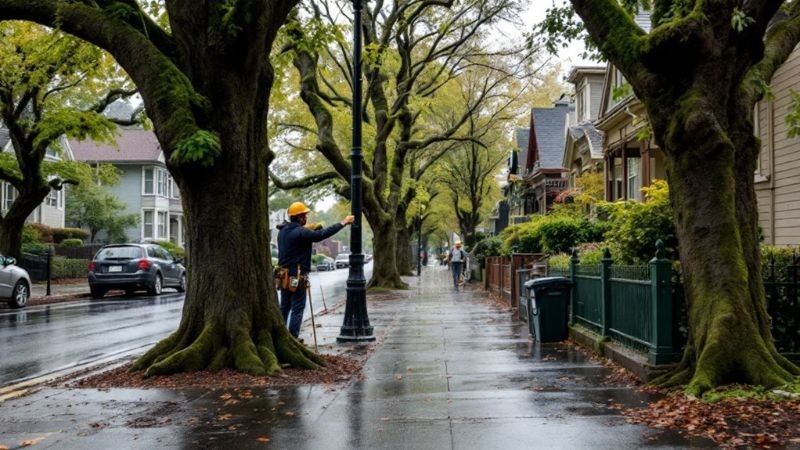
Whether you need a permit to trim trees in Portland depends on the tree type, size, and what work you're doing. For standard tree care like pruning branches that don't exceed specific size thresholds, you typically won't need to go through the permit process.
However, Portland's Urban Forestry regulations become more stringent when trees meet certain size criteria or when work involves significant canopy removal.
Heritage trees and trees in public right-of-ways carry stricter requirements regardless of the scope of work. As a rental property owner, you're responsible for understanding which trees on your property fall under regulated categories before scheduling any trimming. Skipping this step can result in fines and stop-work orders. Additionally, it's essential to familiarize yourself with landlord obligations to ensure compliance with local regulations while maintaining your property.
Which Trees Are Protected Under Portland's City Code
Portland's tree protections fall into three main categories you'll need to understand as a rental property owner: heritage tree designations, size-based thresholds, and species-specific rules.
A tree earns heritage status through criteria like historical significance, exceptional size, or unique horticultural value—and once designated, it carries the strictest protections in the city code.
Beyond heritage status, Portland also protects trees based on trunk diameter and flags certain species for special consideration regardless of size. Understanding local property managers can help you navigate these regulations effectively.
Heritage Tree Designation Criteria
Under Portland's city code, not every large or old tree qualifies for heritage status—designation depends on specific criteria evaluated by the Urban Forestry division of Portland Parks & Recreation.
For heritage tree identification, evaluators assess age, size, historic significance, ecological value, and rarity of species. A tree may also qualify based on its association with a historically significant person, event, or landmark.
Once designated, heritage tree benefits include formal protection under Title 11, requiring permits for any trimming, removal, or root zone disturbance.
As a rental property owner, you must verify whether any trees on your property carry this designation before scheduling maintenance.
Performing unpermitted work on a heritage tree exposes you to code violations and significant fines.
Size-Based Protection Thresholds
Beyond heritage designations, Portland's Title 11 protects trees based on size, meaning you can't simply remove or heavily prune a tree just because it lacks a heritage label.
The city uses tree size thresholds measured by diameter at breast height (DBH), typically calculated at 4.5 feet above grade.
Any tree measuring 6 inches DBH or greater requires a permit before removal. Trees reaching 20 inches DBH or larger fall under stricter regulations, triggering additional mitigation requirements if removed.
As a rental property owner, these tree size thresholds directly shape your maintenance considerations, particularly when scheduling pruning, addressing storm damage, or planning landscaping improvements.
Misidentifying a protected tree before work begins can result in substantial fines and mandatory replacement planting.
Species With Special Protections
While size thresholds determine protection for most trees, Portland's Title 11 also extends protections to specific species regardless of their diameter.
If your rental property contains any of the following protected species, you'll need a permit before trimming or removing them:
- Oregon white oak — a native species protected at any size
- Pacific madrone — another native species requiring permits regardless of trunk diameter
- Ponderosa pine — protected citywide due to its ecological significance
- Significant fruit trees — heritage varieties may qualify for protection depending on location
You're responsible for identifying these species before scheduling any tree work.
Misidentifying a protected tree and removing it without authorization can result in substantial fines and mandatory replacement requirements.
Penalties for Trimming or Removing Trees Without a Permit
Ignoring local tree ordinances can expose you to serious financial and legal consequences.
In Portland, permit violations for unauthorized tree trimming or removal carry significant penalty amounts—fines can reach up to three times the appraised value of the affected tree. For protected or heritage species, those costs climb even higher.
Beyond fines, the city can require you to replace removed trees at your expense, often mandating multiple replacement plantings per tree lost.
You may also face stop-work orders that halt any active renovation or improvement projects on your rental property until violations are resolved.
Repeated violations can trigger heightened scrutiny on future permit applications.
Document all tree work carefully, retain permits, and hire licensed arborists to guarantee every job stays within Portland's regulatory requirements. Moreover, proactive maintenance helps avoid unnecessary legal disputes related to property management.
How to Apply for a Portland Tree Permit
To apply for a Portland tree permit, you'll submit your application through the Portland Bureau of Development Services (BDS) either online via the Portland Permitting & Development portal or in person at 1900 SW 4th Avenue.
You'll need to prepare a required documentation package that typically includes a site plan showing the tree's location, a certified arborist report, and documentation justifying the removal or trimming.
Gathering these materials before you begin the application process keeps things moving and reduces the risk of delays or rejection.
Permit Application Steps
Applying for a Portland tree permit involves four core steps: determining permit requirements, submitting your application, scheduling an inspection, and receiving approval before any work begins.
- Determine requirements – Confirm whether your tree's species, size, or location triggers a permit based on Portland's city code.
- Submit your application – File through Portland's Development Services Center, including site plans, tree species details, and proposed tree trimming techniques.
- Schedule an inspection – A city arborist reviews the site to assess tree health and verify your maintenance best practices align with municipal standards.
- Receive approval – Wait for written authorization before starting any work.
Skipping these steps risks fines and stop-work orders, so follow the process precisely to stay compliant.
Required Documentation Checklist
Gathering the right documents before you submit your Portland tree permit application saves time and prevents delays.
You'll need to compile the following before applying:
- Property deed or ownership verification
- Site plan showing the tree's location relative to structures and property lines
- Tree species identification and current diameter at breast height (DBH)
- Arborist report from a certified professional documenting tree health, structural integrity, and recommended pruning techniques
- Photographs of the tree from multiple angles
- Project scope description detailing removal or pruning techniques planned
- Utility line proximity documentation, if applicable
Portland's Urban Forestry division may request additional materials depending on tree classification.
Submitting an incomplete application triggers review delays, so verify requirements directly at portlandoregon.gov/trees before filing.
Hiring a Licensed Arborist vs. DIY Tree Work
When tree work is required on your rental property, deciding between hiring a licensed arborist and doing it yourself carries real consequences—financially, legally, and operationally.
Understanding licensed arborist benefits versus DIY risks shapes your compliance outcome.
Licensed arborists provide:
- Permit navigation — They identify which trees require city approval before work begins.
- Documentation accuracy — They produce reports Portland inspectors recognize and accept.
- Liability coverage — Their insurance protects you if property damage occurs.
- Code compliance — They understand Portland's canopy requirements and avoid violations.
DIY risks include fines up to $500 per violation, permit denials, and required replanting at your expense.
For rental properties, non-compliance also disrupts tenancy and triggers city oversight.
Additionally, a dedicated maintenance team can help ensure ongoing property care and compliance with local regulations.
Hire licensed professionals.
How Rental Property Owners Can Stay Ahead of Tree Maintenance
Staying ahead of tree maintenance on your rental property means building a proactive schedule rather than reacting to violations, tenant complaints, or storm damage.
Establish annual maintenance schedules that include inspections each spring and fall, pruning cycles aligned with Portland's regulatory windows, and documented records of all work performed.
Consistent monitoring of tree health—checking for disease, root intrusion, structural weakness, and canopy overgrowth—lets you address issues before they trigger permit requirements or liability exposure.
Keep records of every inspection, arborist report, and completed service.
If you're managing multiple rentals across Portland, coordinating maintenance schedules across properties reduces the risk of overlooked trees falling into violation.
Treat tree care as a recurring operational cost, not an emergency expense. Additionally, consider incorporating seasonal property maintenance practices to ensure overall property integrity and appeal.
Frequently Asked Questions
Can Tenants Report Tree Concerns Directly to Portland's City Officials?
Yes, you can exercise your tenant rights by contacting Portland's Urban Forestry division directly. Follow their reporting procedures by calling 503-823-TREE or submitting concerns online at portland.gov/trees.
Who Is Liable if a Neglected Tree Damages a Neighboring Property?
As the property owner, you're typically liable for tree ownership negligence if a neglected tree damages a neighbor's property. Liability issues arise when you've ignored known hazards, making proactive maintenance essential to protecting yourself legally.
Does Portland Offer Any Financial Assistance for Required Tree Removals?
Portland doesn't currently offer direct financial programs for required tree removal. You'll typically cover costs yourself, though you can check with Urban Forestry for any updated grants or assistance options that may apply to your situation.
How Does Portland's Urban Forestry Office Handle Neighbor Tree Disputes?
Portland's Urban Forestry Office doesn't directly mediate neighbor tree disputes. For dispute resolution involving tree preservation, you'll need to engage Portland's Bureau of Development Services or pursue civil remedies through legal channels independently.
Are There Seasonal Restrictions on When Tree Work Can Be Performed?
Portland doesn't enforce strict seasonal regulations on tree work, but you should avoid trimming during active tree growth cycles in spring. Timing cuts correctly minimizes disease risk and supports long-term tree health on your rental property.
Conclusion
Managing trees on your Portland rental property isn't optional — it's a legal obligation. You'll need to identify protected trees, secure proper permits before any trimming or removal, and work with licensed arborists to stay compliant. Ignoring these requirements can result in substantial fines and costly remediation orders. By understanding Portland's tree ordinances and building proactive maintenance into your property management strategy, you'll protect your investment, your tenants, and your standing with the city.