
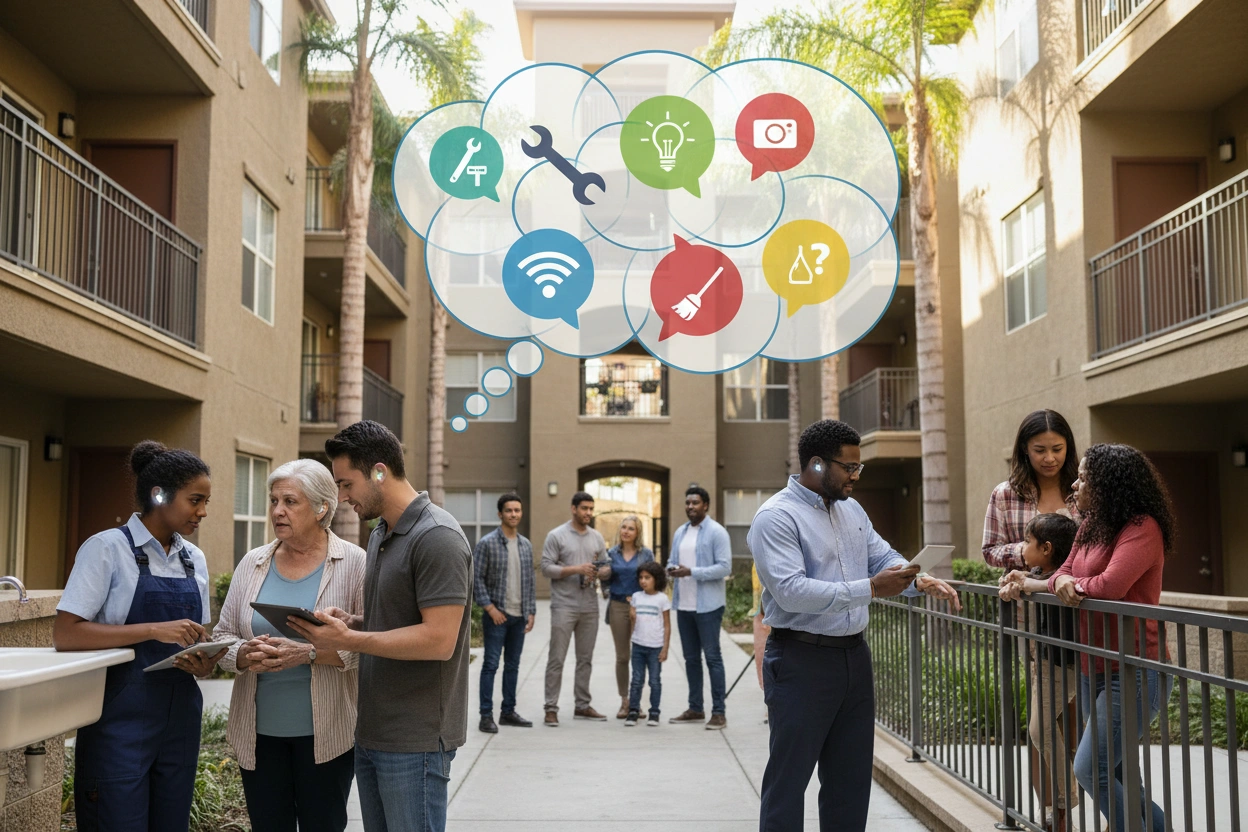
Serving diverse tenant populations means you can't let language barriers slow down maintenance. When tenants can't clearly report issues, minor problems escalate into costly repairs and erode trust. Multilingual communication tools — from translation apps to AI-powered platforms — help you receive requests, send updates, and coordinate repairs in your tenants' preferred languages. Pair these tools with culturally sensitive workflows and you'll protect your property and your relationships. Keep going to find out how.
Key Takeaways
- Multilingual communication reduces repair delays by allowing tenants to submit requests and receive updates in their preferred language.
- Translation apps like Google Translate and Microsoft Translator provide real-time text and voice translation for effective tenant interactions.
- Cultural sensitivity in tone and phrasing ensures communication resonates appropriately across diverse tenant backgrounds.
- Emergency protocols, including visual reference cards and 24/7 multilingual support, ensure clear communication during urgent repair situations.
- Capturing tenant language preferences during onboarding enables automated, accurately routed multilingual maintenance updates throughout the repair process.
Why Language Barriers Delay Maintenance (and Cost You Money)
When a tenant can't clearly explain a maintenance issue, small problems become expensive ones.
Communication challenges between landlords and tenants who speak different languages create repair delays that escalate minor issues into major cost implications. A slow leak becomes water damage. A faulty wire becomes a fire hazard.
Beyond the physical damage, poor communication erodes tenant satisfaction and drops your service quality.
Tenants who feel unheard or misunderstood are more likely to leave—and turnover is expensive.
Addressing these issues requires effective strategies rooted in cultural considerations and supported by bilingual resources. Understanding not just language, but how different cultures approach conflict and communication, helps you respond faster, resolve issues accurately, and keep good tenants longer. High service levels define successful independent landlords in maintaining positive relationships with diverse tenant populations.

What Multilingual Maintenance Communication Actually Looks Like
Multilingual maintenance communication isn't just about translating words—it's about building a system that removes friction at every step of the repair process. It means tenants can submit requests, receive updates, and confirm completed work in their preferred language using effective terminology they actually understand.
Cultural sensitivity plays an equally important role. Communication styles vary across cultures, and a well-structured system accounts for those differences rather than forcing tenants to adapt to yours. That might mean adjusting how urgency is framed, how instructions are delivered, or how follow-ups are conducted.
In practice, this looks like multilingual intake forms, translated status updates, and bilingual coordination during repairs. Additionally, effective communication enhances tenant experience and fosters better landlord-tenant connections.
When tenants clearly understand what's happening with their home, response times improve, disputes decrease, and maintenance issues get resolved faster.
Tools That Make Tenant Communication Work Across Languages
You don't need to speak a second language fluently to communicate clearly with tenants who do—you just need the right tools.
Translation apps like Google Translate and DeepL give you a fast starting point, while multilingual messaging platforms let you manage conversations in multiple languages without juggling separate threads.
AI-powered language tools take it a step further, offering real-time translation, tone adjustment, and even automated responses that keep tenants informed without delays. Clear expectations can also be reinforced through these tools, ensuring that all tenants understand their rights and responsibilities.
Translation Apps Worth Using
A few well-chosen translation apps can close the language gap between landlords and tenants without adding complexity to your workflow. Translation app reviews consistently highlight three standouts: Google Translate, Microsoft Translator, and iTranslate. Each offers real-time text and voice translation across dozens of languages common in rental markets like Seattle, Portland, and San Diego.
Google Translate's camera feature lets you translate written documents instantly—useful during move-ins or inspections.
Microsoft Translator supports multi-person conversations, making it practical for in-person walkthroughs.
iTranslate earns high marks for user experience, with a clean interface that's easy to navigate under pressure.
Choose apps that work offline, since connectivity isn't always reliable on-site. Keeping one or two installed guarantees you're never caught unable to communicate when a tenant needs help.
Multilingual Messaging Platforms
While translation apps handle in-person moments well, day-to-day tenant communication happens mostly through text and messaging—and that's where multilingual messaging platforms earn their place.
Tools like Notify Residents, Buildium, and Tenant Turner let you send maintenance updates, appointment reminders, and notices in a tenant's preferred language without switching between separate apps.
These multilingual platforms streamline tenant engagement by automating language detection and message translation directly within your workflow. Instead of copying text into a separate tool, you're communicating clearly and consistently from one place.
That consistency matters—tenants who receive timely, understandable updates are less likely to miss appointments or misinterpret instructions.
When your messaging infrastructure supports multiple languages natively, you reduce miscommunication, improve response rates, and keep maintenance coordination moving efficiently across your entire tenant base.
AI-Powered Language Tools
Beyond dedicated messaging platforms, AI-powered language tools add another layer of flexibility to how you handle tenant communication. These tools deliver real-time AI translation across dozens of languages, strengthening language accessibility without requiring additional staff or manual effort.
You gain communication efficiency by automating routine responses, maintenance updates, and status notifications in each tenant's preferred language.
The automation benefits extend beyond speed. AI tools help you maintain cultural sensitivity by recognizing regional expressions and adapting tone appropriately, which directly improves tenant engagement.
Technology integration with your existing workflows means you're not managing separate systems—everything stays streamlined. As your portfolio grows, these tools support service expansion into more diverse markets without proportional increases in overhead.
AI-powered communication isn't a future consideration; it's a practical advantage you can deploy now.
How to Handle Urgent Repairs When Tenants Speak Different Languages
When a tenant reports an urgent repair, every second counts, and a language barrier can't slow you down. You should have translation tools ready to go before emergencies happen, so you can immediately communicate what steps the tenant needs to take to stay safe and what your response timeline looks like.
Prioritizing clear, accurate messaging during high-stakes situations keeps tenants protected and prevents small problems from becoming costly disasters. Additionally, ensuring 24/7 rental support is available in multiple languages can significantly enhance tenant satisfaction and trust.
Prioritizing Clear Emergency Communication
Emergencies don't wait for language barriers to be resolved. You need emergency protocols that work regardless of what language your tenant speaks.
Start by creating a simple, visual emergency reference card that uses symbols, images, and multilingual instructions covering fire, flooding, gas leaks, and power outages. Distribute these at move-in and post them inside the unit.
When urgent repairs arise, use translation apps like Google Translate or a language access line to communicate quickly and accurately.
Cultural sensitivity matters here too—some tenants hesitate to report emergencies out of fear or unfamiliarity with local norms. Make it easy and non-intimidating to reach out.
Establish a clear, single contact number for emergencies and guarantee tenants know exactly how to use it before a crisis ever happens.
Using Translation Tools Effectively
Translation tools have come a long way, and used correctly, they can bridge the gap between you and a tenant during a time-sensitive repair. Apps like Google Translate offer real-time text and voice translation, making it easier to confirm access, explain repair timelines, and verify safety concerns quickly.
However, don't rely on translation accuracy alone. Machine translation can misinterpret technical or urgent language, so keep your sentences short, direct, and free of jargon.
Cultural sensitivity also matters—tone and phrasing carry different weight across cultures, so avoid language that could come across as dismissive or demanding.
Whenever possible, save translated message templates for common repair scenarios in advance. Having those ready means you're not scrambling during an emergency, and your tenant gets clear, respectful communication when it counts most.
Building Multilingual Maintenance Workflows That Scale
Scaling multilingual maintenance communication requires more than just translating messages on the fly. You need structured, scalable solutions that integrate language preferences directly into your workflow automation from the start.
Capture tenant language data during onboarding, then use it to route communications, assign resources, and trigger translated maintenance updates automatically.
Cultural considerations matter beyond words alone. Adjust your tone, urgency framing, and communication timing based on tenant background to strengthen tenant engagement throughout every maintenance interaction.
Build feedback mechanisms into each completed work order so tenants can confirm they understood the process. Use that data to refine your training programs and improve resource allocation over time.
When language support is embedded into your systems rather than added reactively, your entire maintenance operation scales without sacrificing clarity or tenant trust. This approach aligns with RentalRiff's commitment to empathy, ensuring all tenants feel valued and understood throughout their maintenance experiences.
How a Dedicated Property Specialist Bridges the Language Gap
When language barriers complicate maintenance communication, having a single, consistent point of contact makes a significant difference. RentalRiff assigns each property a dedicated property specialist who becomes familiar with your tenants' communication needs over time, including language preferences.
Rather than routing tenants through rotating staff, one specialist builds tenant trust by maintaining continuity across every interaction. That consistency reduces miscommunication, speeds up issue resolution, and signals to tenants that their concerns genuinely matter.
Cultural sensitivity also plays a role here. A specialist who understands how different tenants prefer to communicate—whether through translated messages, bilingual support tools, or adjusted communication styles—can tailor their approach accordingly. This approach aligns with effective communication strategies that foster a balanced landlord-tenant relationship.
You get fewer unresolved maintenance issues, stronger tenant relationships, and a property that stays better maintained as a result.
Frequently Asked Questions
Are Multilingual Lease Agreements Necessary if Communication Tools Are Already Used?
Yes, you still need multilingual lease agreements. Communication tools support daily interactions, but lease clarity requires written translations to guarantee legal understanding. Demonstrating cultural sensitivity through translated agreements also protects you and your tenants from costly misunderstandings.
How Do You Document Maintenance Requests Submitted in a Non-English Language?
When you receive a non-English maintenance request, translate it immediately for translation accuracy, then log both the original and translated versions in your request tracking system to guarantee clear, consistent records throughout the repair process.
Can Tenants Request a Specialist Who Speaks Their Native Language?
You can request a specialist who speaks your native language. We'll do our best to match you with one to reduce language barriers and boost tenant satisfaction, though availability may vary by location.
What Languages Does Rentalriff Currently Support for Tenant Communication?
We don't currently have published details on RentalRiff's supported languages for tenant engagement and language accessibility. You should contact RentalRiff directly to get accurate, up-to-date information on available communication language options for your tenants.
Does Multilingual Support Affect the Overall Cost of Rentalriff's Services?
We don't have specific pricing details on how multilingual support affects your costs. However, a cost benefit analysis often shows that boosting tenant satisfaction through clear communication can reduce turnover expenses considerably. Contact us for details.
Conclusion
When language barriers slow down maintenance, you're not just losing time — you're losing tenant trust and money. By putting the right tools, workflows, and bilingual support in place, you can serve every tenant clearly and efficiently, regardless of the language they speak. Don't let communication gaps turn minor repairs into costly problems or empty units. Start building your multilingual maintenance strategy today, and you'll protect both your property and your tenant relationships long-term.