
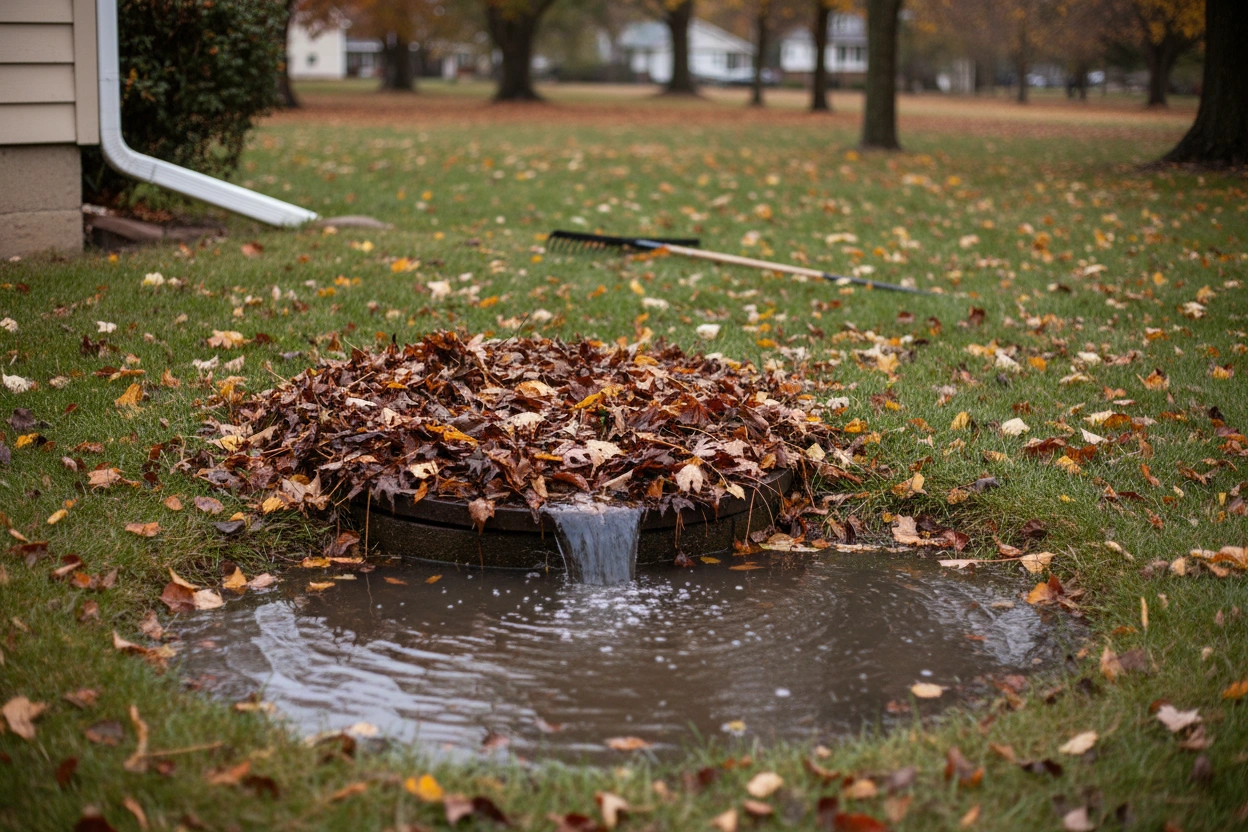
When fall arrives, your yard drains face a completely different threat than your gutters. Leaves collect at ground level, mat together when wet, and block drain grates fast. Unlike gutters, yard drains lack pitch for self-clearing, so debris compresses and restricts flow almost immediately. Standing water that lingers more than 24 hours near a drain grate signals a yard drain problem — not a roof drainage issue. There's more to know about protecting your property this season.
Key Takeaways
- Yard drains sit at ground level, collecting leaves and debris that gutters never encounter, making them uniquely vulnerable to fall clogs.
- Wet leaves mat together over drain grates, blocking water flow rapidly and causing standing water within hours of rainfall.
- Unlike gutters, yard drains lack self-clearing pitch, meaning leaf buildup must be manually removed to restore proper drainage.
- Ignoring leaf-clogged yard drains risks saturated soil, foundation damage, mold growth, and costly structural repairs over time.
- A fall maintenance schedule—clearing grates in early October, flushing basins in late October, and post-storm checks—prevents serious drainage failures.
Why Yard Drains Clog Faster Than Gutters in Fall
While gutters sit elevated and benefit from constant airflow and sloped runoff, yard drains sit at ground level where leaves, debris, and sediment naturally accumulate. Water naturally flows downhill, carrying decomposing leaf matter directly into drain grates. Once that organic material compresses inside the drain body, it restricts flow faster than most landlords anticipate.
Fall accelerates this cycle. Wet leaves mat together, forming a dense layer that even moderate rainfall can't flush through. Unlike gutters, yard drains lack the pitch needed to self-clear. Sediment builds beneath the leaf layer, compounding the blockage over time.
Effective drain maintenance requires you to inspect ground-level drains before peak leaf fall, not after standing water appears. Seasonal preparation starts earlier than most property owners expect. When yard drains fail and water pools near the property, it creates the same foundation erosion risks that overwhelmed gutters are known to cause.

Signs Your Yard Drain Is Clogged, Not Your Gutters
Misreading the source of drainage problems costs landlords time and money, so knowing which system is failing matters before you start clearing anything. If your gutters are flowing freely but water still pools in low-lying yard areas after rain, your yard drain is the problem. Look for standing water that lingers more than 24 hours near drain grates, soil saturation around drain inlets, or grates completely buried under leaf debris. Gurgling sounds near cleanout points also signal a blocked underground line, not a roof drainage issue. Gutters failing typically show overflow at the fascia or water staining on siding. Distinguishing these symptoms early keeps your drain maintenance targeted and your seasonal preparation efficient, preventing minor clogs from escalating into erosion or foundation moisture problems. When gutters are the actual culprit, water pooling around foundations can accelerate mold growth and compromise structural integrity over time.
Where Leaf Buildup Does the Most Yard Drain Damage
Leaf buildup doesn't damage yard drains equally across a property—certain locations take the worst of it. Low-lying areas collect the heaviest debris loads because water naturally carries leaves downhill before they settle. Drains positioned near large trees, fence lines, or property edges face constant reloading after every windstorm. Channel drains along driveways and patios clog fastest because their narrow openings trap compacted leaf layers quickly. Without consistent drain maintenance, these high-risk zones develop standing water that softens soil, undermines hardscaping, and creates erosion channels. Effective leaf management means prioritizing these specific locations rather than treating your entire yard equally. Check low points, shaded corners, and any drain sitting downslope from mature trees first—those spots will fail before anything else does. Properties surrounded by trees are especially vulnerable during fall and winter, when debris accumulation rates increase significantly and demand more frequent inspections of every drainage point on the property.
How to Clear a Leaf-Clogged Yard Drain Yourself
Start by locating the drain grate—often hidden under leaf mats—and lifting it to expose the catch basin below. Use gloved hands or a small hand rake to pull out compacted leaves, sediment, and debris from the basin and any visible pipe opening. Once you've cleared the blockage, flush the drain with a garden hose to confirm water moves freely through the line. In Portland, where annual rainfall exceeds 36 inches, yard drains can become overwhelmed quickly, making seasonal clearing an essential part of property maintenance.
Locate the Drain
Before you can clear a clogged yard drain, you need to find it. After a heavy leaf drop, that's harder than it sounds.
- Scan low spots — Yard drains sit in depressions where water naturally collects, so follow the slope.
- Look for standing water — Pooling after rain almost always points directly to a blocked drain nearby.
- Push leaves aside — The drain grate is often buried under a thick mat of decomposing leaves.
- Check mapped locations — Review any property diagrams or past drain maintenance records to confirm placement.
Seasonal checks during rainy periods help identify potential drainage issues early, reducing the risk of water damage to your foundation before problems escalate.
Finding your drain before fall peaks is smart seasonal preparation. Once you've located it, you're ready to clear it and stop water from becoming a bigger problem.
Remove Debris Manually
Once you've located the drain, clearing it by hand is usually the fastest and most effective first step. Put on gloves and pull out leaves, twigs, and compacted debris from the drain grate and the basin beneath it. Don't just skim the surface—reach down and remove anything blocking water flow below the grate line.
If the grate is bolted down, use a screwdriver to remove it before you dig out the buildup underneath. A small trowel or hand rake helps dislodge packed material that fingers can't grip.
As part of your seasonal preparation, bag the debris and dispose of it rather than leaving it nearby where rain can wash it back in. Consistent drain maintenance at this stage prevents the deeper clogs that require professional intervention. Inspecting your yard drains at least twice a year —ideally in spring and fall—helps you stay ahead of blockages before heavy winter rains arrive.
Flush and Test
After pulling out the debris, a garden hose is your next tool. Use flush techniques and test methods to confirm the drain is fully cleared and flowing correctly.
- Insert the hose directly into the drain opening and run water at full pressure for 60 seconds.
- Watch the water closely — it should drain quickly with no pooling around the grate.
- If water backs up, you've got a deeper blockage requiring a drain snake or auger.
- Once flow looks clean, replace the grate and pour one final slow stream to confirm unobstructed drainage.
Standing water after flushing tells you the problem isn't solved. Don't ignore that signal. A drain that won't clear manually or with flushing needs professional attention before the next rainfall hits. Keep in mind that standing water near your foundation can lead to serious structural damage, including cracks and basement flooding over time.
When a Clogged Yard Drain Becomes a Bigger Problem
A clogged yard drain that goes unaddressed can quickly escalate from a minor nuisance into a serious structural and water damage issue. When water has nowhere to go, it saturates the soil, undermines foundations, and pools against structures — creating conditions that invite mold, erosion, and costly repairs. You'll recognize the warning signs: persistent standing water after rain, soft or sunken ground near the drain, or water seeping toward a crawl space or foundation wall. At that point, you're dealing with more than a drain maintenance task — you need a professional assessment. Consistent seasonal preparation prevents these escalations, but once structural concerns appear, don't delay. Catching the shift from drainage problem to property damage early is what keeps a manageable issue from becoming an expensive one. In cases where prolonged saturation has reached the basement or crawl space, efflorescence on walls is a reliable early indicator that moisture is actively moving through your foundation.
A Fall Yard Drain Schedule for Rental Property Owners
Keeping your yard drains clear through fall requires more than a one-time cleanout — it calls for a repeatable schedule built around how leaves actually fall. Consistent drain maintenance protects your property before water has a chance to pool.
- Early October — Clear debris from drain grates before peak leaf drop begins
- Late October — Inspect drain basins and flush with a hose to confirm flow
- Early November — Remove accumulated leaf mat buildup around drain entries
- Post-storm checks — Inspect after any heavy rain event throughout the season
Seasonal preparation isn't a single task — it's an ongoing rhythm. Skipping even one round leaves your drains vulnerable during the exact weeks when rainfall intensifies and leaf volume peaks.
Frequently Asked Questions
Can Yard Drain Clogs Affect My Rental Property's Foundation Over Time?
Yes, clogged yard drains can threaten your rental property's foundation stability. Without proper drain maintenance, water pools near the foundation, causing erosion and structural damage. You'll want to clear blockages before they escalate into costly repairs.
Do Yard Drains Require Permits to Install or Replace in Rental Properties?
Yard drain regulations vary by city, but you'll typically need rental property permits for new installations. Replacements often don't require permits. Check with your local municipality, or your RentalRiff specialist can help navigate the requirements.
How Much Does Professional Yard Drain Cleaning Typically Cost Landlords?
You'll typically spend $100–$400 per visit on professional yard drain maintenance, depending on clog severity and drain depth. Cleaning frequency—ideally twice yearly—affects long-term costs, so staying proactive keeps emergency service fees from catching you off guard.
Are Landlords or Tenants Responsible for Keeping Yard Drains Clear?
You're typically responsible for landlord obligations like structural drain maintenance, while tenant responsibilities cover routine clearing of debris. Check your lease terms, as they'll define each party's specific duties around yard drain upkeep.
What Type of Yard Drain Grate Works Best for Heavy Leaf Fall?
For heavy leaf fall, you'll want a flat, fine-mesh grate or a debris-interceptor style cover. These leaf guard options catch leaves before they enter the drain, making your drain maintenance tips simpler and clogs less frequent.
Conclusion
Yard drains don't clog on a dramatic schedule — they clog quietly, leaf by leaf, until water has nowhere to go. Now that you know what to look for and how to respond, you can stay ahead of the damage before it reaches your foundation or your tenant's living space. Keep your grates clear, schedule your checks around heavy leaf fall, and treat yard drainage as its own seasonal task separate from your gutters.