

San Diego is world-renowned for its near-constant sunshine, but the very rays that attract residents to the region act as a relentless abrasive on the structural integrity of your property. While many owners focus on the interior aesthetics of their units, the roof remains the most vulnerable and expensive component of the building envelope, facing a daily assault from ultraviolet radiation. We are going to explore the chemical and physical mechanics of UV degradation and provide a comprehensive strategy for San Diego landlords to shield their roofing investments from the drying, cracking, and fading caused by the Southern California sun.
The Science of Solar Radiation on Roofing Substrates
To protect your property effectively, you must understand that UV damage is not merely a heat issue; it is a molecular one. Ultraviolet radiation consists of high-energy waves that, over time, break down the chemical bonds in common roofing materials like asphalt shingles, single-ply membranes, and wood shakes. This process, known as photodegradation, strips materials of the essential oils and polymers that keep them flexible and watertight. In a climate like San Diego’s, where the sun shines for approximately 260 days a year, this chemical breakdown happens at an accelerated pace compared to cooler, cloudier regions.
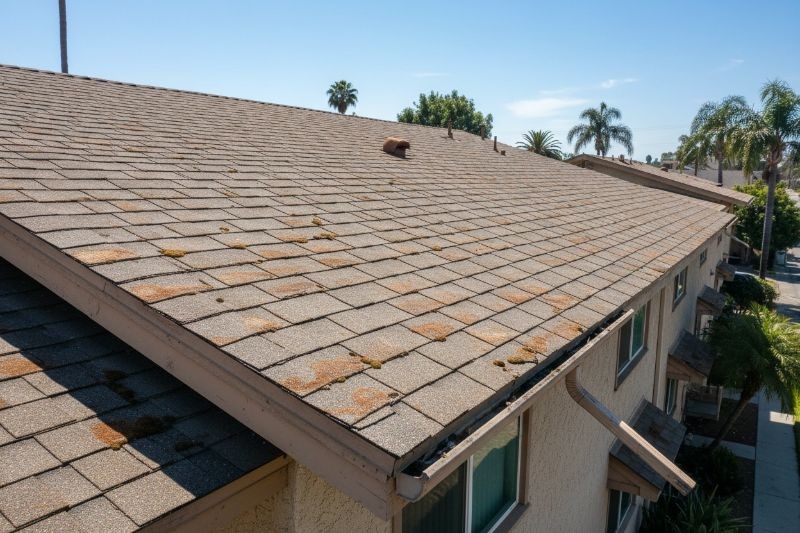
As these chemical bonds fail, the roofing material loses its elasticity and becomes brittle. For asphalt shingles, this often manifests as granule loss, where the protective stony surface sloughs off, leaving the underlying mat exposed to the elements. For flat roofs using TPO or EPDM membranes, the material can begin to shrink and pull away from the edges, creating immediate entry points for moisture during the occasional but intense Pacific storms. Understanding that your roof is undergoing a constant chemical change allows you to move away from reactive fixes and toward a strategy centered on preservation.
Indicators of Advanced UV Degradation
- Thermal Cracking: Long, deep splits in the roofing material caused by the loss of flexibility during the expansion and contraction of the day-to-night temperature cycle.
- Cupping and Curling: Shingles that begin to pull upward at the edges, indicating that the internal oils have evaporated and the material is shrinking.
- Granule Accumulation: Finding large amounts of sand-like particles in your gutters is a sign that the UV-protective layer of your shingles is failing.
- Color Bleaching: While primarily a cosmetic issue, significant fading often precedes the physical failure of the material's structural integrity.
Selecting Climate-Appropriate Roofing Materials
In San Diego, the choice of roofing material should be dictated by its solar reflectance and thermal emittance. Traditional dark asphalt shingles are often a poor choice for this region because they absorb the vast majority of solar energy, reaching surface temperatures that can exceed 150 degrees Fahrenheit. This extreme heat not only accelerates the aging of the roof but also drives up the cooling costs for your tenants. Transitioning to cool roofing technology is one of the most effective long-term strategies for regional landlords.
Cool roofs are designed to reflect more sunlight and absorb less heat than standard roofing products. These can include highly reflective shingles, tiles, or specialized coatings that behave like a mirror for UV rays. In many cases, these materials can lower the roof surface temperature by up to 50 degrees, significantly slowing the rate of chemical degradation. Investing in these materials during your next turnover service or capital improvement cycle ensures that your property remains competitive, energy-efficient, and structurally sound for a much longer duration.
High-Performance Materials for Southern California
- Reflective Concrete Tiles: These provide excellent thermal mass and are often coated with UV-resistant glazes that maintain their color and integrity for decades.
- White Thermoplastic Membranes (TPO): Ideal for flat or low-slope roofs, these membranes reflect the majority of UV radiation and are highly resistant to chemical breakdown.
- Metal Roofing with Cool-Color Pigments: Modern metal roofs use specialized paint systems that reflect infrared and UV light while offering superior durability against coastal salt air.
- UV-Resistant Coatings: For existing roofs that are still structurally sound, applying a high-solids silicone or acrylic coating can provide a fresh layer of UV protection and extend the asset's life.
Implementing a Proactive Roof Upkeep Checklist
A roof should never be a "set it and forget it" asset. To combat the effects of the San Diego sun, a proactive property care program is essential. This begins with bi-annual inspections, ideally performed in the spring and autumn. During these walkthroughs, property specialists look specifically for the early signs of UV fatigue. Identifying a few curled shingles or a small area of thinning membrane today allows for targeted ad-hoc maintenance and repairs that prevent a total roof failure five years down the line.
The building envelope is only as strong as its weakest point. In addition to the primary roofing material, specialists must inspect the flashing, sealants, and caulking around vents and chimneys. These peripheral materials often fail much faster than the shingles themselves under intense UV exposure. By replacing dried-out or cracked sealant during routine maintenance, you ensure that the roof remains a seamless barrier against moisture. RentalRiff supports this proactive model by providing local, licensed specialists who focus on these minute details, ensuring the physical upkeep of the home is never neglected.
Critical Inspection Focal Points
- Sealant Integrity: Checking the pliable joints around roof penetrations for signs of hardening or cracking.
- Flashing Alignment: Ensuring that metal flashing hasn't warped or pulled away due to extreme thermal expansion.
- Drainage Paths: Clearing debris from gutters and valleys to prevent water from pooling on UV-stressed areas.
- Tree Overhangs: Trimming branches that provide excessive shade-moisture cycles or that could scrape against UV-weakened materials.
The Financial Benefits of Reflective Roofing Systems
While the primary goal of UV protection is asset longevity, the secondary benefit is a direct improvement in your rental profit audit. High-reflectivity roofing systems significantly reduce the amount of heat transferred into the living spaces below. For properties where the landlord pays for utilities, this results in immediate monthly savings on cooling costs. For properties where tenants pay their own bills, the lower utility overhead makes the unit more attractive and helps justify premium rent levels.
Furthermore, a cool roof contributes to the overall reduction of the urban heat island effect, a growing concern in densely populated areas like downtown San Diego and North Park. By positioning your property as a sustainable, energy-efficient home, you align your brand with the values of modern, environmentally conscious renters. This professional approach to property management and physical upkeep is a powerful marketing tool that helps you attract high-quality residents and maintain high occupancy rates year-round.
Managing Tenant Support and Communication Regarding Roof Health
The roof is often out of sight and out of mind for the tenant until it leaks. Part of masterful property management is maintaining a line of tenant support and communication that encourages residents to report small anomalies. If a tenant notices a strange stain on a ceiling or a piece of shingle in the yard after a windstorm, they need a primary contact they can reach immediately. 24/7 maintenance requests ensure that these small observations are logged and addressed by a specialist before the next rainy season.
By educating tenants on the importance of roof health—such as the link between attic ventilation and indoor comfort—you foster a sense of shared responsibility for the property. When a resident understands that the landlord is proactively investing in high-quality roofing and UV protection, they feel more secure in their residency. This transparency builds the trust necessary for long-term tenant retention and effortless lease renewals. RentalRiff acts as the bridge in this relationship, managing the logistics of specialist coordination so that the owner stays in control without the daily headache of maintenance oversight.
Future-Proofing Your San Diego Real Estate Assets
The San Diego sun is a constant factor in your property’s lifecycle, but it does not have to be a destructive one. By choosing UV-resistant materials, performing regular inspections, and utilizing reflective technologies, you can stay ahead of the decay curve and keep your property value high. Managing asset aging is a hallmark of the sophisticated investor who understands that the best way to grow a portfolio is to protect the properties they already own.
Whether you are performing turnover services or conducting a mid-lease audit, the health of your roof should always be a priority. Protecting your building from UV damage is an investment in the very foundation of your real estate success. With the right specialists, a proactive plan, and a commitment to quality materials, you can ensure that your San Diego rentals continue to thrive under the Southern California sun for many years to come.