
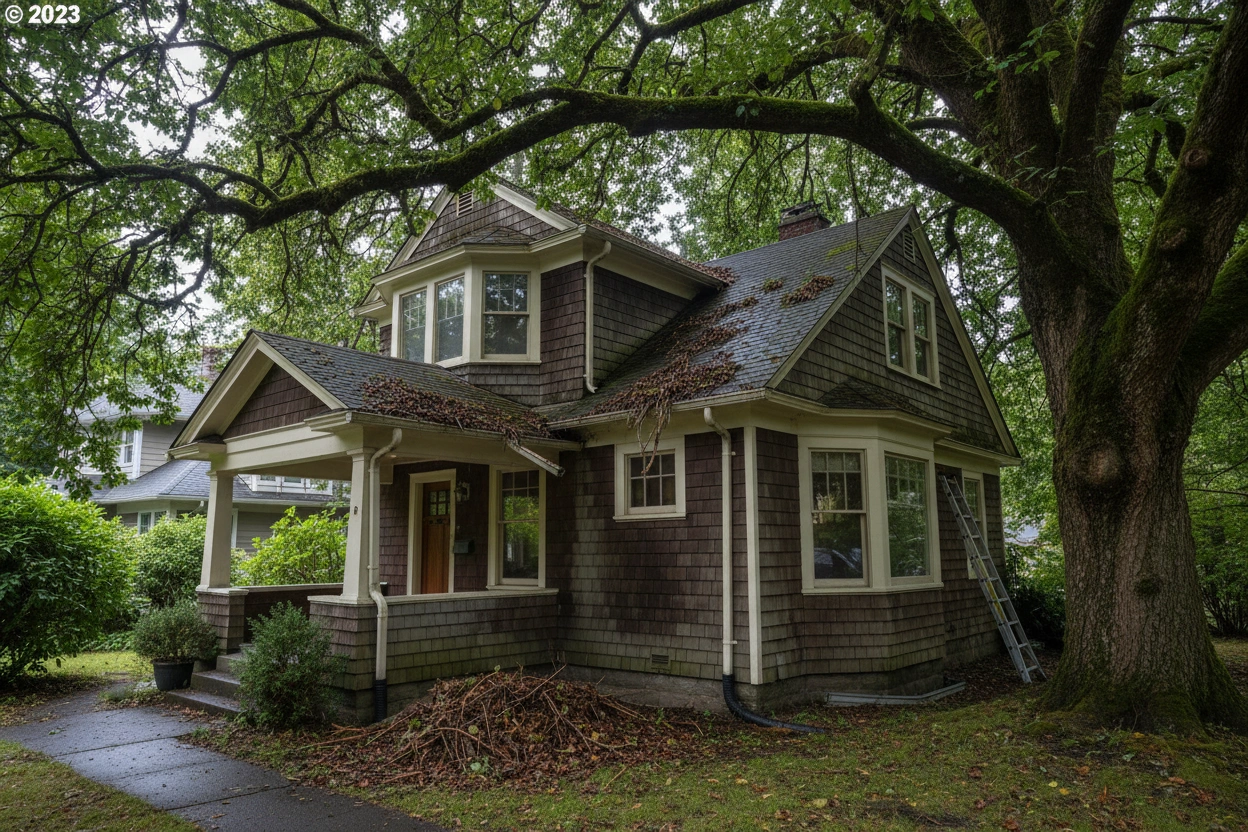
Portland is celebrated for its lush urban canopy, but for property owners, those towering Douglas firs and sprawling maples represent both a scenic asset and a potential structural liability. While greenery enhances the aesthetic of the Pacific Northwest, overhanging branches can silently compromise the integrity of your building envelope. We are going to explore the physical risks that unmanaged trees pose to Portland homes and how proactive maintenance can prevent the high costs of emergency structural repairs.
The Mechanical Impact of Trees on the Building Envelope
The primary threat from overhanging trees is not always a falling trunk; it is the slow, repetitive friction of branches against the exterior of the home. In a city where wind and rain are seasonal constants, branches that rest on or near the roof act as an abrasive, scraping away the protective granules of asphalt shingles or cracking delicate clay tiles. This mechanical wear exposes the underlying waterproof membrane to UV radiation and moisture, significantly shortening the lifespan of the roof.
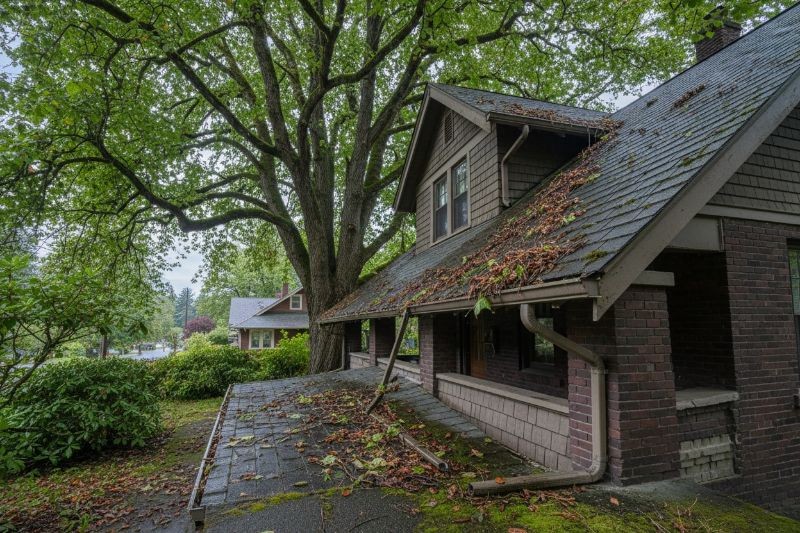
Furthermore, trees provide a direct highway for moisture-retaining debris. Leaves, needles, and twigs accumulate in valleys and behind chimneys, creating damp organic mats that foster rot and moss growth. This is particularly problematic in Portland’s temperate climate, where moisture-driven decay can happen year-round. Understanding that a tree is a dynamic part of your property’s ecosystem is the first step in moving from reactive repairs to a strategy of preservation.
Common Tree-Related Structural Risks
- Roofing Abrasions: Constant swaying of branches that strips the protective surface from roofing materials.
- Gutter Obstruction: Rapid accumulation of organic matter that leads to water overflow and foundation saturation.
- Siding and Trim Decay: Branches that trap moisture against the side of the house, preventing the siding from drying and leading to wood rot.
- Pest Access Points: Overhanging limbs that serve as bridges for rodents and carpenter ants to enter the attic space.
Calculating the Repair Costs of Tree Neglect
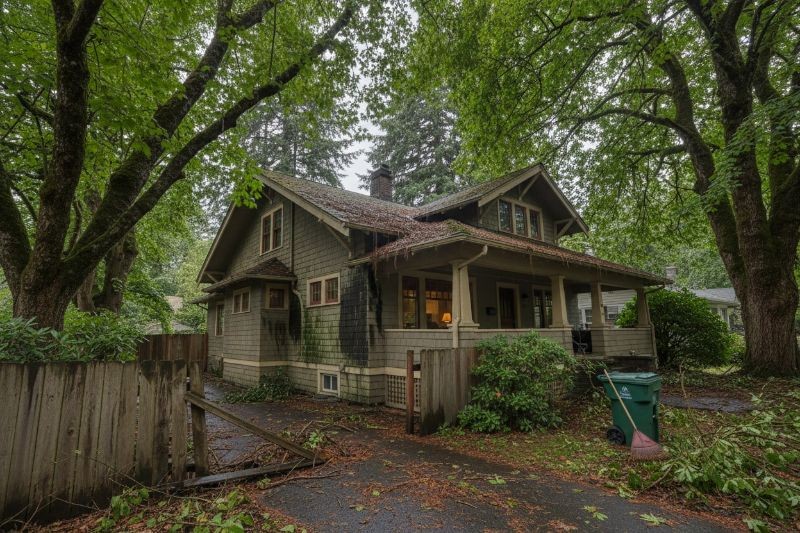
The financial consequences of neglecting Portland’s urban forest can be staggering. A minor roof leak caused by branch friction might cost a few hundred dollars to patch, but if that leak remains undetected, the resulting rot in the roof decking and rafters can lead to a repair bill in the thousands. Similarly, a foundation issue caused by clogged gutters or aggressive root systems can easily become a five-figure structural project that complicates your long-term rental profit audit.
When you factor in the "Turnover Tax" and the potential for tenant displacement during major repairs, the cost of a few hours of professional arboriculture becomes a bargain. Proactive property care—such as thinning the canopy and maintaining a ten-foot clearance from the roofline—is an investment that protects your equity. By treating tree care as a non-negotiable part of your building's physical upkeep, you avoid the high-stress, high-cost cycle of emergency ad-hoc maintenance and repairs.
Potential Financial Impacts
- Premature Roof Replacement: Neglected UV and friction damage can force a $15,000 replacement years ahead of schedule.
- Water Damage Remediation: Dealing with mold and rot caused by overflowing gutters can cost $2,000 to $5,000 per instance.
- Foundation Stabilization: Addressing root-related structural shifts is often the most expensive repair a landlord can face.
- Emergency Tree Removal: After-storm service for fallen limbs often carries a significant emergency premium.
Strategic Tree Maintenance for Portland Landlords
Effective tree management requires a specialized approach that respects the health of the tree while prioritizing the safety of the building. Portland landlords should implement a bi-annual inspection schedule, ideally in the spring and late autumn. This allows you to identify deadwood or overextended limbs before the winter storm season arrives. Utilizing licensed and insured property specialists ensures that the work is performed safely and that the pruning techniques promote the tree's long-term stability.
Clearance is the most important metric for tree maintenance. Maintaining a "buffer zone" between the canopy and the structure allows for proper airflow, reducing the humidity that leads to moss and algae on the roof. This proactive stance on the physical upkeep of the home is a hallmark of the service provided by RentalRiff, which connects owners with specialists who understand the unique environmental challenges of the Pacific Northwest.
Essential Tree Care Checklist
- Limiting Canopy Encroachment: Ensuring no branches are within 10 feet of the roof or siding.
- Root Barrier Installation: Using physical barriers to divert aggressive roots away from the foundation and utility lines.
- Disease and Pest Audits: Identifying signs of Emerald Ash Borer or other local threats that could weaken the tree’s structure.
- Gutter and Valley Cleans: Performing more frequent removals of organic debris in properties with dense tree cover.
Managing Tenant Support and Communication Regarding Landscaping
The trees on your property are part of the tenant’s living environment, and major maintenance can be disruptive. Masterful property management involves maintaining a professional line of tenant support and communication when scheduling arborist work. Explaining the safety benefits of a tree trim—such as reducing the risk of a limb falling on their car or improving the natural light in the unit—usually secures enthusiastic cooperation from the resident.
Furthermore, tenants should be encouraged to report any "silent" issues, such as branches hitting the house during a windstorm or roots lifting a sidewalk. Providing a primary contact for 24/7 maintenance requests ensures that these observations are logged and addressed before they become structural crises. RentalRiff acts as this bridge, managing the logistics of specialist coordination so that the owner remains in control without having to manage the daily details of landscape upkeep.
Enhancing Property Value Through Professional Landscaping
While trees can pose risks, they are also one of Portland’s greatest selling points. A well-maintained landscape with healthy, strategically pruned trees significantly enhances curb appeal and can justify premium rent levels. In a competitive market, a property that feels like a private forest retreat—but with the clean lines of a well-cared-for building—will always attract high-quality residents.
Turnover services provide an excellent opportunity to perform a "landscape reset," ensuring that the property is delivered to the new tenant in peak condition. By focusing on both the aesthetic and structural aspects of your trees, you future-proof your investment against the elements. A property that is prepared for Portland’s weather is a property that remains profitable and stable year after year.
Securing Your Investment in the City of Roses
The relationship between Portland’s greenery and its housing stock is one of balance. By recognizing the hidden maintenance impact of overhanging trees and taking a proactive stance on pruning and inspections, you protect your building from avoidable decay. Your commitment to professional maintenance standards is the surest way to preserve the value of your assets and the safety of your tenants.
Whether you are managing a single-family home in Southeast or a multi-unit property in the Pearl District, the principles of tree maintenance remain the same. Stay ahead of the growth, utilize the right specialists for the job, and keep your communication channels open. With a focus on the physical health of your building and its surrounding environment, you can enjoy Portland’s natural beauty while maintaining a resilient and profitable real estate portfolio.