
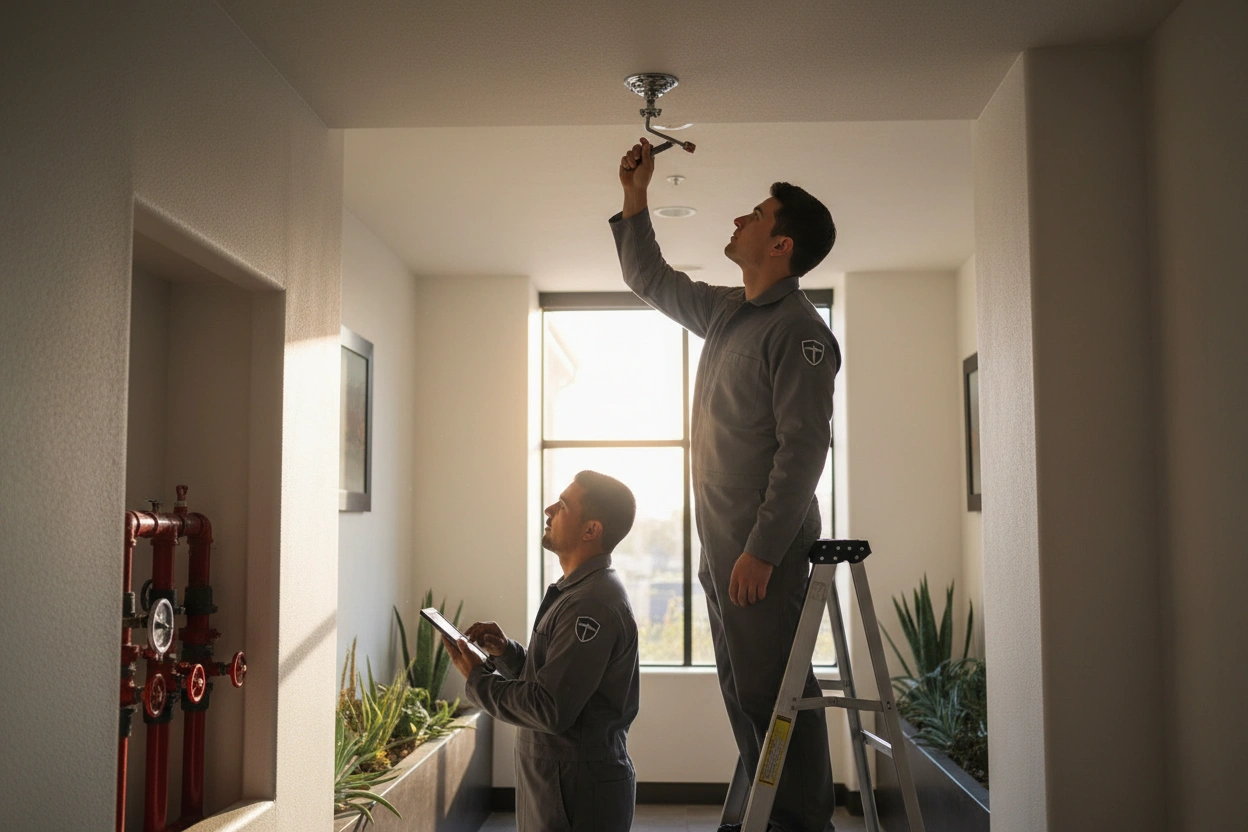
If you own a multi-unit rental in San Diego, you're legally required to maintain your fire sprinkler system under NFPA 25 standards and local fire codes. You'll need quarterly visual inspections, annual professional testing, and monthly checks for corrosion or pressure irregularities. The San Diego Fire-Rescue Department enforces compliance, and the responsibility falls on you — not your tenants. Keep documentation current and address deficiencies immediately. Everything you need to stay compliant is covered below.
Key Takeaways
- San Diego landlords are responsible for fire sprinkler installation, maintenance, repairs, and ensuring compliance with local building codes in multi-unit rentals.
- Quarterly visual inspections by a licensed fire protection contractor must cover control valves, water flow alarms, and tamper switches.
- Annual professional testing by a licensed fire protection engineer verifies flow rates, pressure levels, and valve operations.
- Common issues include restricted water flow, outdated pre-2000 sprinkler heads, and pressure inconsistencies from deteriorating valves and aging pumps.
- Monthly checks for corrosion, pressure monitoring, and documented quarterly valve inspections create essential paper trails for compliance and insurance purposes.
San Diego Fire Sprinkler Requirements for Multi-Unit Rentals
San Diego fire sprinkler requirements for multi-unit rentals are governed by the California Fire Code (CFC) and the San Diego Municipal Code (SDMC), both of which establish the legal baseline for installation, inspection, and maintenance.
Under CFC Section 903, automatic fire sprinkler systems are mandatory in new multi-unit residential buildings and in existing structures undergoing substantial renovation.
The SDMC reinforces these standards and grants the San Diego Fire-Rescue Department authority to enforce compliance through periodic inspections.
As a property owner, you're responsible for maintaining operational systems, documenting inspections, and correcting deficiencies within required timeframes.
Tenant awareness is also part of your obligation—residents must understand sprinkler system protocols and restrictions.
Staying current with these requirements is foundational to fire safety and legal compliance across your rental portfolio. Regular property assessments can help ensure compliance with tenant rights and actions.
How Often Should You Inspect Your Sprinkler System?
You should conduct visual inspections of your sprinkler system quarterly, checking for corrosion, leaks, obstructions, and damaged heads.
Beyond those routine checks, you'll need to schedule annual professional testing that covers flow tests, pressure readings, and control valve operation.
NFPA 25 sets the code-required intervals for each inspection type, and your local jurisdiction may impose stricter schedules that override the baseline standard. Additionally, maintaining a 24/7 response capability ensures that any issues can be promptly addressed, reducing the risk of costly repairs and enhancing tenant safety.

Quarterly Inspection Basics
Quarterly inspections are the minimum standard for fire sprinkler systems in most multi-unit residential buildings, but your specific inspection schedule depends on the system type, local code requirements, and occupancy classification.
For San Diego properties, you'll follow NFPA 25 standards alongside California Fire Code mandates. Quarterly checks cover control valves, water flow alarms, and tamper switches—all critical sprinkler system basics that directly affect tenant safety.
Wet pipe systems require quarterly alarm valve inspections, while dry and pre-action systems involve additional checks of air pressure levels and low-point drains.
You'll need a licensed fire protection contractor to perform and document each inspection. Keep inspection records on-site and accessible, as San Diego Fire-Rescue may request them during compliance reviews.
Annual Professional Testing
While quarterly checks cover the baseline requirements, annual professional testing goes deeper into your sprinkler system's mechanical integrity and performance. A licensed fire protection engineer must conduct this testing, verifying flow rates, pressure levels, valve operation, and alarm activation sequences against current fire safety protocols.
During annual testing, technicians perform full trip tests on dry-pipe and deluge systems, inspect fire department connections, and assess pipe corrosion or obstruction.
You'll receive a detailed inspection report outlining deficiencies and required corrective actions.
Use this testing cycle as a trigger for tenant education. Distribute updated guidance on sprinkler clearance requirements, prohibited obstructions, and emergency procedures.
Tenants who understand system function reduce accidental activations and improve overall response accuracy when the system deploys under actual fire conditions.
Code-Required Inspection Intervals
Four distinct inspection intervals govern fire sprinkler compliance under NFPA 25: weekly, monthly, quarterly, and annual. San Diego's regulatory compliance requirements align with these intervals, and failing to follow them exposes you to serious liability.
Key intervals you can't afford to miss:
- Weekly/Monthly: Inspect gauges, control valves, and alarm components visually.
- Quarterly: Test waterflow alarms and supervisory devices using approved inspection technologies.
- Annual: Conduct thorough internal inspections, forward-flow tests, and full system evaluations.
Each interval targets specific components, ensuring you catch deterioration before it becomes a code violation.
Document every inspection meticulously—San Diego fire authorities require verifiable records during compliance audits. Missing a single interval can trigger fines or mandatory system shutdowns.
What Happens During a Fire Sprinkler Inspection
When a licensed inspector arrives at your property, they'll work through the system methodically, examining every sprinkler head for corrosion, physical damage, paint overspray, or obstructions that could prevent proper activation.
They'll also test system pressure to confirm it falls within the range required for full coverage across all units. Any head that fails visual inspection or any pressure reading outside spec triggers a required correction before the system can be cleared.
Inspector Checks Every Head
During a fire sprinkler inspection, a certified inspector methodically examines each sprinkler head throughout the property. They're verifying that every head is free from damage, corrosion, paint, or physical obstructions that could compromise activation.
Using specialized inspection tools like gauges, mirrors, and thermal imaging equipment, they assess multiple sprinkler head types, including pendant, upright, and sidewall configurations.
Here's what the inspector is specifically checking on each head:
- Orientation and positioning – confirming the head is installed correctly for its designated sprinkler head type
- Physical condition – identifying corrosion, leaks, dents, or unauthorized paint
- Clearance compliance – verifying no storage or fixtures block the spray pattern
Every head must meet NFPA 25 standards, and any deficiencies get documented immediately for corrective action.
System Pressure Gets Tested
Once the inspector clears each sprinkler head, attention shifts to the system's pressure performance. The inspector connects gauges to designated test ports and measures static and residual pressure readings against your system's design specifications.
Any deviation outside acceptable thresholds signals a potential leak, obstruction, or pump failure requiring immediate follow-up.
Testing frequency follows NFPA 25 standards, which mandate quarterly inspections for wet systems and more frequent checks for dry or pre-action configurations common in San Diego commercial-grade multi-unit properties.
Your inspector documents every pressure reading, timestamps the test, and flags components that fall outside spec.
Consistent system pressure testing confirms your suppression system will activate correctly under fire conditions, protecting your tenants, your property, and your liability exposure as a San Diego rental owner.
Common Sprinkler Problems in Older Rental Buildings
Older rental buildings present a distinct set of fire sprinkler challenges that require targeted attention. Aging infrastructure introduces vulnerabilities that routine inspections often surface before they escalate.
Watch for these critical issues in aging systems:
- Corroded or obstructed piping — mineral deposits and rust restrict water flow, reducing suppression effectiveness.
- Outdated sprinkler heads — pre-2000 heads may fail activation standards and warrant sprinkler upgrades to meet current California fire codes.
- Pressure inconsistencies — deteriorating valves and aging pumps create unreliable system pressure across units.
Following proven maintenance tips keeps these problems manageable. Schedule annual inspections with a licensed fire protection contractor, document every finding, and address flagged components immediately. Additionally, landlords must ensure that all systems comply with local building codes to avoid potential penalties.
Proactive attention to aging systems protects your tenants and preserves your San Diego investment.
Who's Responsible: You, the Tenant, or the City?
When fire sprinkler liability is unclear, violations and repair delays follow. As a San Diego landlord, you carry the primary burden: you're responsible for system installation, annual inspections, component repairs, and code compliance under California Health and Safety Code Section 13113. Those are non-negotiable landlord responsibilities.
Tenant obligations are narrower but enforceable. Tenants must avoid obstructing sprinkler heads, hanging objects from pipes, or tampering with system components. Document these restrictions explicitly in your lease.
The City of San Diego enforces compliance through the Fire Prevention Bureau, but enforcement pressure lands on you, not your tenants. If a tenant causes damage, your lease terms determine recourse.
Clarify jurisdictional boundaries now—before an inspection failure or insurance dispute forces the conversation under pressure. Understanding habitability standards is crucial for maintaining compliance and ensuring tenant safety.
Keeping Up With Sprinkler Maintenance Between Inspections
Annual inspections catch what's already gone wrong—routine monitoring between those visits is what prevents failures from developing.
Consistent sprinkler upkeep reduces liability and keeps your San Diego multi-unit property compliant year-round. Apply these maintenance tips to stay ahead of system failures:
- Check sprinkler heads monthly for corrosion, physical damage, paint overspray, or obstructions within 18 inches of the deflector plate.
- Monitor water pressure gauges on wet systems to confirm readings stay within the manufacturer's specified range—pressure drops signal leaks or valve issues.
- Inspect control valves quarterly to verify they're fully open, properly sealed, and secured with tamper indicators intact.
Document every check with dates and findings. That paper trail supports your inspection reports and demonstrates due diligence to insurers. Additionally, maintaining optimal HVAC performance ensures a comfortable living environment for tenants, further enhancing property value.
Frequently Asked Questions
How Much Does a Fire Sprinkler Inspection Typically Cost in San Diego?
You'll typically pay $150–$500 per inspection, though cost factors like system size and unit count affect your total. Inspection frequency—annually or quarterly—also influences your overall maintenance budget considerably.
Can Tenants Accidentally Trigger Sprinkler Heads During Normal Daily Activities?
Tenants rarely trigger sprinklers accidentally during normal activities. You'll want to prioritize tenant awareness around heat sources near heads. Direct flame or extreme heat activates them, so reinforce sprinkler safety guidelines through clear, written tenant communication.
What Should Landlords Do Immediately After a Sprinkler System Malfunction Occurs?
Activate your emergency protocols immediately—shut off the water supply, document the damage, and evacuate affected units. You'll then need to contact a licensed sprinkler technician to initiate proper repair procedures before allowing tenants to return.
Does Homeowners Insurance Cover Fire Sprinkler Water Damage in Rental Units?
Your homeowners insurance policies may cover fire sprinkler water damage, but coverage varies widely. You'll need to review your policy specifics, as fire damage from accidental discharge often differs from malfunction-related water damage claims.
How Long Does a Full Sprinkler System Inspection Usually Take to Complete?
A full sprinkler inspection duration typically runs 1–4 hours. Your inspection completion factors include system size, unit count, and inspector access. Larger multi-unit properties naturally extend timelines compared to single-unit configurations.
Conclusion
Your fire sprinkler system isn't optional infrastructure — it's a life-safety system that demands consistent, documented attention. Schedule your inspections on time, address deficiencies immediately, and keep accurate maintenance records. Know your responsibilities under California fire code and don't delegate them carelessly. In San Diego's high-risk fire environment, a neglected sprinkler system isn't just a code violation — it's a liability you can't afford to ignore.